

ShanghaiApril 28, 2026 /PRNewswire/ — As new consumer demands, new demographics, new scenarios, and new models rapidly iterate, how can brands maintain their composure and navigate through cycles amid the waves of change? At the L’Oréal China 2025/2026 Annual Development Strategy Communication Meeting held on April 27, the core strategy of “consumer-centricity” ran throughout. How to implement this philosophy into every link, laying the foundation for growth and creating long-term value, has become a must-answer question for the consumer industry. Centered on this proposition, L’Oréal China upgraded the format of its strategy communication meeting by establishing a themed forum titled “Consumers as the Priority.” The forum, hosted by Ma Lan, Vice President of L’Oréal China and General Manager of the Consumer Products Division and Dermatological Beauty Division, brought together Wang Wei, former Director and Senior Researcher of the Market Economy Research Institute under the Development Research Center of the State Council; Li Jiaqi, an e-commerce livestream host; and Wang Yang, President and CEO of Yingfan Technology. They shared profound insights and forward-looking perspectives on the consumer market from diverse angles, including brand strategy, macroeconomic trends, and frontline channels.
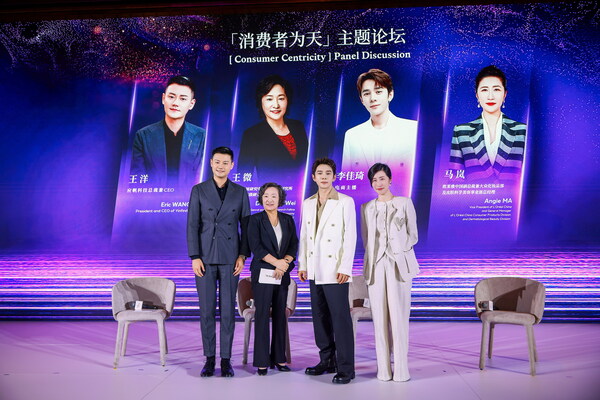
Group photo of forum guests
Wang Yang, serving as the special guest host, set the tone from the outset: “Over the past decade, we have witnessed one brand after another shift from a ‘traffic mindset’ to a ‘user mindset,’ and we have become increasingly convinced that all consumption ultimately comes back to people’s real needs.” With this, the forum commenced.
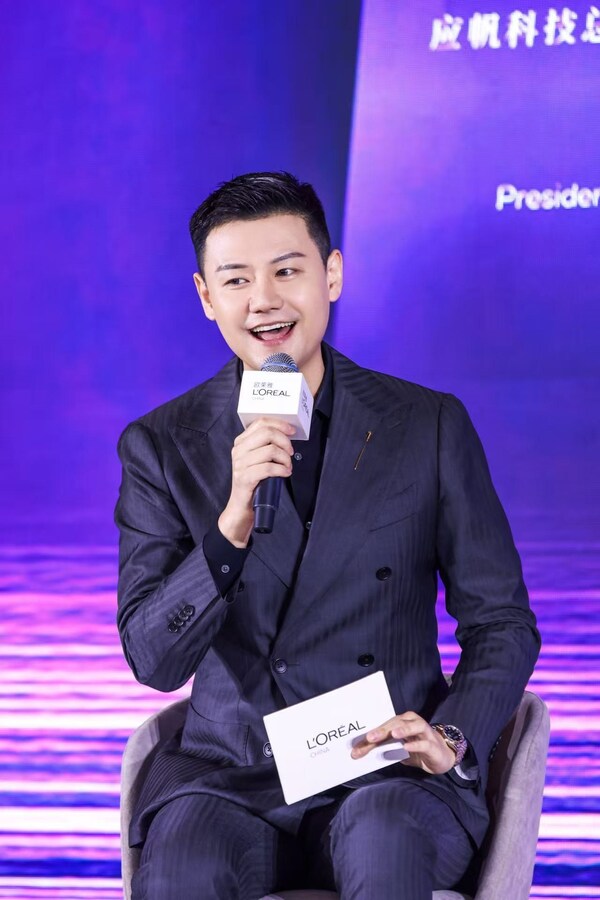
Wang Yang, President and CEO of Yingfan Technology, serves as special guest host
Flowing New Demands: “Want This, Want That, and Want More,” Restructuring the Underlying Logic
The forum’s first topic focused on the ever-evolving consumer demands. From macro trends to micro behaviors, and from structural changes to emotional drivers, the guests deeply dissected the “fluidity” characteristics of contemporary consumption.
Wang Wei pointed out that China’s consumer market exhibits macro-level traits of “newness and stability,” while micro-level consumer demands are characterized by “quality improvement, capacity expansion, and renewal.” “Quality improvement” means consumers are shifting from a focus on cost-effectiveness to a comprehensive consideration of quality, aesthetics, brand, and emotion; “capacity expansion” refers to the transformation of the consumption structure from being goods-dominated to service-oriented; and “renewal” involves technological iterations, represented by AI, which are spawning a large number of new products and consumption models.
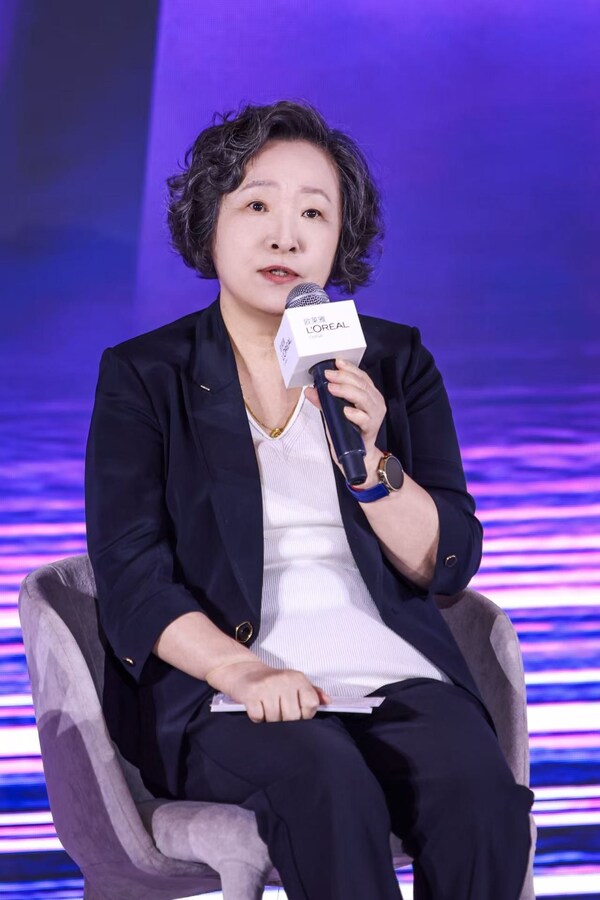
Wang Wei, former Director and Senior Researcher of the Market Economy Research Institute under the Development Research Center of the State Council, shares trends
Ma Lan shared her personal experience from brand practice: “Chinese consumers are becoming increasingly mature and professional, with rational and emotional needs deeply intertwined. The complex demand of ‘want this, want that, and want more’ has become the new normal.” She noted that brands need to meet the dual demands of functional value and emotional connection. Using SkinCeuticals as an example, she shared how the brand evolved from a pioneer in efficacy skincare to a benchmark of “quality-price ratio” over five years, offering upgraded experiences by, for instance, opening its first scientific skincare center.
Li Jiaqi strongly agreed with this. He observed that consumers are shifting from chasing trending products to seeking personalized solutions, with decision-making becoming more rational and professional. For brands, this requires continuously getting closer to consumers, uncovering their needs, and thereby delivering unprecedented experiences and guidance related to beauty.
Multidimensional New Demographics: From “Labeling” to “Understanding Hearts,” Rebuilding Emotional Connections
Against the backdrop of continuously evolving consumer demands, the discussion further focused on the core of this change—”people.” As the structure of the main consumer population continues to evolve, the consumption potential of segmented groups is accelerating its release, and individual needs are interweaving across multiple dimensions, painting a more three-dimensional and dynamic portrait of consumers.
Ma Lan pointed out that old labels are now obsolete, and every consumer group can split into multiple consumer personas in different scenarios. For example, L’Oréal Paris leveraged the Spring Festival marketing campaign “Give L’Oréal as a gift when returning home for the New Year” to reach a broader female consumer base. Meanwhile, CeraVe targeted younger consumers by going offline into campuses to answer students’ questions and collaborating online with anime bloggers to create quality content.
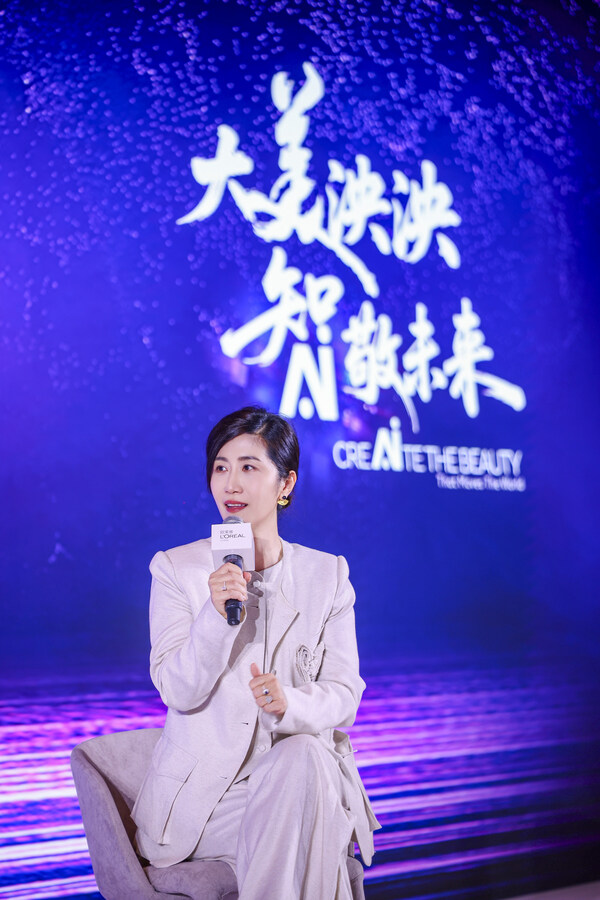
Ma Lan, Vice President of L’Oréal China and General Manager of the Consumer Products Division and Dermatological Beauty Division, shares brand practices
Integrated New Scenarios: Efficiency and Experience in Parallel, Reshaping Channel Logic
Changes in consumer demands and demographics are accelerating the differentiation and expansion of consumer behaviors across different scenarios. Focusing on this trend, the attending guests re-examined the essence of channels from diverse perspectives.
All three guests agreed that “efficiency online, experience offline” has become a consensus, but the deeper proposition lies in their deep synergy and complementarity. Wang Wei, using the debut economy as an example, pointed out that whether it’s online new product launches or offline first stores, first shows, and first exhibitions, the core is to reach consumers in the most efficient way, obtain first-hand user feedback through interaction, and thereby drive continuous innovation on the supply side.
Ma Lan further shared the brand’s practices in leveraging its own strengths to deepen differentiated channels. For instance, mass-market cosmetic brands are accelerating the deployment of instant retail channels to achieve half-hour delivery, making skincare solutions available to consumers anytime. Additionally, every channel serves as an important window for collecting consumer feedback. For example, L’Oréal’s e-commerce operations center is essentially its largest consumer center, where frontline consumer voices rapidly become directions for product innovation.
“Online builds trust through content, offline sparks resonance through experience, but the two are not separate,” Li Jiaqi shared his and his team’s innovative attempts both online and offline, such as hosting mini-classes in livestream rooms before major promotions to help users better find personalized products, and organizing offline events like the “All Girls’ Happy Market” in collaboration with brands.
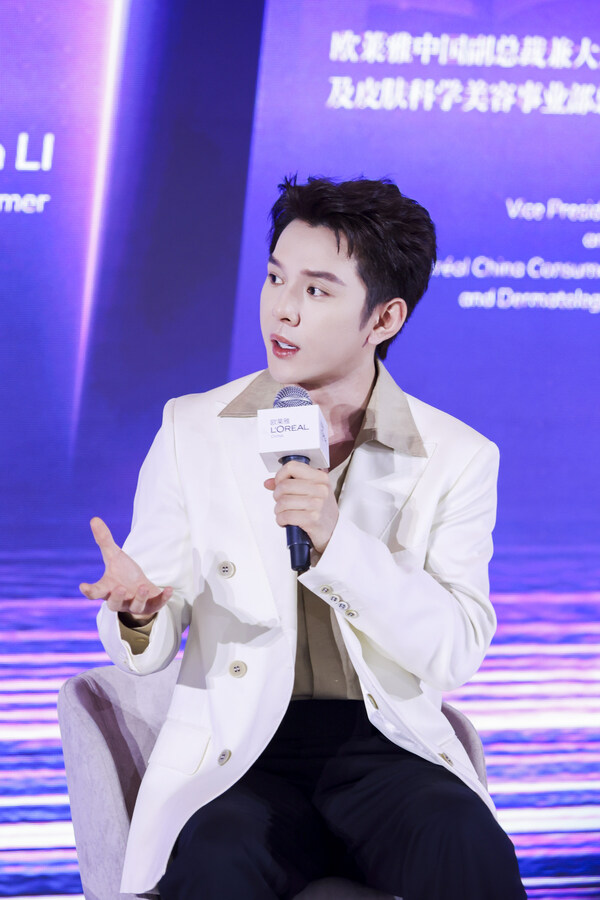
E-commerce livestream host Li Jiaqi shares insights
New Models for Breakthroughs: Symbiosis of Technology and Humanity, Returning to the Essence of Value
As AI becomes deeply integrated into daily life, the entire consumption chain is undergoing profound changes, and the relationship between brands and consumers is being redefined. Against this backdrop, the guests jointly explored the challenges and opportunities that AI brings to the consumer industry.
In Wang Wei’s view, the application of AI in the consumer sector needs to seize two key breakthrough points: first, prioritize scenarios that address real pain points and have clear economic value; second, establish a closed loop for consumer experience feedback to drive technological iteration and functional optimization, transforming technological innovation into tangible and perceptible improvements in quality of life.
Discussing AI applications, Ma Lan stated that the company first clarified the core principles of AI application, namely, upholding integrity and responsibility toward consumers. On this basis, L’Oréal is actively exploring the use of AI to better serve consumers, but at its core, it still relies on a deep understanding of and resonance with consumers.
Li Jiaqi believes that in the AI era, brands become even more important. Taking livestream rooms as an example, he hopes that consumers can buy with confidence, ease, and joy. Among these, “ease” can be achieved through AI’s more precise product matching, but “confidence” and “joy” remain crucial and irreplaceable by AI.
“The opportunity in the beauty industry has always been about meeting people’s aspirations for a better life.” Looking ahead, Ma Lan stated that L’Oréal will continue to stimulate new consumption momentum through innovation, create more diverse, inclusive, and personalized beauty for Chinese consumers, and continue to leverage the lighthouse role of the trillion-yuan beauty industry in consumption, contributing “beautiful new quality energy” to the high-quality development, innovation, and further opening up of China’s economy.