

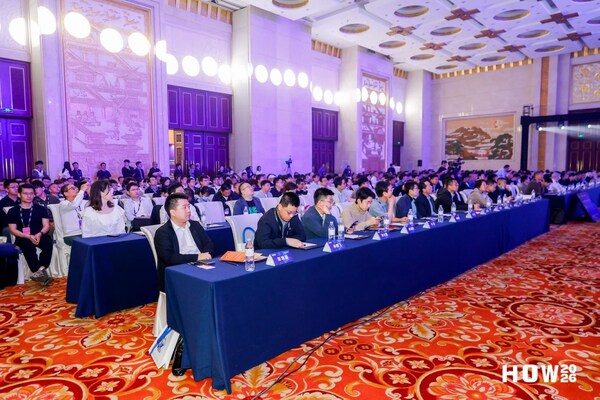
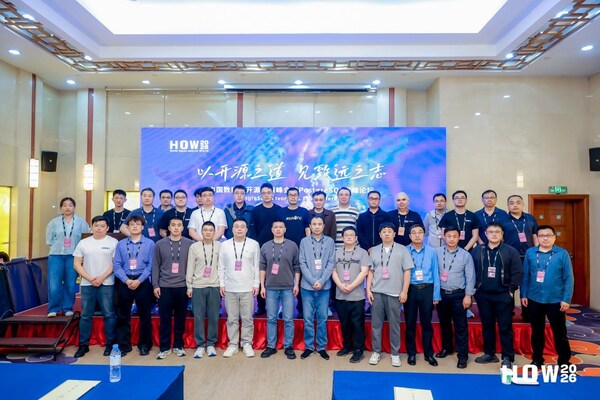
JinanApril 30, 2026 /PRNewswire/ — From April 27 to 28, the HOW2026 China Database Open Source Development Summit and PostgreSQL High-Level Forum, themed “Pursuing Ambition Through the Way of Open Source,” was successfully held in Jinan. The conference featured one main forum and over a dozen specialized sub-forums, bringing together PostgreSQL technical experts from China and abroad, industry representatives, senior developers from the IvorySQL database community and other open source communities. In-depth discussions were held on cutting-edge topics such as database kernel optimization, AI-database integration, cloud-native architecture, and open source ecosystem development, establishing a high-level technical exchange platform for global open source practitioners.
Driving the Future of Data with Intelligence, Deep Integration of AI and Databases.
At the main forum, Bruce Momjian, co-founder of the PostgreSQL Global Development Group, systematically elaborated on how databases can transform into the core infrastructure for AI capabilities, using vector search, text embedding, and other technologies as entry points. Lyu Xinjie, Vice President of HighGo Software and a member of the PostgreSQL Asia Committee, pointed out that the technological foundation of the AI era must robustly support computing power and ecosystem demands. Zhou Aoying, a Fellow of the China Computer Federation and Director of the Database Technical Committee, argued that the essence of current AI is data intelligence, with data as the fifth production factor driving economic transformation, and that the future development of databases must adhere to open source and openness. Tan Zhongyi, Chair of the OpenAtom Foundation Technical Oversight Committee, emphasized the need to take open source as the core foundation, leveraging China’s rich application scenarios and super-large market advantages to forge a solid technological base.
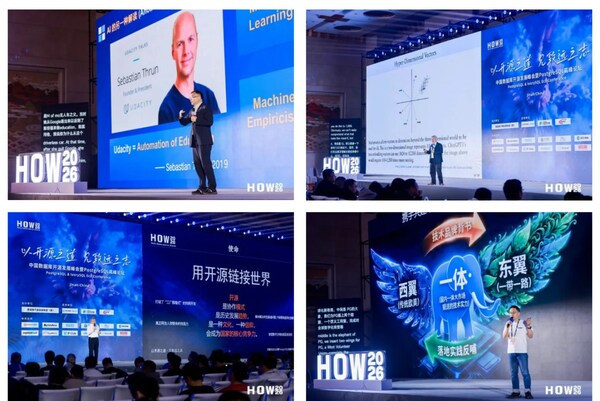
The conference featured two dedicated AI sub-forums, produced by Xiao Shaocong, former President of the PostgreSQL China Chapter. At the “Infrastructure Building • AI Implementation” forum, experts including Sun Peng, an engineer from Baisheng Intelligent Computing, Cui Peng, a PostgreSQL ACE, and Guo Tiecheng, founder of pg4ml, demonstrated a complete path for building efficient AI application systems based on PostgreSQL, focusing on key technologies such as pgvector vector storage, nonlinear regression algorithms, and AI data pipelines. At the “Intelligent Empowerment • Efficiency Enhancement” forum, experts including Wang Dingding, a PostgreSQL ACE, and Bai Fachuan, CTO of Xiaoman Anda, delved into AI-driven query optimization, intelligent performance analysis, and automated operations tool development, sharing practical experience in leveraging AI to overcome information overload and performance bottlenecks.
Deepening Kernel Technology, Building Foundational Database Capabilities.
In terms of kernel technology, two sub-forums presented a comprehensive panorama of innovation from R&D to practice. The “In-Depth Analysis • Kernel Breakthroughs” sub-forum, produced by Lyu Haibo, an enterprise mentor at Peking University, featured PostgreSQL co-founder Bruce Momjian, Suraj Kharage, and Postgres Hacker Xuneng Zhou, who discussed key technologies such as incremental checkpointing, FDW optimization, and CDC synchronization, extending from kernel principles to enterprise-level practices, sharing R&D challenges and solutions. The “Forward-Looking Vision • Feature Deep Dive” sub-forum, produced by Zhou Zhengzhong, a PostgreSQL ACED, featured Hou Zhijie, a PostgreSQL contributor, and Peng Chong, a senior technical consultant at Yunhe Enmo, who provided in-depth interpretations of features in PostgreSQL 18 and future versions, including logical replication evolution, enhanced execution plan intervention, and trigger syntax optimization. Combined with innovative applications of IvorySQL, they showcased the practical value of these features in AI integration and performance optimization.
Focusing on Large-Scale Practice, Building a Highly Reliable Data Foundation.
Addressing large-scale production environments, the conference hosted two sub-forums on architecture design and operations optimization. The “Architecture Practice • Scaling Challenges” sub-forum, produced by Yin Haiwen, a PostgreSQL ACE, featured experts including Chris Travers, Jonah H. Harris, and Cary Huang, who shared practical experience in PB-level data storage architecture, cross-database synchronization solutions, and EAV data model optimization, conveying methodologies for building and operating large-scale PostgreSQL clusters. The “Operations Refinement • Performance Assurance” sub-forum, produced by Xue Xiaogang, a PostgreSQL ACE, featured Yan Shuli, co-editor of “Quickly Mastering PostgreSQL Version New Features,” and Liu Zhilong, a database expert at Ping An Technology, who focused on high-availability solutions and continuous performance optimization, explaining methods for building efficient operations systems to ensure system stability through typical case studies.
Strengthening the Talent Foundation, Deepening Open Source Education.
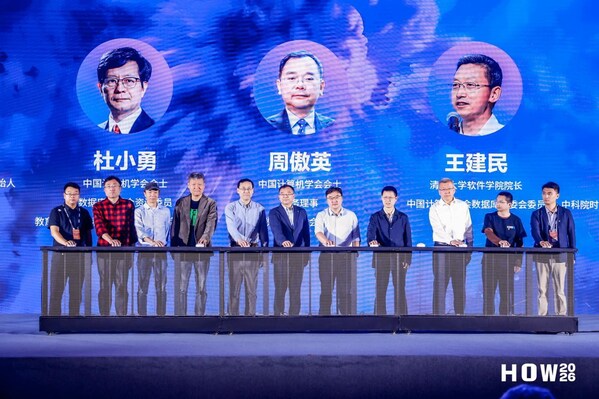
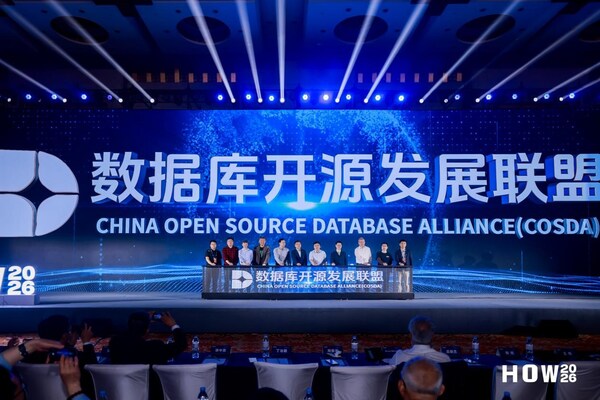
The conference initiated the establishment of the Database Open Source Development Alliance and featured an open source education sub-forum produced by Wang Wei, a researcher at East China Normal University, dedicated to discussing the construction of database open source education systems. Representatives from industry, academia, and research, including Miao Jian, President of HighGo Software, Yin Haiwen, a PostgreSQL ACE, Chris Travers, a PostgreSQL Infrastructure Professional, and Su Wenlin, Project Operations Manager at the Shandong University Intelligent Research Institute, systematically shared innovative practices in open source education from universities and enterprises around topics such as curriculum system development, practical teaching models, and community-education integration, promoting the standardization and large-scale development of database open source education.
Co-building, Co-governance, and Co-sharing, Enhancing Community Governance and Ecosystem.
The community governance sub-forum, produced by Li Chao, Chief Architect of HighGo, featured experienced community participants such as Charis Charalampidi and Lei Yanliang, a PostgreSQL contributor, who interpreted the PostgreSQL community governance mechanism, contribution process, and cultural development, sharing growth experiences from user to contributor. Concurrently, the “Open Source Innovation • Ecosystem Co-building” sub-forum, produced by Yan Shao’an, a PostgreSQL ACE, featured Huang Hongliang, Technical Director of Hunan Luosheng Biotechnology, and Tao Zheng, an IvorySQL contributor, who focused on the IvorySQL ecosystem, sharing core features such as compatibility, high availability, and performance optimization, as well as solutions for AI applications, promoting interaction between production and use to drive sustainable ecosystem development.
Embracing Cloud-Native, Unleashing New Momentum for Elastic Architecture.
The cloud-native sub-forum, produced by Liu Huayang, a PostgreSQL ACE, featured experts including Tang Cheng, founder of Zhongqi Chengshu Technology, and Zhao Rui, Head of Alibaba Cloud RDS PG R&D, who discussed topics such as containerized deployment, Kubernetes orchestration, cloud-native storage, and elastic scaling. Combined with experience in building large-scale cloud-native clusters, they analyzed key issues including performance optimization, high-availability assurance, and cost control. The “Tool Ecosystem • Extension Empowerment” sub-forum, produced by independent open source contributor Feng Ruohang, featured Zhang Chen, a PostgreSQL database recovery expert, and Li Chuancheng, a database kernel development engineer at China Unicom, who systematically introduced the PostgreSQL tool ecosystem and extension development technologies, sharing tips on development and monitoring tools, extension architecture design, and API optimization to help improve development efficiency.
Empowering All Industries with Data, Deepening Innovative Industry Practices.
The industry application sub-forum, produced by Yin Haiwen, a PostgreSQL ACE, featured Fu Chao, DBA at Xiangxun Technology, Mark Wong, a core PostgreSQL contributor, and Jia Yunhao, a marketing engineering expert at SuperMap Software, who focused on sectors such as finance, healthcare, internet, and government. Using real-world cases, they analyzed technology selection, architecture design, and industry-specific data management needs, systematically demonstrating the practical path for PostgreSQL to adapt to different business characteristics, solve data pain points, and empower digital transformation.
Launching the PGNexus Platform, Building a New Hub for Global Collaboration.
During the conference, the PGNexus global collaboration platform (https://pgnexus.ai/) was officially launched. Guided by the philosophy of “Code as a Bridge, Inspiration as a Medium,” the platform aims to build an open, inclusive, and efficient global collaboration network, breaking down geographical and organizational boundaries to connect PostgreSQL developers, enterprise users, and contributors worldwide. Through intelligent collaboration tools and resource-sharing mechanisms, it seeks to drive a new pattern of globally linked open source collaboration.
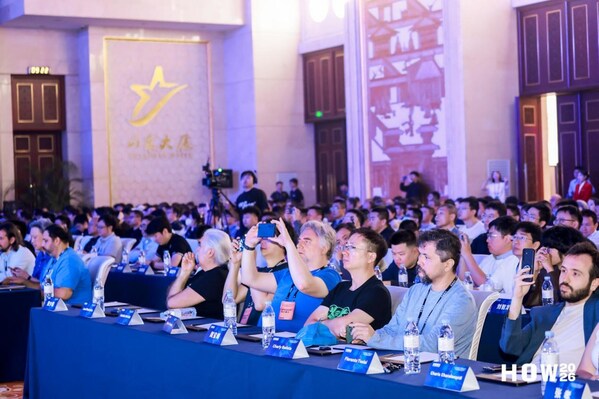
Currently, open source has become the core paradigm for global software technology and industrial innovation. The successful hosting of the HOW2026 China Database Open Source Development Summit and PostgreSQL High-Level Forum comprehensively showcased the innovative vitality of open source databases represented by PostgreSQL in the AI era, conveyed the voice of China’s open source industry gaining momentum, and established a high-energy platform for in-depth global database technology exchange and collaborative innovation. Looking ahead, we will uphold the original intention of “Connecting the World with Open Source,” deeply cultivate the ecosystem, accelerate the integration of technology and industry, and join hands with global developers to contribute to building a new, open, and win-win global open source landscape.