

BEIJINGMay 6, 2026 /PRNewswire/ — On April 21, 2026, CATL held a Super Technology Day product launch in Beijing, officially unveiling the third-generation Shenxing Superfast Charging Battery, third-generation Qilin Battery, Qilin Condensed Battery, second-generation Freevoy Super Hybrid Battery, Naxtra Sodium-ion Battery, and an integrated ultra-fast charging and battery swap network plan. These offerings aim to provide more diverse and efficient new energy solutions tailored to different travel scenarios and user needs.
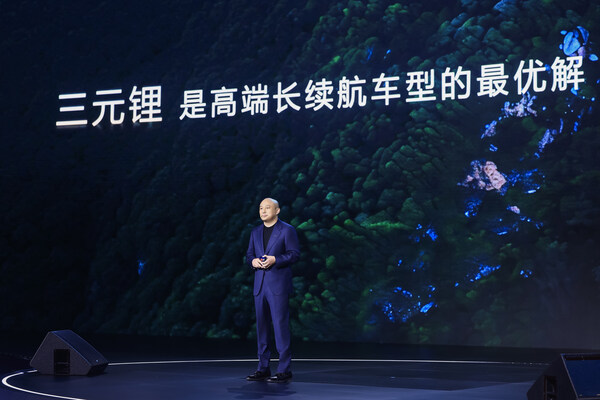
Gao Huan, CTO of CATL China Car Business
At the launch event, Wu Kai, an academician of the Chinese Academy of Engineering and Chief Scientist of CATL, systematically explained the respective advantages, boundaries, and development directions of different material systems. He stated that lithium iron phosphate (LFP) is currently approaching its theoretical energy density limit, making it more suitable for developing a technology roadmap centered on ultra-fast charging to achieve an optimal balance. Ternary materials, leveraging their high energy density advantages, remain a key battleground in global power battery technology competition, further underscoring that energy density is still a core indicator of power battery technology leadership. Sodium-ion batteries, meanwhile, are expected to show broad prospects in high-temperature, extreme cold travel scenarios, and energy storage applications. Whether viewed from the perspective of differentiated consumer demands or from the angles of energy security and social development, the lithium battery industry must pursue the coordinated development of multiple chemical systems.
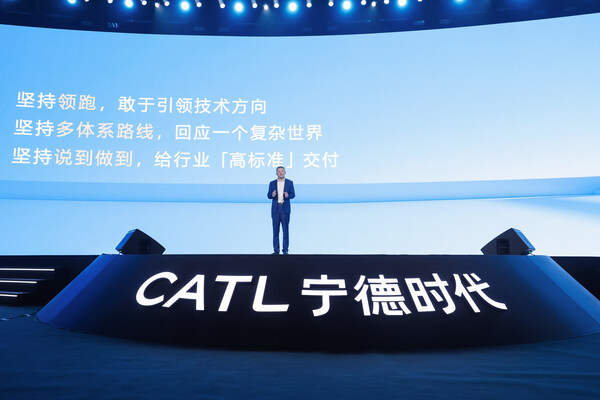
Wu Kai, Chief Scientist of CATL
The third-generation Shenxing Superfast Charging Battery once again set a global record for power battery charging rates, achieving a full charge in just 6 minutes at room temperature, striking a perfect balance between higher charging rates and ultra-long lifespan. The third-generation Qilin Battery boasts an energy density of 280Wh/kg, easily enabling a 1000-kilometer range, making it an ideal choice for high-end new energy electric vehicles that require both long range and lightweight design. The Qilin Condensed Battery extends the range to 1500 kilometers, achieving a new breakthrough in driving range. The second-generation Freevoy Super Hybrid Battery offers a pure electric range of 600 kilometers, opening a new competitive frontier in the hybrid segment. The Naxtra Sodium-ion Battery will propel the sodium-ion material system from technological breakthroughs to mass production.
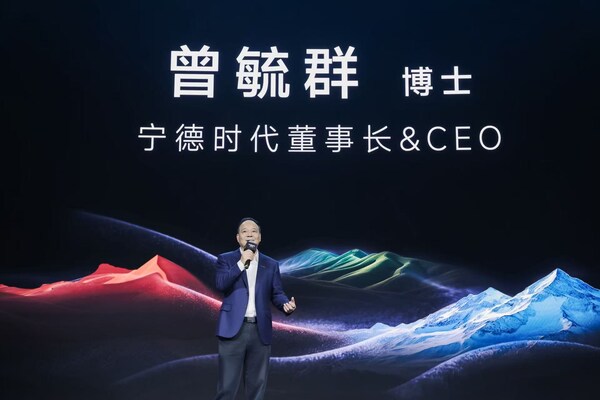
Robin Zeng, Chairman and CEO of CATL
Third-Generation Shenxing Superfast Charging Battery: No Longer a Choice Between Ultra-Fast Charging and Ultra-Long Lifespan
From an electrochemical mechanism perspective, the core challenge in increasing the charging rate without compromising battery lifespan is not trickle charging, but temperature rise. According to the Arrhenius equation, for every 10°C increase in battery temperature, the rate of internal side reactions approximately doubles, significantly impacting lifespan.
The third-generation Shenxing Superfast Charging Battery employs three key methods—reducing heat generation, enhancing heat dissipation, and improving precision—to maintain a capacity retention rate of over 90% after 1000 full cycles, achieving compatibility and balance between ultra-fast charging and ultra-long lifespan. The latest third-generation Shenxing battery achieves the industry’s strongest ultra-fast charging capability, equivalent to 10C with a peak of 15C. It takes only 1 minute to charge from 10% to 35% SOC, 3 minutes and 44 seconds from 10% to 80% SOC, and 6 minutes and 27 seconds from 10% to 98% SOC. In extreme cold conditions at -30°C, charging from 20% to 98% SOC takes approximately 9 minutes. Combined with the battery’s self-heating technology and the integrated ultra-fast charging and battery swap network, it truly enables low-temperature ultra-fast charging without being picky about charging piles, supporting both charging and swapping.
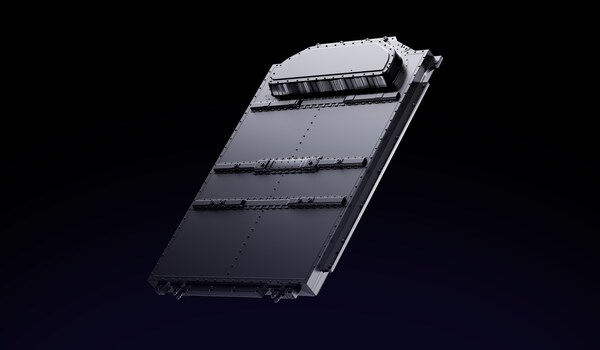
Third Generation Shenxing Superfast Charging Battery
Third-Generation Qilin Battery: Lighter, Stronger, More Premium
In the past, achieving long range in high-end new energy electric vehicles using LFP materials typically involved stacking more battery capacity, which inevitably compromised the vehicle’s lightweight requirements.
The third-generation Qilin Battery has a cell energy density of 280Wh/kg, achieving a 1000-kilometer range while featuring standard 10C ultra-fast charging. The battery pack weight is controlled at 625kg. Compared to commercially available LFP models with a similar 1000-kilometer range, it reduces weight by 255kg and saves 112L of space.
The excellent lightweight characteristics bring significant benefits to the vehicle. First, in terms of energy consumption, it reduces energy consumption per 100 kilometers by over 6%, saving approximately 0.78 kWh per 100 kilometers. Based on an annual mileage of 20,000 kilometers per vehicle and a fleet of 1 million vehicles, the annual electricity saving reaches 156 million kWh, reducing carbon dioxide emissions by 78,500 tons—equivalent to planting 2.55 million trees or covering 1,250 hectares of green space. In terms of handling and safety, the 0-100 km/h acceleration time is shortened by approximately 0.6 seconds, reducing the overtaking parallel hazard window by 12%. The moose test passing speed increases by 8%, the body roll angle decreases by 6.5%, and the extreme hazard avoidance capability improves by 15% to 25%. The 100-0 km/h braking distance is shortened by approximately 1.44 meters. According to data from institutions like CATARC, for every 1 meter reduction in the 100-0 km/h braking distance, the probability of a high-speed accident can decrease by 8%. In terms of durability, the lifespan of key chassis components increases by 40%, and tire lifespan extends by 30%. Previously requiring replacement every 30,000 to 40,000 kilometers, tires can now last at least an additional 10,000 kilometers. The saved 112L of space can provide at least 18mm of additional headroom in the cabin or be used to optimize the vehicle’s aerodynamic design.
In terms of performance, the third-generation Qilin Battery delivers an instantaneous power of 3MW, doubling the maximum power of 1330kW from the second-generation Qilin Track Battery that competed at the Nürburgring Nordschleife in 2025, helping more automakers continuously push the limits of electric vehicle track performance.
Regarding safety, it builds upon the “NP (No Propagation)” technology with an upgraded “Thermal-Electrical Separation” technology. Each cell is designed with an independent sealed exhaust channel. Even if a cell undergoes thermal runaway under extreme conditions, high-temperature gases can be quickly and directionally expelled through the dedicated channel, ensuring “heat follows the heat path, electricity follows the electrical path.” This fundamentally severs the propagation chain from thermal runaway to electrical failure, truly advancing from “thermal isolation” to “thermal insulation.”
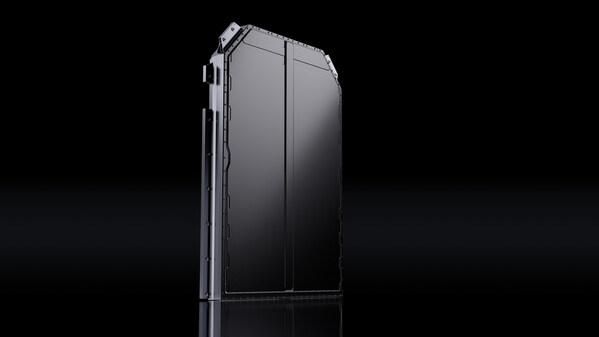
Third Generation Qilin Battery
Qilin Condensed Battery: Aviation-Grade Technology Applied to Passenger Vehicles for the First Time
CATL’s Qilin Condensed Battery is the first power battery product to apply aviation-grade condensed technology to the passenger vehicle sector, with a cell energy density of 350Wh/kg, setting a new record for mass-produced batteries. This technology was previously developed for electric aviation applications and has completed its maiden flight verification on a 4-ton commercial aircraft. Further verification is underway on aircraft weighing over 8 tons.
The Qilin Condensed Battery has a volumetric energy density of 760Wh/L. With a typical vehicle battery pack design, it can enable a sedan range of 1500 kilometers and a range exceeding 1000 kilometers for full-size three-row or large six-seat SUVs, with the battery pack weight controlled within 650 kg. A 1500-kilometer range is not just a disruption of gasoline cars by electric vehicles; it represents a comprehensive surpassing of yesterday’s electric vehicles by today’s—for instance, the distance from Beijing to Nanjing is over 1000 kilometers, and even with a 30% reduction on highways, it can still be reached in one go.
In terms of safety, the Qilin Condensed Battery upgrades traditional liquid electrolytes to condensed electrolytes, fundamentally achieving “no liquid to leak, no liquid to burn,” completely eliminating safety risks associated with potential electrolyte leakage.

Qilin Condensed Battery
Second-Generation Freevoy Super Hybrid Battery: Bringing Extended-Range Hybrids into the 600km Pure Electric Era
The second-generation Freevoy elevates the pure electric range of extended-range hybrids to a new height of 600 kilometers, featuring standard 10C ultra-fast charging across the board. It also pioneers the “Super Hybrid System” technology, covering all extended-range hybrid scenarios from mainstream family use to high-end all-purpose applications through three technology routes: LFP, Super Hybrid, and ternary.
The LFP version of the second-generation Freevoy Super Hybrid Battery offers a pure electric range of 500 kilometers, meeting daily commuting needs with “one charge per week.” The new Super Hybrid System uses the LFP olivine crystal structure as its core framework, achieving a gradient uniform mixing of ternary and LFP materials at the powder particle level. This results in an energy density of 230Wh/kg, improving range by over 15% compared to a single LFP battery with the same pack weight. The ternary version directly breaks through the 600-kilometer pure electric range barrier, with a total vehicle combined range exceeding 2000 kilometers, truly enabling the convenience of “one vehicle for two uses.”
In terms of power, the second-generation Freevoy delivers an instantaneous power of 1.5 megawatts at full charge and maintains a stable output of 1.2 megawatts even at 20% SOC, completely solving the “power degradation under low battery” pain point of extended-range hybrids. Taking a typical off-road scenario as an example, escaping a sand “chicken coop” pit requires the battery to provide over 350kW of instantaneous power. The Freevoy’s output is more than three times that required for such an escape—even when the battery level drops to 20% or even below 10%, encountering a chicken coop pit still allows for an easy escape with a tap on the accelerator, delivering a driving experience where “performance remains robust regardless of battery level.”
Regarding safety, the bulletproof-grade bottom coating can withstand an impact energy of 1500 Joules, which is 10 times the national standard (150 Joules). The sealing and waterproof capability allows for continuous immersion in 2 meters of water for over 200 hours without any performance impact. Whether facing heavy rain, wading, or off-road river crossings, power delivery remains uninterrupted, and safety is uncompromised.
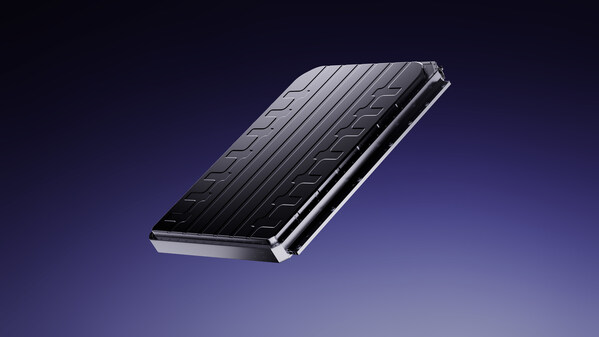
Second Generation Freevoy Super Hybrid Battery
Naxtra Sodium-ion Battery: Advancing Sodium-Ion Batteries from Technological Breakthrough to Industrial Implementation
This year, CATL overcame four major industry challenges in the mass production of sodium-ion batteries: extreme moisture control, gas generation from hard carbon, aluminum foil adhesion bottlenecks, and the large-scale production of self-generating anodes, tackling over a hundred engineering issues one by one.
The Naxtra Sodium-ion Battery is scheduled to begin mass production by the end of 2026.
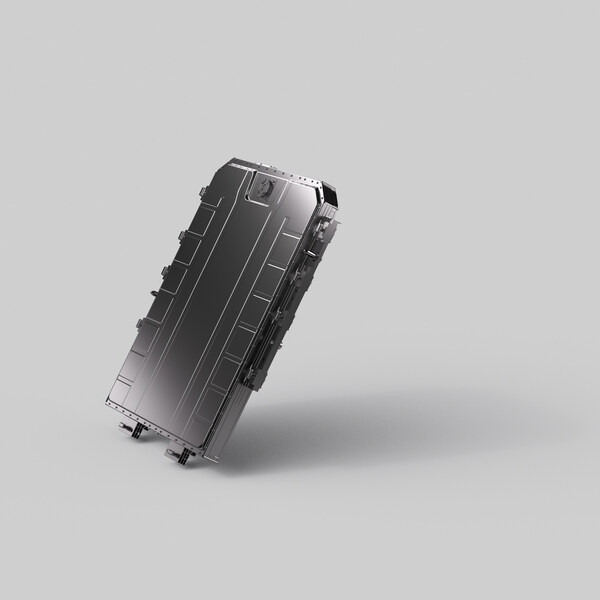
Naxtra Sodium-ion Battery
Integrated Ultra-Fast Charging and Battery Swap: The Optimal Charging Solution
CATL believes that the future charging landscape will be divided into three segments: home charging, public charging, and battery swapping, with the integrated ultra-fast charging and battery swap model being the optimal form.
CATL announced that its passenger car “EVOGO” and heavy truck “QIJI” battery swap stations will all be equipped with Shenxing ultra-fast charging piles as standard, achieving “swappable and chargeable, integrated ultra-fast charging and swapping.”
The integrated ultra-fast charging and battery swap stations share power transformation and charging modules, reducing energy conversion steps. The overall power loss rate is more than 13 percentage points lower than that of market stations with energy storage charging. In case of emergency needs, the batteries from the swap station can be used to discharge to the charging piles, achieving a device utilization rate of over 85%. The service capacity per parking space is three times that of stations with energy storage charging, and the fixed investment cost for the ultra-fast charging part is only one-fifth of the latter.
In terms of battery products, CATL released the EVOGO battery block No. 26, featuring an 800V high-voltage architecture. The initial version offers 75 kWh, with larger capacities to follow, fully adaptable to B to C-segment 800V vehicles. This will allow EVOGO battery swapping to cover a complete vehicle matrix from A0 to C-segments.
Regarding network construction, CATL plans to have built a total of 4,000 integrated ultra-fast charging and battery swap stations by the end of 2026, covering nearly 190 cities and a 12-vertical, 11-horizontal expressway network. CATL will collaborate with automakers and energy partners to build a “Shared Ultra-Fast Charging and Battery Swap Network,” based on the principles of technology sharing, interoperability, and joint investment. The initial partners include Changan, Chery, GAC, Seres, SAIC-GM-Wuling, and BAIC. The plan is to establish over 100,000 shared charging infrastructure units by the end of 2028.
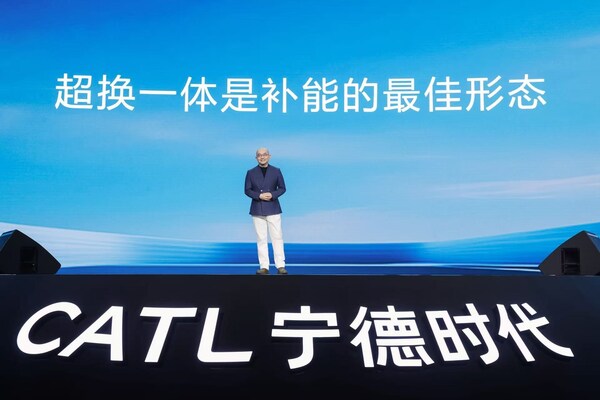
Yang Jun, General Manager of CATL’s Battery Swapping Business
Dr. Robin Zeng, Chairman and CEO of CATL, emphasized at the event that industrial innovation must adhere to a rigorous scientific spirit. For Chinese technology to go global, it relies not only on speed and scale but also on the quality of innovation, the capability of validation, and the credibility of the brand.
From five battery products covering the entire spectrum of chemical material systems to the comprehensive implementation of the integrated ultra-fast charging and battery swap network, CATL has completed a full-chain layout from battery products to charging infrastructure at this Super Technology Day. This drives new energy mobility from “single-point breakthroughs” to “full-scenario coverage,” ensuring that every user’s travel need finds the optimal solution.