

Dongguan, ChinaMay 18, 2026 /PRNewswire/ — On May 15, 2026, the 2026 Global AIDC Industry Forum and Huawei AIDC Strategy & New Product Launch, themed “Empowering the AI World to Run Steadily,” was grandly held in Dongguan. The forum brought together nearly a thousand leading figures, technical experts, and core ecosystem partners from energy enterprises, intelligent computing industries, and telecom operators worldwide. They focused on the evolution of future AIDC architectures and cutting-edge technological innovations, exchanging ideas and witnessing the launch of Huawei’s Source-Grid-Load-Storage AIDC strategy. Concurrently, four specialized sub-forums were held on AIDC power supply, AIDC liquid cooling, AI for DC operations and maintenance, and new AIDC construction models, leading the industry into a new era of AIDC.
Hou Jinlong, Huawei Board Member and President of Huawei Digital Power, delivered a speech. He stated that the rapid development of the AI industry and the large-scale deployment of big models and massive intelligent agents are driving enormous energy demand, and global AIDC installed capacity will continue to break records. The end of computing power is electricity; energy is the foundation for the long-term development of AI. Computing power and electricity will deeply collaborate and empower each other in both directions, gradually building an integrated collaborative system of “new power systems and AI infrastructure.” To promote high-quality and sustainable AIDC development, ensuring power supply is key; to achieve long-term high-reliability and stable operation, improving grid friendliness is crucial; to accommodate ultra-high-density computing loads, upgrading the power supply architecture toward high voltage, direct current, and power electronics is essential. Additionally, liquid cooling has become a necessity for ultra-high-density computing, with reliable liquid cooling solutions and full-lifecycle intelligent operations and maintenance being critical. Moreover, AIDC is essentially a computing power production system, where delivery speed is closely tied to business benefits and return on investment.
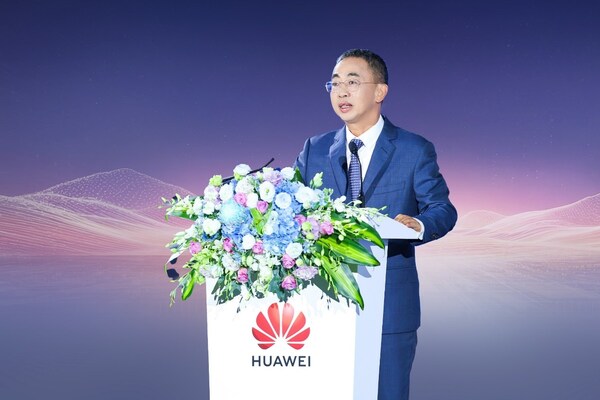
Hou Jinlong, Huawei Board Member and President of Huawei Digital Power
Huawei Digital Power deeply integrates 4T technologies, including Bit (digital technology), Watt (power electronics technology), Heat (thermal management technology), and Battery (energy storage management technology). Focusing on core areas such as new power systems and AIDC, it builds comprehensive capabilities in “new energy power generation, grid connection, high-density computing power supply, liquid cooling heat dissipation, and computing-electricity collaboration.” Facing the opportunities of AIDC industry transformation, Huawei Digital Power is committed to becoming a leader in continuous AIDC innovation and a long-term trusted strategic partner. It aims to collaborate with global customers and partners to drive high-quality, sustainable, and innovative development of the AIDC industry, making every watt greener, generating more Tokens per watt, and optimizing the cost per Token.
He Bo, Vice President of Huawei Digital Power, delivered a keynote speech titled “Building Source-Grid-Load-Storage AIDC to Generate More Tokens per Watt.” He stated that the global AI industry is thriving, with Token demand surging exponentially, and AIDC is fully entering the Token era. The high density and diversification of computing power pose significant challenges to AIDC power density, scale, and load fluctuations. At the same time, large-scale integration of new energy into the grid exacerbates grid volatility, combined with frequent fluctuations from AI business loads, AIDC faces reliability challenges.
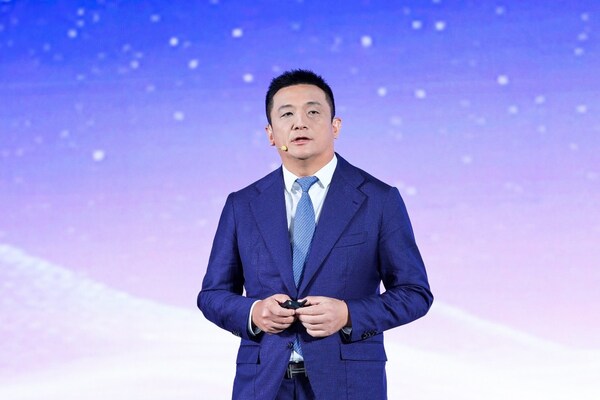
He Bo, Vice President of Huawei Digital Power
Based on this, Huawei grandly launched the Source-Grid-Load-Storage AIDC strategy, centered on a “3+1” restructuring, to create a high-reliability, high-efficiency, fast-delivery, and grid-friendly Source-Grid-Load-Storage AIDC solution, enabling more Tokens per watt.
- Watt Restructuring: Full-chain restructuring of the power supply link from grid to chip. Diversified loads determine diversified power supply architectures. AC and DC will coexist for a long time in the future. Huawei will build a MIMO power supply architecture centered on grid-friendly UPS and grid-forming energy storage, gradually evolving toward a converged grid-forming energy router based on SST technology. This fully leverages Huawei’s technical expertise in power electronics, grid forming, high/low voltage, and AC/DC to flexibly adapt to AIDC high-density power supply needs.
- Heat Restructuring: From chip to outdoor, building a full-lifecycle safe and reliable thermal management system. The ultimate value of liquid cooling is not single-point cooling but constructing a full-lifecycle thermal management system. Huawei innovatively creates an AI-enabled MW-level liquid cooling system, achieving more efficient and reliable heat dissipation, leading the large-scale deployment of liquid cooling from usability to long-term reliability.
- Bit Restructuring: AI empowers data centers, restructuring the full-lifecycle operations chain. Digitalization and intelligence from design, delivery, to operations across the full lifecycle achieve full-chain visibility, full-chain reliability, and efficient full-lifecycle operations and maintenance.
- Construction Model Restructuring: Engineering productization, restructuring the construction model with prefabrication and modularization. Moving the entire process of design, production, testing, and validation to the factory, requiring only simple on-site installation, significantly shortens delivery cycles, improves delivery quality, and enables rapid productized replication.
He Bo pointed out that the upper limit of AI computing power development depends on the upper limit of energy supply, Energy as Token. The traditional energy efficiency evaluation system centered on PUE can no longer fully measure AIDC value. The AIDC era needs to move from “energy efficiency indicators” to “value indicators.” Huawei proposes the TokEnergy Index (Energy-to-Token Ratio) to measure the full-chain conversion efficiency from energy to computing power in AIDC.
In the AI era, data centers are no longer just computer rooms but super factories producing Tokens. At this inflection point of industry development, Huawei Digital Power will continue to invest in root technologies, create leading Source-Grid-Load-Storage AIDC solutions, lead high-quality industry development, generate more Tokens per watt, and ensure the AI world runs steadily.
— End —