

ShanghaiMay 20, 2026 /PRNewswire/ — From May 12 to 14, the 30th CBE China Beauty Expo 2026 was held at the Shanghai New International Expo Centre. CHANDO Group made its debut at Booth B04 in Hall E1 under the theme “Together, More Beautiful.” The five major brands—CHANDO, MAISU, ChunXia, Jichu, and Proya—showcased their latest R&D achievements and star products, and held multiple themed salons to unveil scientific breakthroughs in areas such as anti-fatigue aging, pigment management for East Asian skin, and aerospace skincare technology. Meanwhile, the Group also presented its latest progress in protective ingredient development, green packaging, empty bottle recycling, and Himalayan ecological conservation, demonstrating the technological strength and sustainable development commitment of domestic beauty brands.
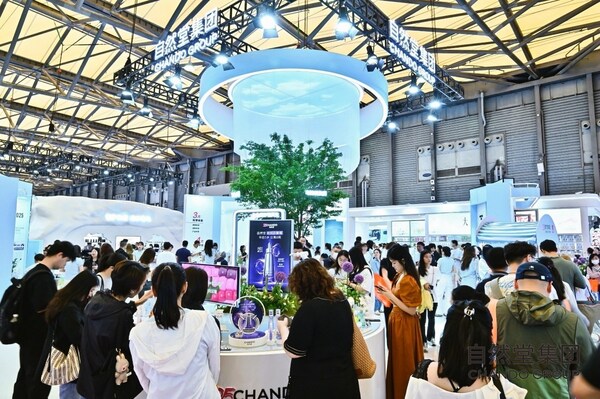
Image: Booth of CHANDO Group at the 30th CBE Beauty Expo
At the CBE 30th Anniversary Gala Night & Global New Product Awards Ceremony held during the Expo, Mr. Zheng Chunying, Chairman and President of CHANDO Group, was appointed Vice Chairman of the CBE Brand Alliance. The Group’s natural high-tech brand CHANDO, originating from the sacred Himalayan region, won the “Annual Black Diamond Brand Award” for its comprehensive omni-channel presence, consumer recognition, and market sales leadership. The Group’s functional scientific skincare brand Proya, specializing in skin barrier health, won the “Annual Efficacy-Selected Repair Mask Award” for its Soothing Repair Cooling Mask, which demonstrated excellence in ingredient innovation and efficacy validation.
Booth Highlights: Star Products from Five Brands Gather, New Launches Steal the Spotlight
The most eye-catching feature at the CHANDO Group booth was the array of annual new products. Among them, the seventh generation of CHANDO Super Anti-Aging Little Purple Bottle, launched on April 23, made its debut at the booth. Powered by the core self-developed ingredient Himucin® Super Anti-Aging Peptide, it forms a scientific skincare solution against fatigue-induced aging alongside the Little Purple Bottle family series, attracting many visitors to stop and experience it.
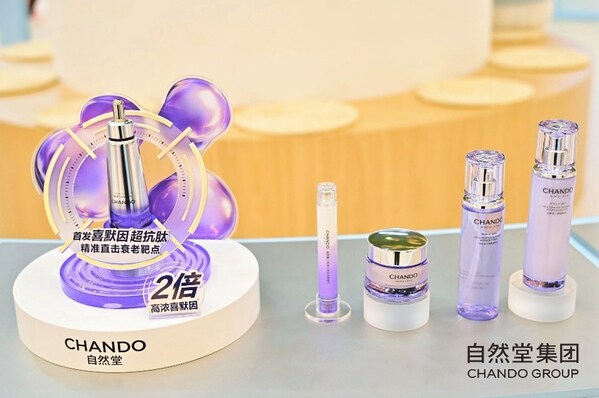
Image: CHANDO Super Anti-Aging Little Purple Bottle 7th Generation and Little Purple Bottle Family
In addition, the Group’s other products were also on display, including MAISU Space Cream, Proya 728 Repair Cream and Soothing Repair Cooling Mask, Jichu AD Special Care Cream and Jichu Baby Physical Sunscreen (Jichu Cloud Sunscreen), and the ChunXia 509 Sunscreen Family.
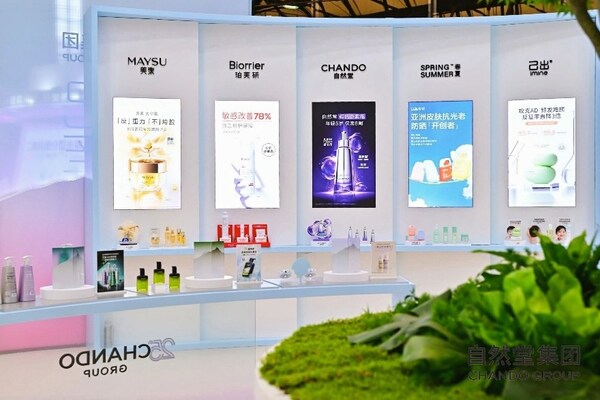
Image: Five Major Brands of CHANDO Group
Themed Salons: From Cellular Mechanisms to Epigenetics, Annual Scientific Breakthroughs Unveiled
CHANDO: Cracking “Fatigue-Induced Aging,” Himucin® Super Anti-Aging Peptide Offers a Root Solution
As a core scientific achievement at this Expo, Dr. Ren Hui, Senior Manager and Scientist of the Raw Material R&D Laboratory at CHANDO Group’s R&D Center, systematically elaborated on the Group’s latest breakthroughs in anti-fatigue aging during the salon titled “Molecular Mechanisms of Fatigue-Induced Aging in Skin Cells and the Himucin Super Anti-Aging Peptide Solution.”
Dr. Ren Hui introduced the scientific research system established by CHANDO Group over 25 years: three major systems—skin science, raw material science, and product science—and four major technology platforms—raw material development, formulation development, packaging development, and evaluation and testing. She then focused on explaining the emerging scientific concept of “fatigue-induced aging.” According to reports from CNR News, CHANDO, in collaboration with the Shanghai Institute of Nutrition and Health, Chinese Academy of Sciences, conducted a quantitative analysis of facial skin aging big data from over 300,000 women across 32 provinces and cities in China. The study revealed a trend: the overall wrinkle aging inflection point for Chinese women in 2023 was approximately 4 years earlier than in 2018, characterized by “aging earlier, aging faster, and an earlier onset of the accelerated aging phase.” Further research indicated that fatigue-inducing lifestyles such as poor diet, sleep deprivation, and mental stress accelerate skin aging by affecting mitochondrial function—mitochondria, as the “energy factories” of cells, when dysfunctional, directly lead to insufficient cellular energy supply, reduced collagen synthesis, and premature wrinkles and sagging.
To address this mechanism, CHANDO leveraged its AI computational biology platform to screen and modify over 2.8 million yeast proteins, successfully developing Himucin® Super Anti-Aging Peptide. This ingredient directly targets the mitochondrial energy switch PGC1α, boosting its expression by 1.7 times, achieving precise energy replenishment. Experimental data show that the penetration of Himucin® Super Anti-Aging Peptide is 8.5 times that of traditional tetrapeptides, promoting cell renewal and collagen synthesis, thereby achieving firming and anti-wrinkle effects. The seventh generation of CHANDO Super Anti-Aging Little Purple Bottle, which incorporates this ingredient, can combat skin “fatigue-induced aging” at its root without requiring changes to consumers’ lifestyles. This breakthrough provides Chinese women with a scientific skincare solution for “fatigue aging.”
CHANDO: “577” Whitening Breakthrough: Controlling Pigmentation from the Epigenetic Source
In the salon titled “Pigment Management for East Asian Skin: New Breakthroughs in CHANDO’s ‘577’ Whitening Technology,” Zhang Guodong, Director and Scientist of the Product Development Department at CHANDO Group’s R&D Center, proposed that the pigment characteristics of East Asian skin—”prone to darkening, yellowing, and redness”—require more precise intervention solutions. CHANDO 577 can target and inhibit UV-induced characteristic microRNAs, blocking the production of key enzymes for melanin synthesis at the epigenetic level—a pathway that is more upstream and fundamental than traditional whitening ingredients. This achievement was presented at the 2026 IMCAS World Congress in Paris and has been successfully applied in the Snow Cream 577 Whitening Essence.
CHANDO Men: Extension of Aerospace Skincare Technology: Creating a New Direction for “Barrier-Friendly” Cleansing
The aerospace skincare philosophy of “using the heavens for earthly purposes, and the earth for heavenly purposes” not only serves women’s skincare but also extends to the men’s field. In the salon titled “CHANDO Men—Barrier-Friendly Cleansing Formula Technology Based on Aerospace Skincare Science,” scientists from CHANDO Group’s R&D Center introduced the development logic behind the CHANDO Oil-Control Blackhead-Removing Amino Acid Facial Cleanser. By leveraging research findings from aerospace skincare science on microbial environments and skin barrier protection, they developed a formula that effectively cleanses while maintaining the skin’s micro-ecological balance, opening up a new “barrier-friendly” track for men’s facial cleansing.
MAISU: Aerospace Technology Empowers Skin Base Youth, Unlocking Precision Anti-Aging
In the salon titled “Aerospace Technology Empowers Skin Base Youth: MAISU Space-Breeding Super Ingredients for Medical-Grade Precision Anti-Aging,” Qin You, Director of the International Cooperation Laboratory at CHANDO Group’s R&D Center, systematically introduced MAISU’s aerospace skincare research journey. In 2013, MAISU’s parent company, CHANDO Group, launched Asia’s first cosmetic space biology research project via the “Shenzhou-10” spacecraft. After four years and 1,253 experiments, they screened “space yeast” from yeast strains returned from space, which was then combined with Changbai Mountain ginseng ingredients to ultimately obtain “Space Ginseng Essence” with super base repair capabilities. In 2016, seeds of wild small roses from Shangri-La were taken into space aboard the “Shijian-10” satellite, and combined with plant tissue culture technology, successfully cultivated “Space Rose Cell Clusters.” MAISU has built a scientific research system encompassing aerospace dermatology, a million-skin data bank, six patents for new epigenetic anti-aging targets, and 3D skin models, holding eight application patents and 12 authoritative papers. In product applications, MAISU applies “Space Ginseng Essence” to products like the Space Yeast Ampoule, Space Ginseng Water, and Regenerating Serum; and “Space Rose Cell Clusters” to the Little Rose Collagen Thousand Gold Series, pioneering rose collagen peptide to promote collagen network formation. Its star product, “MAISU Space Cream,” once traveled to space aboard the “Shenzhou-13” spacecraft, providing solutions for skin dryness, sagging, and collapse in microgravity environments.
ChunXia: Reverse Light Shield 509 Specializes in Anti-Photoaging for Asian Skin
ChunXia, a professional sunscreen brand for anti-photoaging in Asian skin, unveiled its core anti-photoaging technology inspired by the Nobel Prize, originating from the key achievement of the 2024 Nobel Prize in Physiology or Medicine—the critical role of microRNA in post-transcriptional gene regulation. Dr. Youssef, a scientist at CHANDO Group’s R&D Center, introduced that the ChunXia R&D team developed anti-photoaging and sunscreen product applications based on the unique photoaging target of Asian skin, hsa-microRNA-509-5p. Elevated levels of this factor lead to a decrease in HIF1A, a protein responsible for resisting oxidative stress in the skin, accelerating skin photoaging. Based on this, ChunXia created the exclusive “Reverse Light Shield 509” technology, combined with three highland plant extracts from the Qinghai-Tibet Plateau—tea extract, tea seed oil, and Terminalia chebula fruit extract—which can effectively inhibit microRNA-509 expression, providing customized anti-photoaging protection for Asian skin at the epigenetic level. The brand has launched five commercially available sunscreen products covering all scenarios, including commuting, outdoor activities, and different climates.
Proya: Releases “White Paper on Precise Subtype Repair for Chinese Skin Barrier Health”
Proya, a functional scientific skincare brand specializing in skin barrier health, released research findings on the heterogeneity of skin phenotypes in the Chinese population in collaboration with industry-leading research institution Qingyan Intelligence, nutrition and health research institutes, and skin experts. Wu Xianxian, Science Communication Officer at CHANDO Group’s R&D Center, shared and interpreted the research results during the Expo in the salon titled “Proya Barrier Health White Paper: Precise Subtype Theory and Root Repair Solutions.” She stated, “Precise subtyping is like drawing a ‘disease map’ for each person’s skin, helping us identify skin problems and find the right scientific repair path.” Based on bioinformatics research, Proya conducted target mining on 926 small molecules from its self-developed ingredient, finger millet ferment, locking onto seven core barrier-related targets and elucidating the “ingredient-target-efficacy” mechanism. This white paper, based on extensive Chinese skin data, proposes a precise barrier subtype theory and root repair solutions, providing more targeted scientific evidence for sensitive skin care.
Jichu: Two Core Scientific Research Achievements Tackle High Recurrence of Atopic Dermatitis in Infants and Children
Jichu, a functional skincare brand specializing in infant and child skin issues, in collaboration with the National Children’s Medical Center and the Children’s Hospital of Fudan University, released two core achievements from their Joint Technology Center for Infant and Child Skin Health. Dr. Jiang Shanshan, Science Communication Officer at CHANDO Group’s R&D Center, shared the “Expert Consensus on Non-Pharmacological Intervention Management of Atopic Dermatitis in Children,” jointly compiled by 33 top dermatologists, filling a systematic standardization gap in this field. Subsequently, Luo Keqing, Infant and Child Skin Expert at CHANDO Group’s R&D Center, shared the “Clinical Evidence Report on Non-Pharmacological Intervention of Jichu Soothing Special Care Cream.” Based on clinical data statistical analysis from the Children’s Hospital of Fudan University, continuous use of Jichu Soothing Special Care Cream for 28 days reduced the recurrence rate of atopic dermatitis in infants and children by more than three times, providing real data support for the principle of “three parts treatment, seven parts care.”
Sustainable Development: From Ingredient Protection to Empty Bottle Recycling, Practicing Green Circularity
At this year’s Expo, CHANDO Group’s sustainable development practices also garnered attention. The booth showcased three key raw materials—Saussurea involucrata cell clusters, Gentiana veitchiorum flower extract, and Himalayan glacier water—systematically presenting the Group’s practices and achievements in the protective development of green ingredients.
On the packaging front, Jichu uses FSC-certified eco-friendly paper. Several CHANDO products, including the Gold Diamond Micro-Sculpting Cream, Little Purple Bottle Serum, and hair care series, have already launched refill packs.
In the circular economy field, adhering to the philosophy of “taking from nature, giving back to nature,” CHANDO Group initiated an empty bottle recycling program, encouraging consumers to deposit used empty bottles into recycling bins at stores. At this Expo, CHANDO comprehensively showcased the complete chain of empty bottle recycling—from consumer drop-off and points incentives, to collection and sorting, environmentally friendly processing, and regeneration—allowing the public to intuitively understand the closed-loop path of green consumption. In March 2025, CHANDO relaunched its empty bottle recycling program, and to date, over 10,000 consumers have participated.
Coexisting with the Himalayas, Moving Forward with Society
An even grander guardianship takes place in the Himalayas. CHANDO firmly believes that the pursuit of beauty must go hand in hand with the commitment to goodness. Since 2016, CHANDO has partnered with the China Environmental Protection Foundation to establish the “CHANDO Himalayan Environmental Protection Public Welfare Fund.” As of 2025, cumulative donations have reached 29.2 million yuan. Among its initiatives, the “Planting Grass in the Himalayas” project has planted 6.66 million square meters of green wheat grass in the Shigatse region of Tibet for eight consecutive years, aiding ecological restoration and rural revitalization. This project was selected as a “UN Biodiversity 100+ Global Typical Case” in 2021. Starting in 2025, the project was upgraded to the “2025-2030 Himalayan Biodiversity Protection Project.” In April of this year, an agreement was signed with Yusha Village in Bomê County, Nyingchi City, to establish the “CHANDO • Himalayan Ancient Peach Forest Reserve,” adopting 1,000 ancient peach trees covering 120,000 square meters to support ecological conservation and cultural tourism development. In terms of talent development, CHANDO, in collaboration with the China Children and Teenagers’ Fund, has donated a total of 10 million yuan over the past 10 years. From 2023 to 2025, the “CHANDO Spring Bud Scholarship Action” donated 5.6 million yuan, supporting 860 Tibetan female high school and college students to complete their education.
CHANDO Group believes that technology and sustainable development are the dual engines driving high-quality growth in the beauty industry. In the future, it will continue to deepen its commitment to self-developed raw materials and core technologies, adhere to the original aspiration of “making technology accessible to consumers,” and together with the industry and consumers, witness the innovative future of Chinese technology-driven beauty.
1. Fatigue-induced aging: Refers to the Little Purple Bottle series products developed by CHANDO Group based on its first internal research findings on “fatigue-induced aging.” Anti-fatigue aging means the product can improve skin sagging, wrinkles, and dullness caused by fatigue.
2. 8.5 times: Refers to the penetration of the Super Anti-Aging Peptide being 8.5 times that of tetrapeptide-10. Internal data from CHANDO R&D Center.
3. 1.7 times: The relative expression level of PGC1α mRNA promoted by Himucin Super Anti-Aging Peptide is 1.76 times that of the control group, equivalent to approximately 170% of the control group level. Internal data from CHANDO R&D Center.
4. 577 root blockade: Data sourced from in vitro test results in the literature, based on the IC50 value comparison of tyrosinase inhibition rates between 577 and 377. Reference: 4-n-butylresorcinol, a highly effective tyrosinase inhibitor for the topical treatment of hyperpigmentation. Base and source both refer to the melanin production environment in the basal layer of the epidermis. Related report: https://mp.weixin.qq.com/s/PehZLVMx7QrkBY7gvyls1A
5. From third-party testing, self-assessment results of 33 consumers aged 26-55 using the essence twice daily for 28 days. Actual results may vary.
6. The combination of core ingredients tea seed oil, tea leaf extract, and Terminalia chebula fruit extract has been validated by patented ingredient screening technology (Chinese invention patent, patent number: 71201811847363) to improve skin aging caused by external environmental factors by inhibiting the miRNA marker hsa-microRNA-509-5p. Data from third-party in vitro testing shows significant free radical inhibition, with a free radical inhibition rate 4.9 times that of VC. The Nobel breakthrough discovery refers to the 2024 Nobel Prize in Physiology or Medicine awarded to American scientists Victor Ambros and Gary Ruvkun for their previous research findings “discovery of microRNA and its role in post-transcriptional gene regulation.”
7. Data sourced from the interim report of the Joint Research Center for Infant and Child Skin Health, based on a special observation of patients aged 0-6 with skin issues. Phased research data from the special observation shows: after using “Jichu Baby Anti-Dryness Soothing Special Care Cream,” the recurrence rate of problem skin in children decreased by 65.9%. Actual results may vary.