

BeijingMay 20, 2026 /PRNewswire/ — May 20, 2026 marks the 22nd “520 International Clinical Trials Day.” Around this significant milestone, under the guidance of the National Health Commission and the National Medical Products Administration, the 2026 National “520 International Clinical Trials Day” themed promotional activities, initiated and advocated by the Cancer Hospital of the Chinese Academy of Medical Sciences, have been successively launched in multiple locations. This campaign has mobilized numerous pharmaceutical R&D enterprises and higher education institutions across the country, with the core theme of “Correct Understanding, Joint Participation.” Targeting the entire society, especially medical students, it systematically popularizes the core logic and scientific value of clinical trials, aiming to dispel misconceptions and build social consensus.
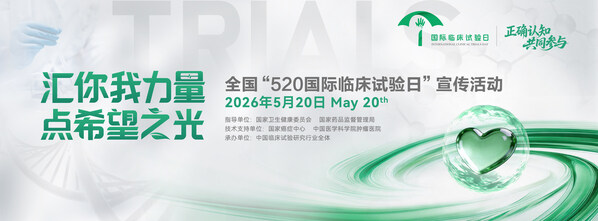
The series of activities began at Peking Union Medical College, Chinese Academy of Medical Sciences, and subsequently visited several top domestic universities and medical institutions, including Tsinghua University, Beijing Anzhen Hospital affiliated with Capital Medical University, and Qilu Hospital of Shandong University. Leveraging their unique characteristics, these institutions carried out diverse and extensive science education and academic exchange activities.
Establishing Three Core Concepts to Reshape Social Perception of Clinical Trials
Clinical trials are a core component of medical research and the essential pathway for new drugs and therapies to transition from the laboratory to clinical application. They are not only crucial for patients’ treatment prospects but also serve as an institutional guarantee driving continuous medical progress. However, due to the professional barriers of medical information, the public, and even some medical practitioners, have long held certain cognitive limitations regarding clinical trials. Among the most representative misconceptions is equating clinical trials simply with high-risk unconventional medical treatments, or even misunderstanding volunteers as passive “guinea pigs” subjected to experimentation. This cognitive bias not only hinders patients’ access to new therapies but also, to some extent, constrains the efficiency of clinical translation in China’s pharmaceutical innovation.
To break down information barriers and reshape social consensus, this “520 International Clinical Trials Day” themed campaign has established three core concepts: Recognize, Respect, and Trust. “Recognize” means elucidating the necessity and scientific nature of clinical trials for human health, clearly establishing them as the cornerstone of modern medical development. “Respect” emphasizes acknowledging the contributions of clinical trial volunteers, viewing them as partners and drivers of medical progress, rather than mere experimental subjects. “Trust” stems from confidence in rigorous ethical review and scientific standards, allowing the public to understand that volunteers within a compliant framework not only receive adequate protection but may also gain access to cutting-edge treatment opportunities. These three dimensions, progressing step by step, form the foundational framework for the public’s understanding of clinical trials.
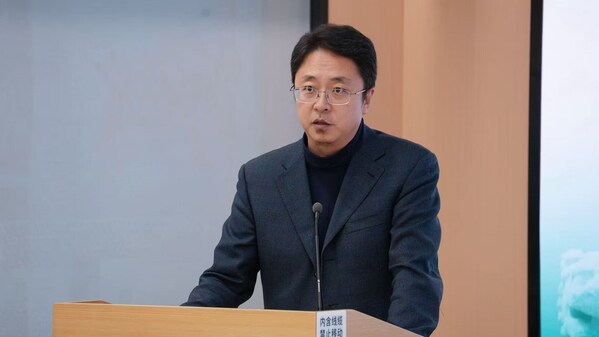
Professor Li Ning, Vice President of the Cancer Hospital of the Chinese Academy of Medical Sciences, stated that clinical trials are the core of modern medical development. Without clinical trials, there would be no medical progress, nor better health for humanity. He pointed out that the societal notion of simply equating clinical trial volunteers with “guinea pigs” is not objective. Volunteers in standardized clinical trials not only enjoy full rights protection but may also achieve long-term therapeutic benefits. Although clinical trials involve some uncertainties, under scientific review and ethical supervision, the associated risks are effectively managed. The current ICH E6 (R3) guideline has adjusted the term “subject” to “participant,” essentially redefining participants as collaborators in the doctor-patient relationship, whose contributions should be duly recognized. Professor Li Ning emphasized that the advancement of medicine is more important than the progress of individual medical skills, and the key to driving medical development lies in technological development and the emergence of new drugs and devices. In this field, every new breakthrough brings changes over five, ten, or even more years. He called on the entire society to approach clinical trials with a scientific and rational attitude, discard one-sided labels, and truly achieve “Correct Understanding, Joint Participation.”
Uniting Industry, Academia, and Research to Accelerate the Translation of Pharmaceutical Innovation
The birth of a new drug is never a closed loop accomplished by a single institution but a systematic project requiring high-level collaboration. It begins with basic research discoveries in universities and research institutes, proceeds through process development and large-scale production by pharmaceutical companies, then enters multi-phase rigorous clinical trials in tertiary hospitals, and finally, after verifying safety and efficacy, is widely applied in clinical practice. In this interconnected translational chain, clinical trials play a pivotal role, linking the preceding and succeeding stages. Only when universities provide source innovation, enterprises solve process translation, and hospitals rigorously control clinical validation—each performing its role efficiently and collaboratively—can scientific breakthroughs on paper truly be transformed into accessible treatment options for patients.
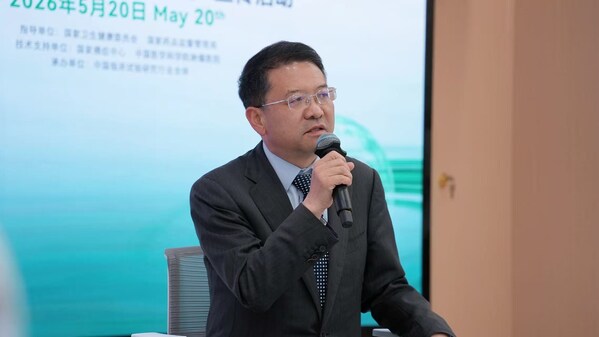
Pharmaceutical companies play an indispensable bridging role in this ecosystem. Dr. Li Zhengqing, Senior Vice President of Merck Sharp & Dohme (MSD) and President of MSD China R&D Center, noted from a corporate practice perspective that sustained investment in R&D is not only the core driving force for enterprise development but also a long-term commitment to patients and society. He introduced that MSD is one of the pharmaceutical companies with the highest proportion of global R&D investment. The MSD China R&D Center is one of only two independent, comprehensive, and fully functional R&D centers outside MSD’s global headquarters. Since its establishment, it has successfully introduced over 80 innovative drugs, vaccines, and new indications to China. At the same time, MSD has always regarded China as an important frontier for global innovation and R&D, establishing the MSD China Innovation Collaboration Center (MCICC) to integrate global scientific resources with the advantages of China’s local innovation ecosystem, thereby promoting the rapid and high-quality clinical translation of breakthrough innovations originating from China. Leveraging the strategic opportunity of the “Healthy China 2030” initiative, MSD R&D is committed to contributing more to public health in China and globally, with a core focus on “More, Faster, Newer, Stronger.”
Focusing on Medical Students to Strengthen the Foundation of Pharmaceutical Innovation Talent
Notably, this year’s campaign has, for the first time, placed a special emphasis on medical schools and medical students. As future clinical decision-makers and researchers, medical students’ depth of understanding of clinical trials directly impacts the efficiency of implementing new therapies at the clinical frontline. By bringing clinical trials into campuses and directly engaging medical students, the campaign systematically popularizes the scientific value of clinical trials and their career development pathways. This not only helps eliminate future doctors’ institutional estrangement from clinical trials but also cultivates, from the source, versatile medical talents equipped with scientific thinking and humanistic care, injecting sustained endogenous momentum into China’s pharmaceutical R&D. It is this foundation of talent that ultimately supports the national height of pharmaceutical innovation.
This “520 International Clinical Trials Day” themed campaign serves both as a cognitive advocacy effort for the entire society and as a new communication starting point for multi-party collaboration. From knowledge dissemination to concept advocacy, from campus outreach to industry linkage, the campaign aims not only to enhance public scientific understanding of clinical trials but also to further promote consensus and synergy among industry, academia, and medical sectors. Looking ahead, it is hoped that with the joint participation of more social forces, clinical trials will be more widely understood, trusted, and participated in, thereby gathering more solid and enduring momentum for the sustained development of China’s pharmaceutical innovation.