

ShanghaiMay 21, 2026 /PRNewswire/ — The 19th Global Award for Sustainable Architecture™ was recently announced at Mimar Sinan Fine Arts University in Istanbul, Turkey, with works by five selected architects and international teams receiving the award:
- Ye Man — Sealink Architects, China
- Doan Thanh Ha, Vietnam
- Loreta Castro Reguera & José Pablo Ambrosi — Taller Capital, Mexico
- Amelia Tavella, France
- Andreas Kipar — LAND, Germany
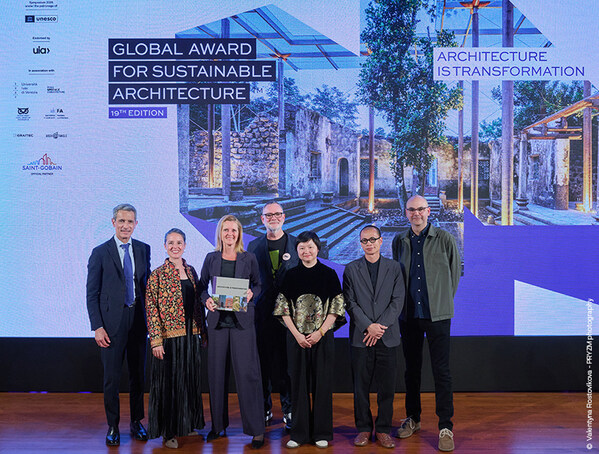
Saint-Gobain Group Chairman and CEO Benoit Bazin with the winning architects
Saint-Gobain Group, as the official partner, has supported the award for three consecutive years, fully reflecting the shared commitment to sustainable and responsible architecture. Through the Global Award for Sustainable Architecture™, Saint-Gobain is also dedicated to promoting the dissemination and implementation of more sustainable, inclusive, and innovative architectural practices.
The Global Award for Sustainable Architecture™ was founded in 2006 by architect and scholar Jana Revedin, and annually honors five architects, urban planners, or landscape architects whose work embodies responsibility, innovation, and commitment to sustainability. The award not only emphasizes responses to contemporary social, environmental, and cultural challenges but also highlights concrete contributions to the transformation of the built environment. Five architects or teams who have previously received the Global Award for Sustainable Architecture™ have later been awarded the highest international honor in the field of architecture—the Pritzker Architecture Prize, including Chinese architectural scholar Wang Shu.
Since 2011, the award has been sponsored by UNESCO, and since 2024, it has received support from the International Union of Architects (UIA), gradually establishing itself as a benchmark in the global architectural community. The Global Award for Sustainable Architecture™ is not just an award but also a community that brings together architecture professionals dedicated to ethics, sustainability, and architectural innovation.
The theme of this year’s award is “Architecture Is Transformation,” emphasizing architecture as a driving force in construction processes, resource management, usage, and profound societal change. The winning projects demonstrate adaptive and innovative approaches, with their design, construction, and urban planning serving as levers for sustainable transformation, while focusing on local context, expertise, materials, and communities.
This year, the award jury commended the winning projects for their commitment, methodological consistency, and impact at political and social levels. The works of the five selected architects and international teams powerfully illustrate the potential of architecture as a vehicle for driving sustainable change. Their projects demonstrate how architecture can play a role in simultaneously influencing regions, resources, uses, and social dynamics.
Among the winners, Chinese architect Ye Man, lead of the “Sealink Architects” team, advocates for wood-based prefabricated buildings that are biodegradable, reversible, and based on traditional mortise-and-tenon structures, while integrating cutting-edge technology. Her projects stem from the patient refinement of experimental prototypes, always focusing on local spirit, customs, and circular economy principles.
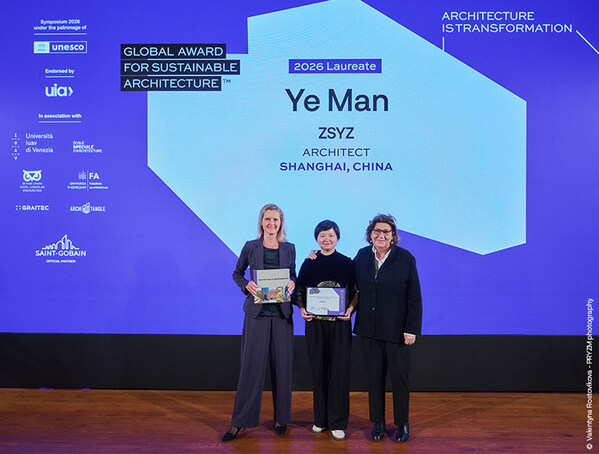
Jana Revedin (left) presents the award to Ye Man (center)
Her architecture seeks to simplify, refine, and reduce environmental impact by reconnecting with Chinese architectural wisdom. Ye Man stated: “We choose wood as a building material, based on the traditional symbiotic relationship between humans and trees.”
For the jury, Ye Man’s work perfectly embodies the values of “adaptability, regeneration, and empowerment,” demonstrating how “doing more with less” can become a conscious, constructive, and ecologically resilient act.
Some of Ye Man’s architectural works shared:
Tongde Hall, Longji Village, Hainan Province
The restored Tongde Hall and Jiangxing Ancestral Hall integrate into the community, with their ruins echoing the undulating stone-paved square.
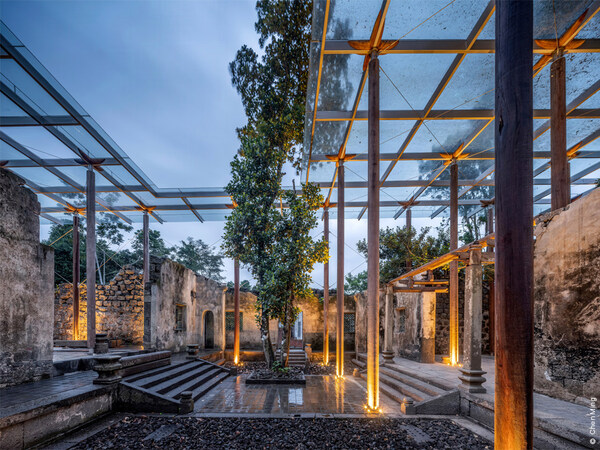
A century-old banyan tree is displayed in the center of a courtyard open to the sky.
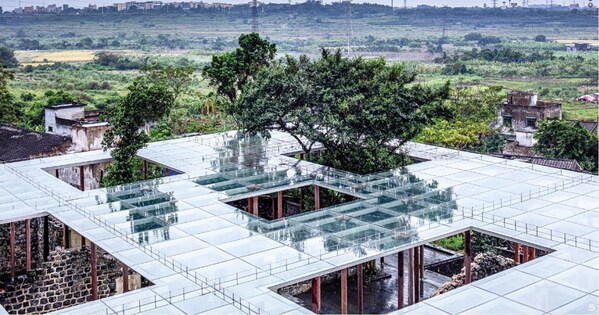
Naya Village, Chengmai County, Hainan Province
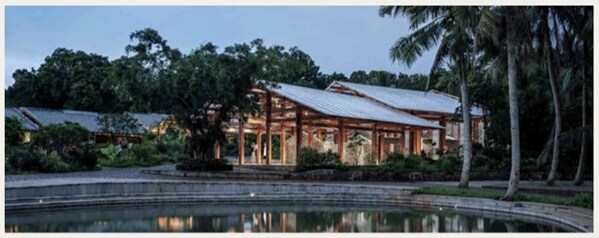
Three luminous canopies create new public thresholds. Under polycarbonate roofs, traditional Hainan agricultural sheds are reinterpreted.
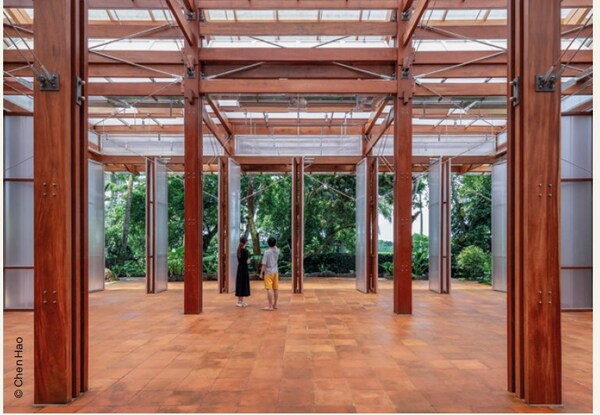
The interior space of the reception pavilion, combining a demountable wooden structure with lightweight polycarbonate panels.
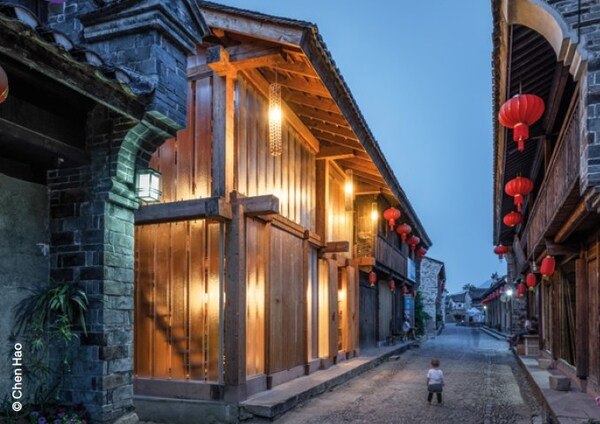
Qiantong Residence, Ninghai County, Zhejiang Province
This wooden structure draws inspiration from traditional craftsmanship while opening outward with expansive glass curtain walls.
As the official partner of the Global Award for Sustainable Architecture™, Saint-Gobain congratulates the winning and participating architects and teams this year, thanking them for their exploration and contributions in the field of sustainable architecture. It also hopes to continue working with the architectural academic and professional communities to promote the application of innovative building materials and the popularization of sustainable architecture.