

BeijingMay 22, 2026 /PRNewswire/ — On May 13, Nissan Motor Co., Ltd. released its full-year and fourth-quarter financial results for fiscal year 2025 (April 2025 – March 2026), with operating profit remaining positive for both the full year and the fourth quarter. Against the backdrop of sustained pressure in the global automotive industry, intensifying price competition, and accelerated electrification transformation, this financial report is regarded as a phased progress report following Nissan’s implementation of the “Re:Nissan” plan.
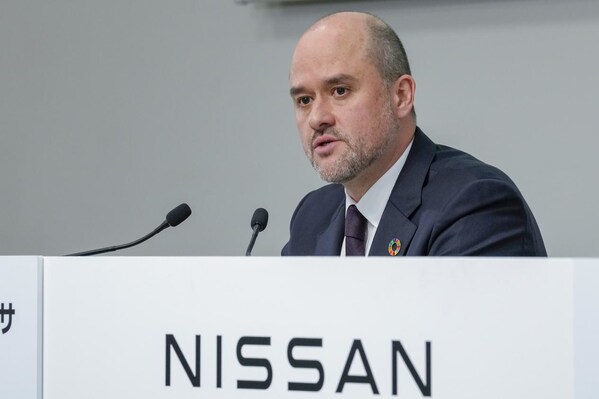
Nissan Motor Co., Ltd. CEO Ivan Espinosa stated: “Fiscal year 2025 was a year of steady progress under the ‘Re:Nissan’ plan. We solidified our foundation and began to see tangible progress in our financial performance. At the same time, we established a long-term vision of ‘Empowering life through intelligent mobility.’ Nissan has moved beyond the recovery phase and is entering a growth phase.”
Steady Progress in “Re:Nissan,” Multiple Targets Achieved
In fiscal year 2025, Nissan’s global sales reached 3.15 million units, primarily driven by the three major markets of the United States, China, and Japan. Consolidated net revenue stood at 12.0 trillion yen, with operating profit of 58 billion yen. In the fourth quarter (January – March 2026), Nissan’s global sales totaled 894,000 units, with consolidated net revenue of 3.43 trillion yen and operating profit of 68.1 billion yen. Free cash flow turned positive in the second half of fiscal year 2025, reaching 112 billion yen, indicating signs of recovery.
As of March 2026, Nissan’s financial position remained robust, with ample liquidity totaling 3.6 trillion yen, including nearly 2.2 trillion yen in cash and cash equivalents and 1.4 trillion yen in loans provided to sales finance companies. Additionally, the company had 2.3 trillion yen in unused credit lines available for withdrawal when necessary, providing support for resilience amid uncertainty.
In fiscal year 2025, Nissan steadily advanced key initiatives under the “Re:Nissan” plan. Significant progress was made toward the cost reduction target of 500 billion yen, including savings of 200 billion yen in fixed costs and 55 billion yen in variable costs. Production optimization was deepened, with an announced consolidation of global production plants from 17 to 10. Integration work is underway at seven of these plants, including capacity transfers. In research and development, operational optimization measures—including redefining the functional division of global R&D centers and improving work efficiency—enabled Nissan to reduce cost per working hour by 18% while maintaining quality and delivery standards, moving toward the 20% target. In the United States, retail-driven product portfolio optimization continued to enhance business quality; in Japan, sales were boosted by focusing on new product launches; and in China, a more targeted new energy vehicle strategy was adopted to strengthen orderly and precise market participation.
Long-Term Vision Takes Shape, China Market Enters “Dual Role” Positioning
In April this year, Nissan Motor Co., Ltd. unveiled its long-term vision—”Empowering life through intelligent mobility”—establishing a customer-centric strategic direction. This vision integrates intelligent mobility into daily life through Nissan’s “AI-defined vehicle” strategy, offering a variety of electrification technology options.

Nissan will streamline its global vehicle lineup from 56 models to 45, eliminating underperforming models and reallocating investments to high-growth areas. At the same time, Nissan will expand the powertrain options for each model, providing consumers with more choices, increasing per-model sales, and strengthening the company’s operational foundation. As part of the new product lineup plan, Nissan’s model strategy will focus on four categories: Heartbeat, Core, Growth, and Partner models.
Nissan is adjusting its global business strategy, redefining the roles of its three major markets: Japan, the United States, and China. As one of Nissan’s three key global markets, the China market assumes a dual role: serving as a core market, providing clear and compelling value to Chinese customers, and acting as a global innovation and export hub, strengthening Nissan’s global product lineup.
This dual positioning of the China market enables it to support local market growth while enhancing Nissan’s global product portfolio strength. At the same time, Nissan is deepening its “In China, for the World” strategy. On one hand, leveraging the N-series new energy product matrix, it is deepening localization to align with local user needs, offering Chinese customers compelling innovative products, experiences, and services. On the other hand, it is committed to transforming the China market into a global innovation and export hub, leveraging China’s innovation capabilities and efficient R&D speed to develop globally competitive technologies and products.
To date, Nissan’s product matrix in China covers multiple powertrain types, including pure electric, plug-in hybrid, range-extended electric, and intelligent fuel-powered vehicles, spanning segments such as sedans, SUVs, and pickups. Leveraging its global technological expertise and a diverse electrified powertrain lineup, Nissan is comprehensively enhancing its competitiveness in China’s new energy market.
As a global innovation and export hub, the China market will fully leverage its advantages in response speed, cost control, and advanced intelligent technologies. Relying on the mature localized R&D, production, and supply chain systems of Dongfeng Nissan and Zhengzhou Nissan, Nissan has built a complete closed loop in China, from R&D and design to production and export. With its industrial chain advantages and innovation vitality in electrification and intelligence, China is becoming a key output base for Nissan’s global product matrix. The evolving role of the China market also reflects how multinational automakers are re-evaluating China’s value in the intelligent and new energy vehicle supply chain.
N7 and Frontier Pro officially began exports this year. Nissan plans to export the N7 to Latin America and Southeast Asia, and the Frontier Pro to Latin America, Southeast Asia, and the Middle East. In the future, the NX8 and other models will also be exported to specific global markets.
Accelerated New Energy Offensive to Meet Diverse User Needs
Nissan’s new energy product offensive in China is progressing steadily. On April 8 this year, Nissan’s N-series first SUV model, the NX8, was officially launched, marking the beginning of the new energy SUV era following Nissan’s strategic transformation in China. The NX8 achieves comprehensive advancements in four dimensions: powertrain, electronic and electrical architecture, space, and safety. With three core values—”Big Brand, Big Space, Big Intelligence”—and deep co-creation with ecosystem partners, it targets the needs of mainstream family users in the 200,000 yuan price range. The model offers both pure electric and range-extended powertrain options, fully meeting diverse market user demands.
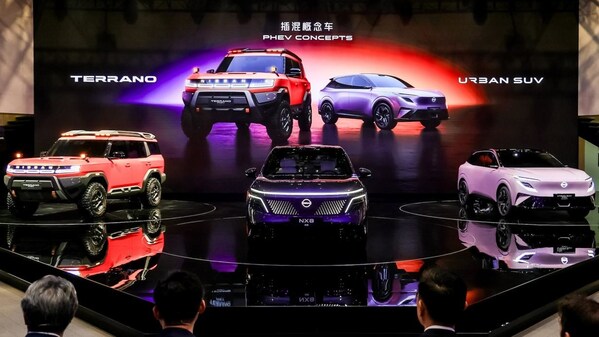
Following the NX8, Nissan made a strong push in the new energy赛道. During the 2026 Beijing Auto Show, Nissan unveiled the Urban Plug-in Hybrid SUV Concept and the Nissan Terrano Plug-in Hybrid Concept, adding two new members to Nissan’s new energy SUV lineup. This marks the start of the new energy SUV era while underscoring Nissan’s commitment to deepening its presence in China. The Urban Plug-in Hybrid SUV Concept is a strategic forward-looking work created by integrating global resources and focusing on Chinese user needs. The Nissan Terrano Plug-in Hybrid Concept targets the new energy hardcore off-road market, continuing Nissan’s off-road DNA and serving as a key product for Zhengzhou Nissan’s foray into the new energy off-road segment. Within the next year, Nissan will launch five new energy models, including the two new energy SUV concepts mentioned above, fully meeting consumer demands and driving Nissan’s strategic transformation in the China market.
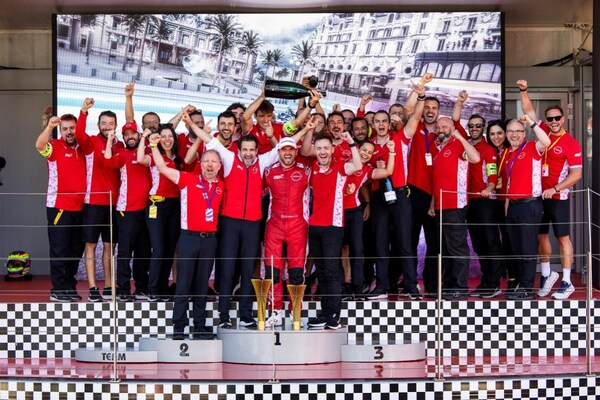
During the 2026 Beijing International Automotive Exhibition, Nissan also announced that its joint venture in China, Dongfeng Nissan, has become the official partner for the Chinese round of the 12th season of the Formula E World Championship. Nissan has competed in Formula E for eight consecutive seasons, winning the drivers’ championship and finishing third in the teams’ championship last season. In the first ten rounds of this season, the Nissan Formula E Team has stood on the podium six times and secured one race win. On June 20 in Sanya, and July 4 and 5 in Shanghai, the Nissan Formula E Team will bring three exciting races to China, and Nissan is eager to share the fun and passion of Formula E electric motorsport with more Chinese consumers.
Net Profit Expected to Turn Positive in 2026
For fiscal year 2026 (April 2026 – March 2027), Nissan expects the business environment to remain challenging, with factors such as intensified competition, exchange rate fluctuations, and inflation continuing to exert pressure. Against this backdrop, Nissan forecasts consolidated net revenue of 13 trillion yen, operating profit of 200 billion yen, and net profit of 20 billion yen for fiscal year 2026. The company remains committed to achieving positive automotive operating profit and free cash flow by the end of fiscal year 2026, excluding tariff impacts.
Espinosa stated: “In fiscal year 2026, we will build on this foundation, advancing through strict cost management and faster product launches to deliver on the ‘Re:Nissan’ promise, driving improvements in sales and profitability.”