

BeijingMay 25, 2026 /PRNewswire/ — On May 23, 2026, the “Healthy Weight, Psoriasis-Free Future” public welfare program for psoriasis chronic disease management, hosted by the Beijing Anzhengxin Health Service Center and supported by the caring enterprise Innovent Biologics, was warmly launched in Beijing. On the occasion of the International Skin Love Day on May 25, this event focused on the pain points of co-management in patients with psoriasis complicated by overweight/obesity under the dual chronic disease burden. It brought together industry experts, patient organization representatives, and public welfare partners to build a scientific, warm, and powerful health support platform for psoriasis patients through diverse formats such as science popularization sharing, roundtable dialogues, and health interactions.
Policy Guidance, Demand-Driven: Embarking on a New Journey of Chronic Disease Management
Psoriasis is a chronic inflammatory disease, and overweight/obesity is a common comorbidity. The two interact through the “metabolic-immune” axis, significantly affecting patient treatment outcomes[1-2]. In recent years, related academic research has continued to heat up, with multiple consensus statements and guidelines emphasizing the importance of comorbidity management, highlighting the urgent need for psoriasis patients to achieve scientific weight management and standardized disease control[3].
Against this backdrop, the Psoriasis Chronic Disease Management Public Welfare Program was officially launched. With “Healthy Weight, Psoriasis-Free Future” as its core theme for 2026, it focuses on the co-management of psoriasis and obesity, responding to the requirements of the “National Weight Management Year” and the “Three-Year Action for Skin Health”. It plans three core actions: patient science education projects, co-management patient education tool support, and doctor-patient interactive public consultations, covering the entire chain of science education, tool empowerment, and medical support to help psoriasis patients achieve scientific chronic disease management.
Empowering Through Professional Science Education: Making Psoriasis Treatment No Longer a Blur
In China, the proportion of psoriasis patients with comorbid overweight/obesity exceeds 60%[4]. The two influence each other, forming a “bidirectional vicious cycle”: the higher the BMI, the higher the risk of progressing to severe psoriasis later on[5-6], while the inflammatory response of psoriasis often exacerbates metabolic disorders, thereby promoting obesity[2]. Additionally, psoriasis patients with high BMI who previously used biologics are more prone to poor efficacy compared to those with normal weight[7], further increasing the treatment difficulty for this group.
Dr. Sheng Yujun, Associate Chief Physician of the Dermatology Department at China-Japan Friendship Hospital, pointed out in his science popularization sharing: “Psoriasis patients with comorbid overweight/obesity should pay attention to lifestyle interventions such as diet and exercise. In terms of treatment choices, individualized plans need to be considered based on BMI characteristics. The dilemma of poor efficacy in overweight/obese patients lies in the fact that elevated BMI may alter the distribution volume and clearance rate of antibody drugs in the body, leading to insufficient exposure to biologics and reduced treatment effectiveness[7]. Doctors often take this characteristic into account when selecting treatment plans, opting for regimens that are as unaffected by BMI as possible. Fortunately, the continuous innovation and implementation of drug development technologies have effectively helped high-BMI patients overcome the dilemma of reduced efficacy. For example, antibody Fc fragment engineering technology can enhance the recycling of antibodies, increasing peak blood concentration and exposure, offering new solutions for psoriasis patients with high BMI.”

Dr. Sheng Yujun, Associate Chief Physician, China-Japan Friendship Hospital
Meanwhile, during the roundtable discussion, Dr. Qu Yufeng, Associate Chief Physician of the Endocrinology Department at Beijing Jingmei Group General Hospital, added: “Obesity is a metabolic disease. High-BMI psoriasis patients are prone to forming a vicious cycle of ‘immune inflammation → metabolic disorder → obesity → worsened inflammation.’ Due to this immune-driven metabolic dilemma, many psoriasis patients with elevated BMI find it difficult to break the cycle, achieve and maintain an ideal weight through diet and exercise alone, which also affects the overall treatment outcome of psoriasis. Therefore, these patients require more proactive and effective metabolic intervention measures. It is noteworthy that in recent years, GLP-1 (glucagon-like peptide-1) and related dual-target drugs have provided important tools for weight and metabolic management. As research deepens, industry exploration has moved beyond the single GLP-1 target towards innovative directions of dual-target synergy, such as glucagon (GCG) and glucose-dependent insulinotropic polypeptide (GIP) receptors, aiming to simultaneously promote energy expenditure, reduce visceral fat, and improve metabolic function, offering a new dimension for the co-management of metabolism and inflammation. Chinese innovative pharmaceutical companies are also leading the way in this field.”

Dr. Qu Yufeng, Associate Chief Physician, Beijing Jingmei Group General Hospital
Additionally, Dr. Wang Liangmin, Chief Physician of the Dermatology Department at Northeast International Hospital, mentioned during the roundtable story-sharing session: “To address the management challenge of psoriasis complicated by overweight/obesity, we can optimize treatment outcomes for these patients through multidisciplinary co-management. In this process, dermatologists should pay more attention to the overall management and chronic disease management of patients, helping psoriasis patients break the misconception that ‘being overweight is a minor issue’ and guiding them to establish a long-term health concept of ‘anti-inflammation plus weight control.’ This helps patients achieve comprehensive goals of stable skin lesions, improved metabolism, and enhanced quality of life, allowing more patients to return to a healthy and confident lifestyle.”
Dr. Miao Guoying, Chief Physician of the Dermatology Department at the Affiliated Hospital of Hebei University of Engineering, added: “In clinical practice, dermatologists should proactively move beyond the traditional mindset of only looking at skin lesions. They should incorporate metabolic risk screening, weight management, and lifestyle guidance into routine care, while also paying attention to individualized medication for patients with comorbid overweight/obesity. This promotes the shift of psoriasis treatment from single lesion management to comprehensive management of skin and metabolic comorbidities. We look forward to building a more robust multidisciplinary collaboration system in the future to help patients achieve long-term benefits.”

Health Living Room – Roundtable Story Session (Discussion guests from left to right: Shi Xingxiang, Founder of Psoriasis Patient Mutual Aid Network; Dr. Qu Yufeng, Associate Chief Physician, Beijing Jingmei Group General Hospital; Dr. Miao Guoying, Chief Physician, Affiliated Hospital of Hebei University of Engineering; Wang Luguang, Founder of Niuba New Media; Dr. Wang Liangmin, Chief Physician, Northeast International Hospital)
Targeted Therapy: Advancing Psoriasis Treatment into a New Era of Chronic Disease Management
The progress in psoriasis treatment has always been built on a deepening understanding of its pathogenesis—from the early days of “knowing only that skin lesions recur, but not the root cause,” to gradually clarifying the core IL-23/IL-17 inflammatory axis, and then precisely targeting key points to optimize drugs at the molecular level. With each step forward in understanding, treatment becomes more precise, and patients gain greater confidence in returning to normal life.
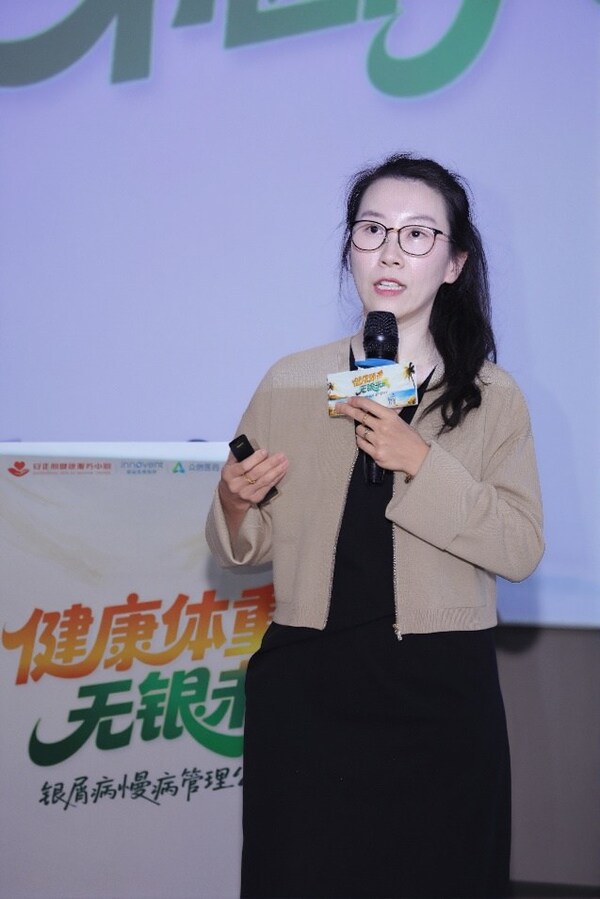
Dr. Wang Xiaoyang, Chief Physician, Beijing Anzhen Hospital, Capital Medical University
Dr. Wang Xiaoyang, Chief Physician of the Dermatology Department at Beijing Anzhen Hospital, Capital Medical University, pointed out in his science popularization sharing: “In the new era of psoriasis management, equal emphasis must be placed on efficacy, safety, and convenience, moving towards a long-term controllable chronic disease management model. From early broad-spectrum inhibition to the iteration of targets, each generation of drug advancement stems from a deeper understanding of the disease mechanism. Today, treatment choices have evolved from target iteration to molecular-level optimization. By modifying and optimizing specific parts of the drug, we can increase drug exposure, helping difficult-to-treat psoriasis populations, such as those with high BMI or involvement of special areas (e.g., scalp, face, private parts), achieve robust responses. Extending the drug half-life allows for longer dosing intervals during the maintenance phase (e.g., once every three months), meeting the needs of long-term chronic disease management and special patient populations[8-9]. Only by understanding the essence of the disease, choosing the right targeted direction, and benefiting from innovation and molecular technology advancements can we help the majority of psoriasis patients achieve deep clearance of skin lesions, long-term disease stability, and confidently return to a high-quality life.”
Sustained Public Welfare Empowerment: Psoriasis Chronic Disease Management Care Extends Beyond a Single Event
This Beijing event marks the starting point of the public welfare program and the beginning of long-term companionship for psoriasis chronic disease management. In the future, the project will continue to focus on the chronic disease management needs of psoriasis patients and implement more heartwarming initiatives. Psoriasis chronic disease management is never a solitary battle; the pursuit of a healthy weight is never a source of pressure or burden. The Beijing Anzhengxin Health Service Center is committed to continuously providing high-quality health education for patient groups. As a leading local innovative pharmaceutical company, Innovent Biologics will also maintain a long-term focus on chronic disease areas such as immunology and metabolism, developing high-quality biologics to help chronic disease patients regain confidence in life. This “Healthy Weight, Psoriasis-Free Future” public welfare program aims to dispel cognitive misconceptions with science, warm the path forward with companionship, help high-BMI patients understand the correlation between psoriasis and overweight/obesity and choose appropriate treatment plans, achieve health in the process of psoriasis chronic disease management, embrace lightness in warm companionship, and stride towards their own “psoriasis-free future” through scientific treatment.
References:
- Song Q, et al. Mol Med Rep. 2025 Jun;31(6):169.
- Vata D, et al. Life (Basel). 2023 Sep 22;13(10):1947.
- Wang H, et al. Sci Rep. 2025 Apr 1;15(1):11158.
- Li L, Wu Z, Wu M, et al.. Int Immunopharmacol. 2020;89(Pt B):107008
- Yuling Shi, et al. 2026 AAD. Poster ID: 75120