

BEIJINGMay 26, 2026 /PRNewswire/ — Siemens Energy has recently signed a contract with Mai-Liao Power Corporation to supply key power generation equipment and provide long-term service support for a new gas-fired combined cycle power plant project. The project plans to build two gas-fired combined cycle units, each with a capacity of 1,200 MW, totaling 2,400 MW, to replace the existing 1,800 MW coal-fired power generation units.
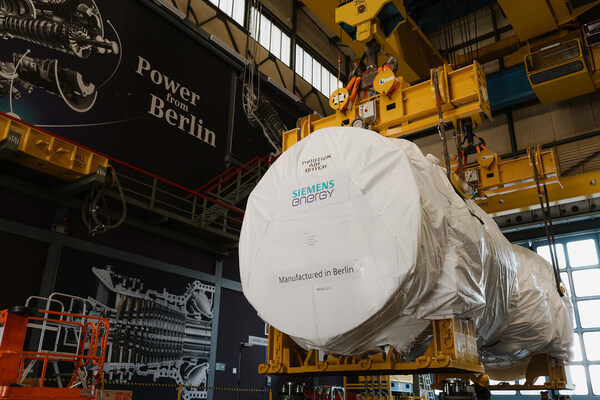
HL-class gas turbine manufactured at Siemens Energy’s Berlin factory
Under the contract, Siemens Energy will supply four SGT6-9000HL gas turbines, along with matching steam turbines and generators. The project utilizes Siemens Energy’s HL-class gas turbine technology, which enhances power generation efficiency while improving the flexibility of unit start-stop and load regulation to better align with the dispatch needs of the power system. Once the new units are operational, carbon dioxide emissions per unit of electricity generated are expected to be reduced by approximately 58% compared to the existing coal-fired units.
John Lee, Managing Director of Siemens Energy Taiwan, stated: “The Mai-Liao project is a crucial step in advancing the modernization and decarbonization of Taiwan’s power infrastructure. As the power generation structure continues to evolve, the demand for highly efficient, dispatch-flexible, and long-term stable units is growing. Siemens Energy is honored to participate in this project and to support Taiwan’s energy transition with our technology and long-term service capabilities.”
Siemens Energy has extensive project experience in the gas-fired combined cycle power generation sector, having provided gas power generation technology, key equipment, and service support to multiple power plants in Taiwan. The two new units of the Mai-Liao project are scheduled to achieve commercial operation by December 31, 2029, with an expected annual power generation of approximately 14 billion kWh, accounting for about 5% of Taiwan’s total annual electricity output, and will be integrated into the unified dispatch of the power system.