

From Industry-Driven Agricultural Support to Multi-Faceted Assistance Promoting a Dual-Driven Approach of Low-Carbon Industry and Prosperous Communities
Linshu, Shandong May 27, 2026 /PRNewswire/ — Today, PepsiCo, in partnership with the China Foundation for Rural Development, held the launch ceremony for the “Low-Carbon Prosperous Village” project in Linshu County, Shandong Province. As a multinational corporation committed to driving rural industry revitalization and sustainable development in China, PepsiCo has donated nearly 7 million RMB in total for this project, with donation management handled by Give2Asia. The three-year project aims to start in Linshu, the location of PepsiCo’s Shandong food production base, and create a replicable model for building “low-carbon prosperous villages,” providing practical references for green revitalization in more counties.
Under the policy guidance of the “15th Five-Year Plan” proposal, which explicitly calls for building livable, workable, and beautiful villages, and the Ministry of Agriculture and Rural Affairs’ push to establish a green, low-carbon, circular agricultural industry system, the project will help Linshu County establish innovative, low-carbon, and eco-friendly models through measures such as creating low-carbon, efficient green production bases and building agricultural service centers. This will achieve sustainable, low-carbon, circular agricultural development while increasing farmers’ incomes. Additionally, the project will create low-carbon community activity spaces, conduct low-carbon environmental science popularization activities, foster green concepts locally, enhance the county’s overall low-carbon environmental awareness, and jointly build livable villages.
This year marks the 45th anniversary of PepsiCo’s entry into China. PepsiCo has always upheld its long-term commitment to “Rooted in China, Serving China, Partnering with China.” The Low-Carbon Prosperous Village project is a key practice of PepsiCo’s pep+ (PepsiCo Positive) initiative in China. It is not just a charitable investment but a pragmatic exploration of sustainable agricultural development pathways.
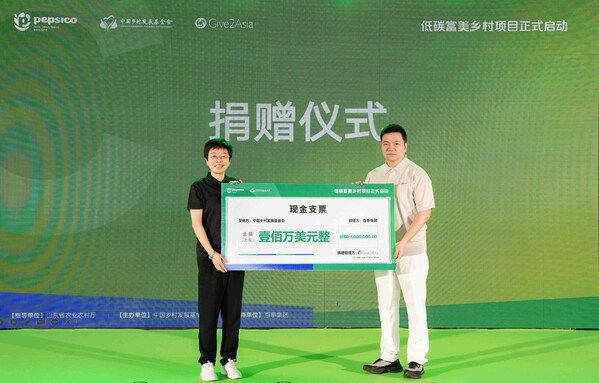
PepsiCo and the China Foundation for Rural Development hold the launch ceremony for the “Low-Carbon Prosperous Village” project in Linshu County, Shandong Province
Rooted in the Sweet Potato Industry, Building a Foundation for Green Revitalization
Shandong, as a major agricultural province, is a key location for PepsiCo’s production bases in China. In addition to establishing the PepsiCo Shandong food production base, since 2023, PepsiCo and the China Foundation for Rural Development have implemented a sweet potato industry assistance project in Linshu County. This project established a “village collective + cooperative + farmer” mechanism to link agriculture with farmers, built standardized seedling bases, and promoted mechanization and green pest control technologies, effectively improving sweet potato yield and quality, strengthening village collective economies, and increasing farmers’ incomes.
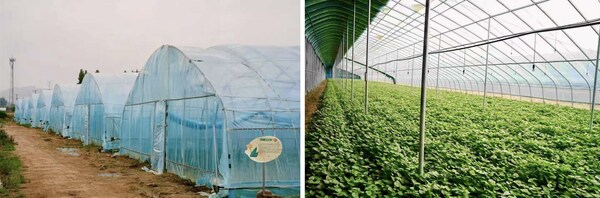
Greenhouse for new sweet potato varieties at the cooperative
Building on the results of earlier assistance, the sweet potato industry, as a core vehicle for promoting low-carbon industrial development locally, has achieved phased successes. However, challenges such as insufficient technological equipment levels in the industry, inadequate adoption of green production methods, weak branding and sales channels, and the need to improve community environmental awareness still constrain the coordinated advancement of sustainable industrial development and prosperous community building.
Based on deep trust accumulated through long-term cooperation and rural work experience, PepsiCo and the China Foundation for Rural Development have targeted the integrated development direction of low-carbon and prosperous villages. This achieves a natural transition from industry assistance to green and low-carbon upgrades, driving comprehensive rural revitalization to more deeply integrate with the “dual carbon” goals.
Guided by Dual Carbon Goals, Creating a Replicable Model for “Low-Carbon Prosperous Villages”
From industry assistance to green empowerment, PepsiCo and the China Foundation for Rural Development, guided by the “dual carbon” goals, are systematically implementing a series of innovative measures in Linshu County, Shandong Province, focusing on two major areas: low-carbon industry and prosperous communities.
In terms of low-carbon industrial development, the project centers on the sweet potato industry to create a full-chain green development model: building a regional organic waste recycling center, pioneering the establishment of a demonstration “carbon reduction station,” introducing modular degradation equipment to process agricultural waste like sweet potato straw, producing high-quality organic fertilizer, and constructing a regional resource recycling network; establishing a green technology integration demonstration zone of no less than 500 mu (approx. 83 acres), vigorously promoting low-carbon technologies such as water-saving irrigation, organic fertilizer substitution, and green pest control; building an agricultural service center to provide social services including agricultural materials, agronomic techniques, and production consulting for 100 households covering 500 mu of farmland monthly, promoting cost reduction and efficiency gains in production and increasing farmers’ incomes; organizing expert teams to conduct technical training, cultivating a group of new-type professional farmers and cooperative leaders skilled in green production techniques.
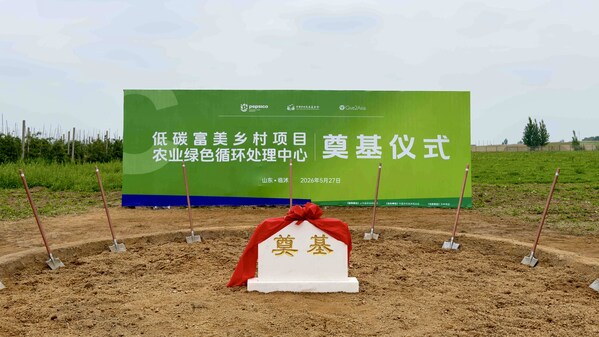
Groundbreaking ceremony for the agricultural green recycling center of the Low-Carbon Prosperous Village project
In terms of building livable and prosperous communities, the project focuses on the “elderly and children” as key service targets to create low-carbon, friendly, and sustainable rural communities: establishing two low-carbon community activity spaces in townships, equipped with energy-saving and environmentally friendly facilities and activity supplies, serving as green platforms for residents to learn, interact, and engage in activities. Implementing a points redemption system based on waste sorting and upcycling, the project will organize community low-carbon themed activities for villagers, cultivate local low-carbon volunteer teams, foster green concepts, and enhance the county’s overall low-carbon environmental awareness. Meanwhile, PepsiCo will encourage its employee volunteers to participate in community services, providing technical support and activity assistance, strengthening the emotional connection between the company and the community, and jointly building eco-friendly, livable villages.
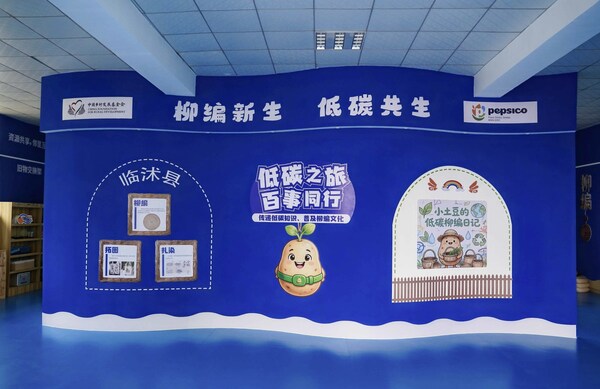
Low-carbon community activity space in a township
Rooted in China for 45 years, PepsiCo has always walked alongside this land. From industry assistance to green revitalization, from the sprouting of a single seedling to the renewal of an entire village, PepsiCo is taking concrete actions to help pave a green revitalization path for vast rural areas that is visible, learnable, and replicable, allowing corporate social responsibility to take root and flourish amidst green waters and lush mountains.