

TianjinMay 29, 2026 /PRNewswire/ — From May 28 to 31, the 2026 Vision Health Innovation and Development International Conference (VisionChina 2026) was grandly held at the Tianjin Meijiang Convention and Exhibition Center. Bausch + Lomb, with over 170 years of global ophthalmic research expertise, made a significant appearance with a full product matrix from its Pharmaceutical and Health Consumer divisions. Focusing on three major national eye health issues—asthenopia, dry eye disease, and age-related macular degeneration (AMD)—the company showcased innovative eye drop achievements and a comprehensive professional dietary supplement system of ocular lutein. Adhering to a full-cycle eye care philosophy of “precise external intervention and scientific internal nourishment,” Bausch + Lomb presented a systematic eye health solution covering from the ocular surface to the fundus, aiming to enhance national eye health literacy and promote high-quality industry development.
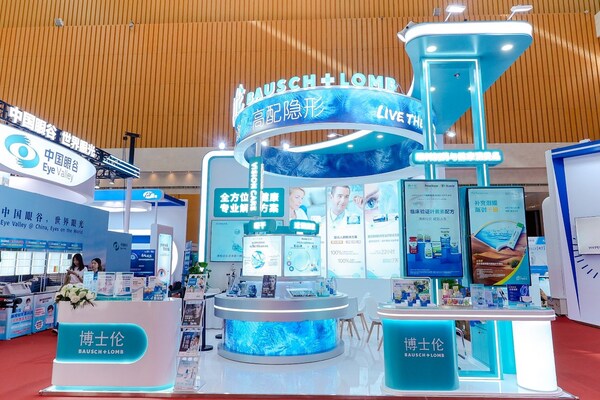
Focusing on Asthenopia Prevention and Control: New Runjie Products Refine the Ocular Surface Precision Intervention System
Currently, the comprehensive penetration of digital lifestyles has exponentially increased the ocular load on the population, making asthenopia a common eye health issue across all age groups. Over the past decade, with the normalization of online education and remote work, asthenopia has shown a significant trend toward younger demographics. The prevalence of asthenopia among children and adolescents has surged from 10%–20% before the pandemic to 50%–65%1.
Prolonged use of video terminals leads to decreased blink frequency and sustained ciliary muscle spasm, not only causing eye discomfort such as soreness, dryness, and blurred vision but also potentially accompanied by systemic symptoms like headaches, nausea, and lack of concentration. Individuals with myopia or presbyopia are more prone to these asthenopia issues.
According to the “Expert Consensus on the Diagnosis and Treatment of Asthenopia (2014),” since most asthenopia patients suffer from abnormal ocular accommodation function, the fundamental issue to address for these patients is improving accommodative ability2. However, most current asthenopia products on the market only temporarily relieve symptoms like ocular surface dryness and soreness, failing to effectively intervene in the root cause of accommodative dysfunction. “Tired eyes are not just about taking a rest.” Simply closing the eyes or looking into the distance only temporarily alleviates ocular surface discomfort and cannot resolve the core issues of sustained ciliary muscle spasm and accommodative dysfunction.
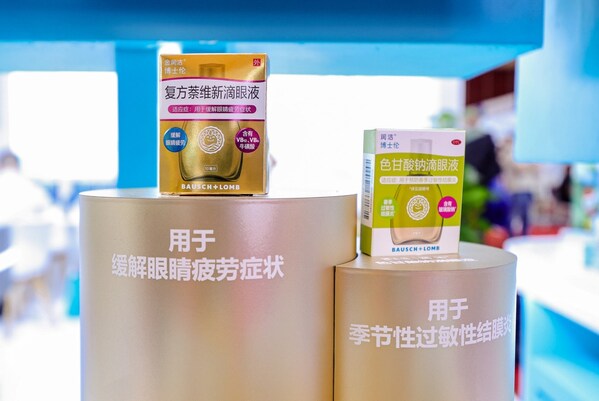
At this exhibition, Bausch + Lomb’s Jin Runjie Compound Naphazoline Neostigmine Eye Drops were prominently featured as a core product. As a compound naphazoline neostigmine eye drop with a unique national approval number, Jin Runjie employs a scientifically formulated multi-mechanism synergy. Its core components include Vitamin B12 and Neostigmine Methylsulfate, among other regulatory ingredients, acting on the ciliary muscle to improve ocular accommodative function. It not only alleviates asthenopia caused by daily high-intensity eye use but also improves discomfort associated with presbyopia, while simultaneously addressing conjunctival congestion, providing antipruritic and anti-inflammatory effects, and nourishing and repairing the ocular surface. This achieves a four-fold synergistic effect: relieving eye fatigue, reducing congestion, nourishing and repairing, and providing anti-allergy benefits, all in one.
Also exhibited was Bausch + Lomb’s Runjie Cromoglycate Sodium Eye Drops, used for preventing seasonal allergic conjunctivitis. This product works by stabilizing mast cell membranes and inhibiting the release of allergic mediators like histamine, thereby preventing allergic reactions. These two products further complete the Runjie brand’s full-scenario ocular surface care matrix and solidify its professional expertise in the ophthalmic sub-sector, providing tiered, specialized intervention solutions for people of different ages and needs.
Innovative Dry Eye Solutions: Closed-Loop Upgrade from Moisturizing and Repair to Precision Anti-Inflammation
Dry eye disease, the most prevalent chronic ocular surface disease in China, has a prevalence rate between 21% and 52.4%, showing an increasing trend year by year. Dry eye not only causes persistent dryness, foreign body sensation, and burning sensation but can also lead to corneal epithelial damage and keratitis. In severe cases, it can even affect vision, significantly reducing patients’ quality of life.
However, there is a widespread misconception about dry eye among the public. Most people equate dry eye with “lack of water in the eyes,” relying solely on common artificial tears for temporary hydration. They overlook the core roles of ocular surface barrier damage and chronic inflammation in the development and progression of dry eye, leading to recurrent and difficult-to-treat conditions in moderate to severe dry eye patients.
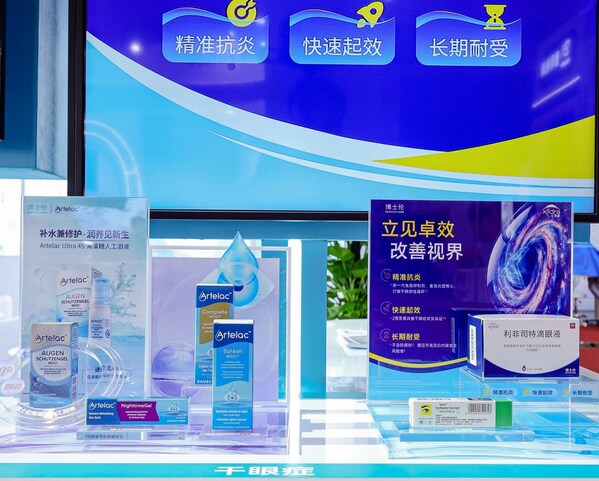
Traditional artificial tears mainly contain sodium hyaluronate, which only physically supplements tears and moistens the ocular surface. They cannot repair the damaged ocular surface barrier or address inflammation-related issues of dry eye. Addressing this industry pain point, Bausch + Lomb has dedicated 25 years of innovative R&D in the dry eye field. This time, it brought two innovative achievements—Artelac Ultra 4S Trehalose Artificial Tears and Lifitegrast Ophthalmic Solution—constructing a comprehensive dry eye intervention closed loop encompassing “basic moisturizing, barrier repair, and precision anti-inflammation.”
Among them, Artelac Ultra 4S Trehalose Artificial Tears (nicknamed “Angel Tears”) breaks through the limitations of traditional single-action moisturizers. It uses a scientific formula combining trehalose, fucoidan, dexpanthenol, and sodium hyaluronate for a four-fold synergistic effect: Trehalose, known as the “sugar of life,” provides unique cell protection by replacing water molecules to stabilize cell membrane structures, protecting ocular surface cells from dehydration damage and stabilizing the tear film. Fucoidan has anti-inflammatory and antioxidant effects, helping to reduce hyperosmolar stress-related ocular surface inflammation and cell damage. Dexpanthenol (a precursor of Vitamin B5) strengthens the protective film on the ocular surface, promoting the repair and regeneration of the damaged ocular surface barrier. High-purity sodium hyaluronate can bind many times its weight in water, forming a stable moisturizing film on the ocular surface, providing long-lasting lubrication and reducing tear evaporation. This product is sold through regular domestic e-commerce channels as a cross-border eye drop, allowing Chinese consumers timely access to international high-quality products, addressing unmet needs in the dry eye field and providing more advanced professional solutions for patients with moderate to severe dry eye and post-ophthalmic surgery repair.
This product is particularly suitable for patients with moderate to severe dry eye, individuals undergoing corneal repair after ophthalmic surgery, and those at high risk for dry eye, such as people in air-conditioned environments or who use electronic screens for long periods. Its user-friendly design further enhances the experience: it can be used directly while wearing contact lenses without removal; it uses an internationally standard OSD (preservative-free vacuum) device to prevent bacterial growth, improving cost-effectiveness.
Complementing Artelac Ultra 4S is Lifitegrast Ophthalmic Solution, the world’s first-in-class small molecule LFA-1/ICAM-1 antagonist for ophthalmic use. It precisely blocks T-cell-mediated inflammatory pathways on the ocular surface, inhibiting the release of inflammatory factors, and addressing the inflammatory cause of dry eye at its source. Compared to traditional dry eye immunosuppressants, Lifitegrast offers advantages such as rapid onset of action and sustained improvement in dry eye signs and symptoms, providing a new option for long-term management of dry eye patients.
The launch of these two products marks Bausch + Lomb’s completion of full-process dry eye coverage—from basic moisturizing for mild dry eye to barrier repair for moderate to severe dry eye, and precision treatment for inflammatory dry eye. It also drives the upgrade of dry eye treatment in China from “symptom relief” to “etiological treatment.”
Scientific Leadership in Fundus Health: AREDS Series Research Empowers Macular Protection
With the acceleration of China’s population aging, AMD (Age-Related Macular Degeneration) has become the third leading cause of blindness in China after cataracts and glaucoma, with its incidence rising annually. Data shows that the prevalence of AMD in the Chinese population aged 70 and above is 20.2%3. Central vision loss caused by late-stage AMD is irreversible, severely affecting the quality of life of middle-aged and elderly individuals and imposing a heavy burden on families and society. However, public awareness of AMD is extremely low, with most patients diagnosed already in the late stages, missing the optimal intervention window. Scientific research indicates that appropriate ocular nutritional supplementation can significantly slow the progression from intermediate to late-stage AMD, making it a key aspect of fundus health management.
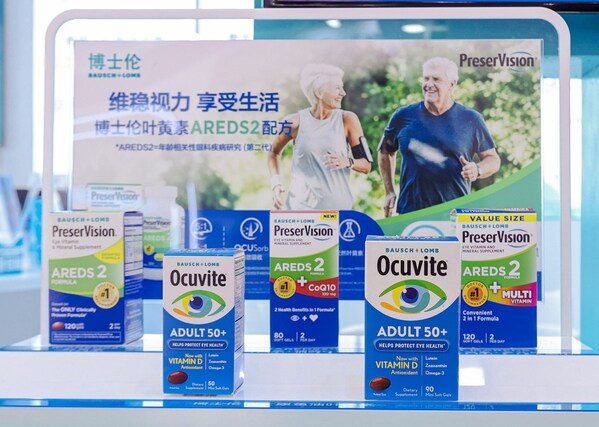
In the field of ocular nutrition research, the AREDS and AREDS2 studies led by the U.S. National Eye Institute (NEI) are globally recognized milestones in age-related eye disease research. Initiated in 1992 and spanning over 30 years, these studies enrolled more than 12,000 participants, making them one of the largest and longest-followed AMD clinical studies globally. Bausch + Lomb has fully sponsored this research since 1995 and has been deeply involved in formula development and clinical validation, becoming a pioneer in the field of global AMD nutritional intervention.
In 2001, the initial AREDS study results were published, demonstrating that a specific combination of antioxidants and minerals could reduce the risk of progression from intermediate to late-stage AMD by 25% over five years and reduce the risk of moderate vision loss by 19%4. Based on these results, Bausch + Lomb launched the first PreserVision lutein product that same year. In 2013, the AREDS2 study further optimized the formula, replacing beta-carotene with lutein and zeaxanthin, which are more readily absorbed by the eye. This not only reduced the risk of late-stage AMD progression by an additional 18% but also eliminated the potential lung cancer risk associated with beta-carotene in smokers, significantly improving formula safety5. In 2022, the NEI published the 10-year follow-up results of the AREDS2 formula, confirming its long-term stable clinical efficacy, reducing the risk of neovascular AMD progression by 20%, further solidifying its gold standard status in AMD nutritional intervention6.
Currently, the demand for ocular nutritional supplementation among the population is continuously growing. When selecting ocular nutrition products, consumers should not focus solely on the single ingredient “lutein” but should pay more attention to the product’s formula basis, clinical research foundation, and brand’s professional expertise. Only products based on authoritative research and professional development can provide reliable support for fundus health. The PreserVision lutein series highlighted at this exhibition is precisely a professional ocular nutrition product strictly adhering to the authoritative AREDS2 formula. This series uses a scientific golden ratio of 5:1 lutein to zeaxanthin, combined with patented OCUSorb absorption technology, which can increase the bioavailability of lutein by 3.2 times and zeaxanthin by 2.2 times, ensuring that nutrients reach the fundus to be effective. In addition to the basic formula, PreserVision also offers compound formulas with added ingredients like Coenzyme Q10 and multivitamins, which, while protecting fundus health, also address the heart health and systemic antioxidant needs of the middle-aged and elderly population. As the leading ocular nutrition brand recommended by North American ophthalmologists and holding a leading market share, PreserVision, grounded in over 30 years of clinical evidence and leveraging its core advantages of genuine R&D, genuine clinical research, and genuine import, provides scientific and credible fundus nutrition solutions for China’s AMD high-risk population.
Also exhibited was Ocuvite Lutein, targeting the daily eye care needs of the general adult population. With a simplified and scientific formula, it provides daily ocular nutritional support, helping to filter blue light and resist oxidative damage. It is suitable for workplace professionals who use electronic screens for long periods and heavy eye users, completing Bausch + Lomb’s ocular nutrition product matrix covering from daily to professional eye care.
From precise intervention for ocular surface discomfort to long-term protection of fundus health, Bausch + Lomb has constructed a full-cycle eye health protection system with an “internal and external” integrated solution. Leveraging the top industry platform of VisionChina 2026, it not only showcased its cutting-edge scientific research achievements and innovative product layout in the eye health field but also conveyed the concept of “scientific eye care and full-cycle management.” As a global leader in the eye health industry, Bausch + Lomb is always committed to the mission of “See better. Live better.” It deeply integrates its global R&D network with the eye health needs of the Chinese population, continuously introducing internationally leading technologies and products. In the future, Bausch + Lomb will continue to take scientific innovation as its core driving force, constantly improve its product matrix, deepen the dissemination of eye health science, help build an eye health service system covering the entire population, contribute to the high-quality development of China’s eye health cause, and protect everyone’s clear vision!
References:
- Chinese Expert Consensus on Diagnosis and Treatment of Asthenopia (2024). Chinese Journal of Ophthalmology, April 2024, Vol. 60, No. 4.
- Expert Consensus on Diagnosis and Treatment of Asthenopia (2014). Chinese Journal of Optometry & Ophthalmology and Visual Science, July 2014, Vol. 16, No. 7.
- Chinese Clinical Diagnosis and Treatment Guidelines for Age-Related Macular Degeneration (2023). Chinese Journal of Ophthalmology, May 2023, Vol. 59, No. 5.
- American Academy of Ophthalmology. Age-Related Macular Degeneration PPP[M], 2020.
- Long-term Outcomes of Adding Lutein/Zeaxanthin and ω-3 Fatty Acids to the AREDS Supplements on Age-Related Macular Degeneration Progression. JAMA, 2022, 140(7): 692–698.