

ShanghaiJune 1, 2026 /PRNewswire/ — In the field of cardiovascular medicine, conducting regular international exchanges and advancing localized medical collaboration are vital pathways to driving disciplinary development and extending high-quality medical services to more people. Since its founding, Shanghai Delta Cardiovascular Hospital has prioritized international academic exchange and domestic medical co-construction as core development directions. On one hand, it actively engages with global cutting-edge technologies and concepts; on the other, it steadily deepens its efforts based on local medical needs, continuously strengthening its specialized capabilities through technological upgrades, talent cultivation, and the establishment of collaborative networks.
From November 2025 to May 2026, several renowned international cardiovascular experts visited for exchanges and discussions, while multiple collaborative projects targeting grassroots and regional medical institutions were successively implemented. These practices not only reflect the hospital’s years of academic accumulation but also validate Delta’s development approach of enhancing its strength through an international perspective and fulfilling social responsibilities through collaborative cooperation.
International Academic Exchange:
Engaging with Global Frontiers, Continuously Refining Diagnostic and Treatment Capabilities
To maintain vitality in specialized development, ongoing exchanges and learning with international authoritative medical platforms and industry experts are essential. Over the years, Delta Hospital has maintained regular communication with renowned cardiac centers and senior scholars worldwide. These exchanges go beyond visits and tours, focusing on clinical thought discussions, optimization of technical methods, and deliberation of complex cases, integrating advanced overseas experiences into daily clinical practice.
November 2025 | Visit from U.S. Expert
Dr. Suyog A. Mokashi, Chief of Cardiovascular Surgery and Director of Aortic and Endovascular Surgery at Temple University Health System in the U.S., visited the hospital. He observed morning handovers, ward rounds, and surgeries in full, engaging in in-depth discussions with the hospital team on key issues such as aortic dissection treatment, the scope of transcatheter aortic valve replacement (TAVR), and surgical management of heart failure. Both sides also shared practical experiences in multidisciplinary collaboration models and surgical quality control, offering new insights for optimizing the treatment of aortic diseases and structural heart conditions.
December 2025 | Visits from Distinguished Professors from Germany and Italy
Prof. Martin Czerny, MD, PhD, MBA, FESC, FEBCTS, FEBVS, Director of the Department of Cardiac and Vascular Surgery at the Heart Center of the University of Freiburg, Germany, and Prof. Gabriele Piffaretti, MD PhD, from the Department of Vascular Surgery at the University of Insubria, Italy, visited for academic exchanges. The two international authorities shared cutting-edge experiences in cardiac and vascular surgery, new endovascular techniques, resident training, and translational research in vascular surgery, providing an international perspective for the hospital’s disciplinary development.
March 2026 | Edwards Surgical Academic Center · Master Class China Tour (Shanghai Station)
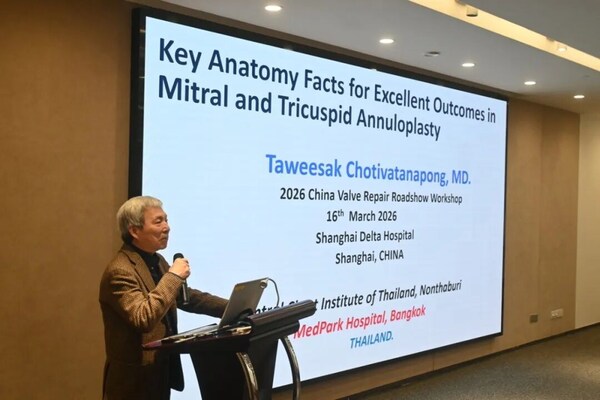
The event was held at Delta Hospital. Prof. Taweesak Chotivatanapong, President of the Thai Association of Thoracic Surgeons and Fellow of the Royal College of Surgeons of Thailand, who specializes in valve repair, presented technical points, operational challenges, and solutions for mitral and tricuspid valve repair using numerous real cases. Concurrently, Prof. Meng Xu from Beijing Anzhen Hospital, Capital Medical University, shared insights on minimally invasive treatment approaches for rheumatic mitral valve repair. Dr. Xia Yu, Executive Director of Cardiac Surgery at Delta Hospital, also introduced the hospital’s distinctive treatment model: leveraging a multidisciplinary team to create a full-process service from precise preoperative assessment and meticulous intraoperative procedures to rapid postoperative recovery, promoting the standardized implementation of minimally invasive valve treatment techniques. The joint exchange between Chinese and international experts effectively facilitated the mutual advancement of valve disease treatment technologies.
May 2026 | Visit from Former AATS President
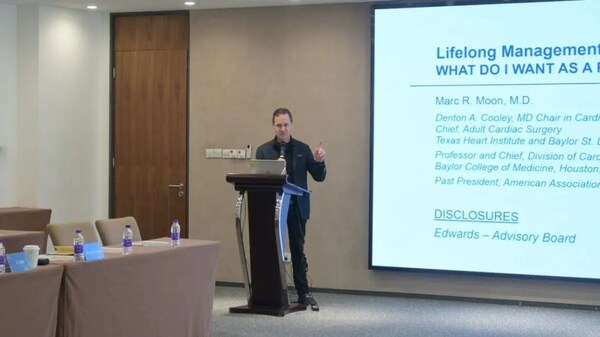
Prof. Marc R. Moon, Chief of Adult Cardiac Surgery at the Texas Heart Institute and former President of the American Association for Thoracic Surgery (AATS), visited and delivered a keynote presentation on the full-cycle management of aortic valve disease. Topics covered included prosthetic valve selection, postoperative anticoagulation management, long-term clinical data on new valve materials, and comparisons of outcomes from different surgical approaches. The Delta team, considering the clinical characteristics of domestic patients, exchanged views on valve usage, reoperation strategies, and minimally invasive techniques, adapting international cutting-edge concepts to local clinical scenarios.
Major Project: AATS Aortic Training Program
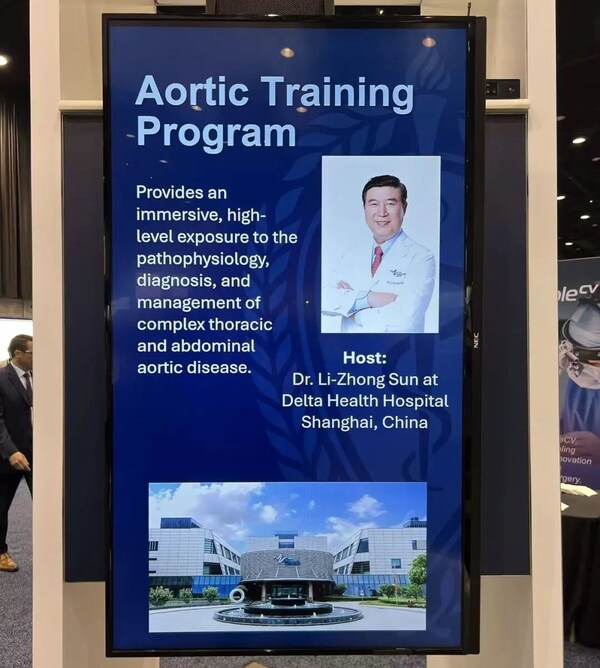
The AATS Aortic Training Program, in which Delta Hospital is deeply involved, is the first international training course established by AATS in China. It has significantly enhanced the academic influence and voice of China’s cardiovascular discipline in the international thoracic surgery field. Jointly initiated by the AATS Foundation, Beijing Anzhen Hospital, and Chinese institutions, the program offers advanced hands-on training in aortic dissection surgery and endovascular repair for cardiothoracic surgeons worldwide, cultivating key talents for aortic disease diagnosis and treatment and promoting global exchange and advancement in aortic treatment technologies.
Uninterrupted international exchanges keep Delta consistently aligned with industry trends. Through a cycle of learning, practice, and improvement, the hospital’s clinical technical system and treatment standards are continuously refined, solidifying its foundation for specialized development.
Domestic Specialized Co-Construction:
Deploying High-Quality Resources, Collaboratively Elevating Treatment Levels
While engaging in external exchanges and learning, Delta Hospital actively assumes industry responsibilities by sharing its mature clinical techniques, management experience, and quality control systems with grassroots and regional medical institutions through long-term collaboration models. These partnerships do not pursue short-term gains but focus on helping partner institutions cultivate professional talent and improve management systems, jointly advancing the overall development of cardiovascular medical services in China.
Hebei Zanhuang | Charity Training Program
To support the development of medical services in Zanhuang County, Hebei Province, the Swire Group launched a special charity project funding the selection of two doctors from Zanhuang County for a six-month training program at Shanghai Delta Cardiovascular Hospital. On May 7, 2026, two doctors—one medical administrator and one cardiologist—from Zanhuang County Hospital and Zanhuang County Traditional Chinese Medicine Hospital arrived at Shanghai Delta Cardiovascular Hospital, officially commencing their training. According to the training schedule, the two doctors will complete programs in cardiology, medical affairs, and hospital management at the hospital.
Suzhou Jiulong Hospital | In-Depth Co-Construction in Cardiac and Great Vessel Surgery
In November 2025, Delta Hospital advanced co-construction efforts in cardiac and great vessel surgery with Suzhou Jiulong Hospital, formally signing a cooperation agreement on May 26, 2026. Under the agreement, Delta dispatches senior physicians to reside in the partner’s wards, providing technical support for complex cardiac and vascular surgeries, intraoperative monitoring, and critical care, while establishing a green channel for two-way referrals. Comprehensive cooperation is also conducted in talent cultivation, clinical research, and quality control. This initiative extends high-quality specialized resources to a broader region, helping build an efficient, interconnected local diagnosis and treatment network.
Yunnan Xishuangbanna | Long-Term Multidisciplinary Technical Collaboration
In June 2026, targeting the Xishuangbanna region of Yunnan, Delta started with charitable clinics and further established a bridge for long-term technical collaboration. The Xishuangbanna People’s Hospital will form a multidisciplinary team to undergo training at Delta, covering roles such as cardiothoracic surgery, anesthesia, nursing, ultrasound, and intensive care. Both parties agreed to regularize personnel training, departmental teaching, and remote consultations. Subsequently, Delta will dispatch professional teams to the local area for surgical demonstrations and on-site guidance, helping the partner hospital achieve autonomous development, transitioning from “one-way assistance” to “mutual growth.”
Conclusion: Upholding a Long-Term Commitment, Building a Future for Specialized Development
Medical progress thrives on exchange, deepens through dedication, and endures with persistence.
Integrating with international standards to refine technology while collaborating domestically to share resources has been Delta Hospital’s consistent path over the years. A professional medical team, a robust diagnosis and treatment system, and an open collaborative philosophy support the hospital’s steady progress. The series of international exchange activities and domestic co-construction projects are true reflections of the hospital’s long-term development strategy in action.
Looking ahead, Delta Hospital will continue to maintain an open stance, broadening its technical horizons through deep international exchanges and extending its service reach through solid inter-hospital collaborations. While continuously enhancing its own capabilities, it will contribute to the ongoing improvement of China’s cardiovascular medical service system, providing the public with higher quality, more standardized, and more accessible diagnostic and treatment services.