

TokyoJune 2, 2026 /PRNewswire/ — Asahi Kasei Corporation (Headquarters: Chiyoda-ku, Tokyo; Representative Director and President: Kojiro Kudo; hereinafter “Asahi Kasei”) announced that ultra-high-power lithium iron phosphate (LFP) battery cells (hereinafter “the cells”) utilizing Acetolyte™ (hereinafter “the technology”), an electrolyte technology with superionic conductivity developed by Asahi Kasei, have been available for sale since March 2026 by German battery manufacturer EAS Batteries GmbH (Headquarters: Thuringia, Germany; hereinafter “EAS”).
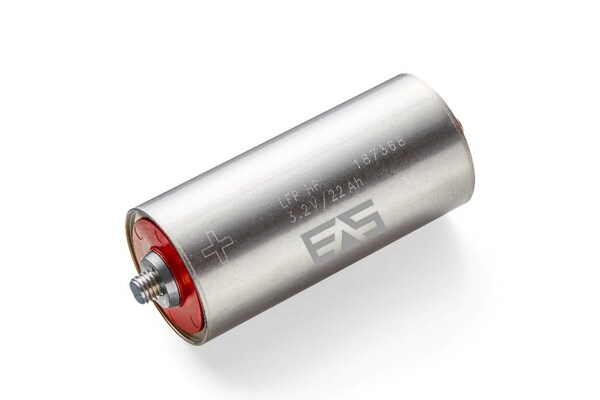
EAS’s ultra-high-power LFP battery cell
The electrolyte using this technology contains acetonitrile, which provides high ionic conductivity, thereby reducing internal battery resistance and enhancing output power. A key feature is its excellent performance, especially under harsh temperature conditions. Asahi Kasei and EAS signed a license agreement for the use of this technology in November 2025※1. The launch of these cells marks a significant milestone in the licensing strategy for Acetolyte™ technology.
Furthermore, EAS is advancing sub-license agreements with battery manufacturers and automotive OEMs for this technology, while also progressing evaluations for application in next-generation 46-series cells. The 46-series cells are large cylindrical lithium-ion battery cells with a diameter of 46 mm. Technology development targets productization within 2026, and prototype cells are already available for supply. In the future, 46-series cells are expected to be widely adopted in various fields, primarily in mobility sectors such as electric vehicles (EVs).
Features of Ultra-High-Power LFP Battery Cells Using Acetolyte™
Performance Summary
- With this technology, output can be improved by up to approximately 60% compared to conventional electrolytes
- Balances high output characteristics※2 with cycle life※3, expected to be widely applicable in industrial fields
The cells are cylindrical lithium iron phosphate (LFP) batteries with a rated capacity of 22 Ah. Under continuous discharge※4, they achieve an output power of 2,550 W/kg, representing an approximately 60% improvement over cells using conventional electrolytes.
Additionally, under 2-second pulse discharge※5 conditions, a maximum output of 3,760 W/kg has been confirmed, an improvement of about 10% compared to conventional products.
Moreover, at room temperature, even under high-load conditions such as 5C/5C and 100% DoD, the cells maintain 80% of their initial capacity after 2,400 charge-discharge cycles, achieving a long lifespan. Stable performance is sustained even under these conditions, where conventional cells tend to degrade. Currently, customers across various industrial fields are conducting evaluations.
Comments from Both Parties’ Representatives
Michael Deutmeyer, Managing Director of EAS Batteries GmbH, stated:
“The commercialization of the new cells using Asahi Kasei’s Acetolyte™ is a key milestone in our strategic partnership. At the same time, joint development for the 46-series cells is progressing smoothly, showcasing our R&D capabilities and synergies in accelerating innovation from concept to market launch.”
Osamu Matsuzaki, Senior Executive Officer, General Manager of R&D Headquarters, and Head of R&D and Intellectual Property at Asahi Kasei Corporation, stated:
“Achieving productization in a short period from the signing of the license agreement in November 2025 to the start of mass production in March 2026 is the result of close collaboration between EAS and Asahi Kasei. The practical application of advanced electrolyte technology within such a short timeframe is highly significant. Going forward, we will continue to contribute to the further evolution of high-performance battery solutions through the development of next-generation cells.”