

ShanghaiJune 4, 2026 /PRNewswire/ — On May 22, Quectel held a seminar in Shanghai on “Digital Medical Care for Children and Adolescents and Millimeter-Wave Applications.” Experts from renowned pediatric hospitals, millimeter-wave radar technology companies, children’s health service platforms, and the Quectel Research Institute gathered to discuss how non-contact sensing technology centered on millimeter-wave radar can extend hospitals’ professional diagnostic capabilities to home-based daily care scenarios.
Guests attending the seminar included: Wang Guanghai, Director of the Brain Development Center at Shanghai Children’s Medical Center; Researcher Zhang Yanfeng from the Capital Institute of Pediatrics; Researcher Shi Shaoying from the School of Information and Electronic Engineering at East China Normal University; Postdoctoral Fellow Gong Xinyu from the Songjiang Research Institute of Shanghai Jiao Tong University School of Medicine; Hua Xiang, General Manager of Shanghai Beisheng Medical; Bian Yizhi, Chairperson of the Beijing Yongzhen Foundation; Tang Jiangang, General Manager of Ningbo Yingxin Micro; and Wang Shunan, Vice President of AnDa Technology. Representatives from the Quectel team included: Zhang Zhen, Dean of the Quectel Research Institute; Chen Jian, Senior Project Manager at the Quectel Research Institute; Zhang Lei, Millimeter-Wave Radar Product Manager at Quectel; and Zhang Yong, LTE Product Manager at Quectel.
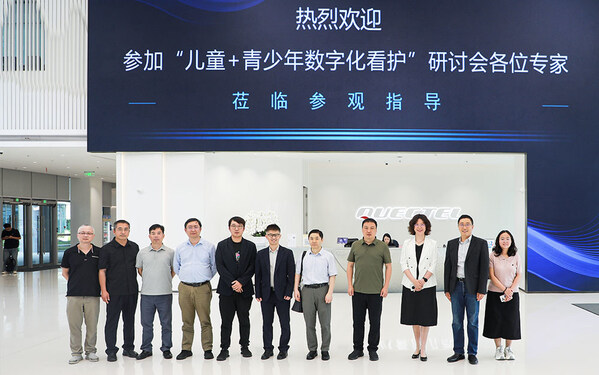
As families increasingly focus on managing the health of children and adolescents, industry competition is shifting from single-device capabilities to comprehensive solutions combining “sensing + connectivity + platform + services.” Attendees generally agreed that contact and non-contact technologies should leverage their respective strengths and work together in real-world scenarios. Only when technological capabilities are integrated with hospital guidance, platform services, and family usage habits can digital care for children and adolescents truly move from “demonstrable” to “implementable.”
Pain Point: More data is useless if it cannot be understood or applied
At the seminar, Wang Guanghai from Shanghai Children’s Medical Center shared his perspective on digital care for children from a clinical viewpoint: “Current sleep quality in children is a health concern for both parents and the medical community. Hospital-specific PSG sleep monitoring devices cannot meet the needs of large patient volumes or long-term monitoring. Sleep quality monitoring particularly requires a home-based setting that can provide doctors with long-term sleep quality monitoring data as a scientific evaluation standard.” He emphasized that future, more valuable digital care must be a service system that smoothly extends hospital expertise into the home environment, rather than just a standalone piece of hardware.
Researcher Zhang Yanfeng from the Capital Institute of Pediatrics, drawing from WHO guidelines, proposed product expectations closer to parents’ daily needs. He stated: “We hope the market can offer a product that clearly tells parents: Are the child’s 24-hour physical activity, sleep, and outdoor time meeting standards? Is screen time or time spent in restrictive positions excessive? Is the infant’s tummy time adequate? This is not just a simple list of data but should have some medical guidance significance, allowing parents to easily know when to adjust their parenting behaviors.” He called on Quectel and industry partners to jointly develop such products, truly transforming international guidelines into practical tools for families.
Technological Breakthrough: Millimeter-Wave Radar as an ‘Invisible Guardian’
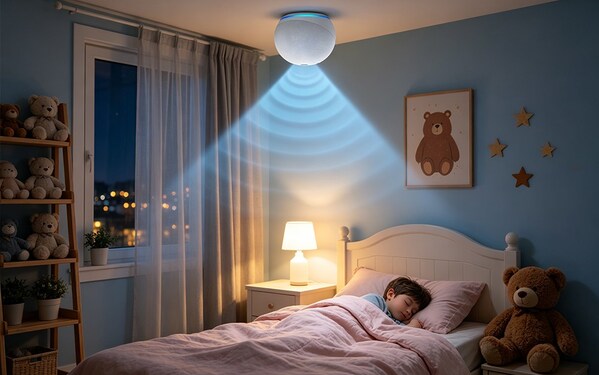
Addressing this challenge, radar expert Shi Shaoying from East China Normal University provided a technological solution. He pointed out that compared to cameras and wearable devices, millimeter-wave radar technology is naturally suited for child care scenarios. These scenarios demand high standards: minimizing interference while ensuring stable and reliable results. The non-contact sensing technology of millimeter-wave radar balances privacy and comfort, making it suitable for long-term, continuous, low-disturbance state sensing. It shows great potential in areas like breathing trends, body movement trends, and detecting presence in or absence from bed. Particularly for different conditions (e.g., sleep-disordered breathing, convulsions, abnormal movement in ADHD), millimeter-wave radar can provide differentiated auxiliary judgments through multi-posture recognition. “We are also continuously advancing the standardization and modularization of millimeter-wave products and algorithms, enabling relevant solutions to move from the lab into children’s bedrooms more quickly.”
Model Innovation: Parents Need ‘Services,’ Not Just ‘Alerts’
Hua Xiang, General Manager of Shanghai Beisheng Medical, added from a service perspective that what parents truly need is not just a terminal that sends alerts, but a comprehensive service system connecting families, platforms, and professional resources. “The value of a platform lies in transforming device data into more understandable service content, integrating health management, online support, and professional advice naturally into the home setting. Only when parents perceive continuous service value does digital care truly achieve a closed loop.”
Scenario Expansion: Child-Friendly Communities and a New AI-Powered Care Ecosystem
Digital care is not limited to the home. In the construction of child-friendly communities, daycare centers and parent-child activity venues can deploy millimeter-wave radar and smart devices to achieve a “hospital-home-community” three-tier collaborative care system. As a promoter of the child-friendly community concept in China, Chairperson Bian Yizhi noted that in the AI era, launching smart devices that genuinely care for children’s physical and mental health is crucial. This not only addresses families’ practical needs but also generates broad and positive social impacts.
Additionally, AI toys and AI smart devices are emerging as new entry points for child care. Future AI toys can not only accompany and educate but also assist in monitoring emotions, activity, and sleep quality through built-in sensors, becoming “caring companions.” Meanwhile, smart desk lamps can provide real-time posture reminders and measure concentration levels, offering health protection for learning scenarios. In terms of nutrition, smart electronic scale solutions can help daycare institutions accurately assess children’s dietary intake, evaluate nutritional balance through digital platforms, and support scientific feeding. These innovative devices collectively enrich the implementation scenarios for digital care.

Quectel’s Strategy: From ‘Connectivity Foundation’ to ‘Scenario Solution Provider’
As the host representative, Zhang Zhen, head of the Quectel Research Institute, stated that digital care for children and adolescents is not a task that a single component can accomplish independently. It is the result of the synergistic effect of connectivity, sensing, terminals, platforms, and services. “If you only look at one sensor, the value of this direction is limited. But if you combine millimeter-wave radar, multi-sensor sensing, wireless connectivity, edge computing, device management, and platform integration capabilities, there is an opportunity to form a truly replicable and scalable industry-wide solution.”
He said that Quectel already possesses full-chain capabilities ranging from communication modules, smart terminals, short-range connectivity, and antennas to millimeter-wave radar. “We welcome partners in fields such as AI toys, educational products, and nutritional monitoring to jointly create standards and solutions for digital child care. In the future, we hope to work with medical institutions and ecosystem partners to deepen and solidify the direction of digital care for children and adolescents.”
Future Outlook: Hospital-Home Collaboration, from Concept to Reality
This seminar marks Quectel’s official entry into the vertical scenario of “digital medical care for children and adolescents.” The company will continue to collaborate with medical institutions and ecosystem partners to promote the coordinated development of technical standards and service norms, enabling more families to experience digital care that is “warm, privacy-conscious, and professional.”
About Quectel
Shanghai Quectel Communication Technology Co., Ltd. (Stock Code: 603236) is a globally leading provider of IoT total solutions, with a comprehensive range of IoT products and services. These include cellular modules (5G/4G/3G/2G/LPWA), automotive-grade modules, smart modules (5G/4G/Edge Computing), short-range communication modules (Wi-Fi & BT), GNSS positioning modules, satellite communication modules, antennas, and other hardware products, as well as AI solutions, IoT platforms, industrial intelligence, smart agriculture, certification and testing services, RTK network correction services, and other solutions. The company has extensive industry experience, and its products are widely used in smart transportation, smart energy, financial payment, smart cities, wireless gateways, smart agriculture & environmental monitoring, smart industry, smart living & healthcare, smart security, and other fields. For more information, please visit Quectel’s official website at https://www.quectel.com.cn/, follow the WeChat official account/video channel “移远通信,” or send an email to marketing@quectel.com.