

- StrataMap Spatial empowers researchers to conduct spatial biology studies at true single-cell resolution, expanding the boundaries of scientific discovery.
- Compared to probe-based technologies, it detects more than 2 times the number of genes per sample in whole-transcriptome analysis across large tissue capture areas.
SAN DIEGO, California, June 9, 2026 /PRNewswire/ — On June 8, 2026, Illumina (NASDAQ: ILMN) announced the launch of the StrataMap Spatial solution, expanding researchers’ capabilities in spatial transcriptomics with exceptional coverage breadth and resolution. Formerly known as the “Illumina Spatial Transcriptomics Solution,” StrataMap Spatial is a sequencing-based, end-to-end research solution designed to uncover spatial transcriptomic insights. Spatial transcriptomics has become a vital tool in developmental biology, neuroscience, and oncology research, and StrataMap Spatial will further enhance researchers’ ability to map tissue architecture, decipher tissue function, track tumor progression, and identify novel drug targets that advance precision medicine.
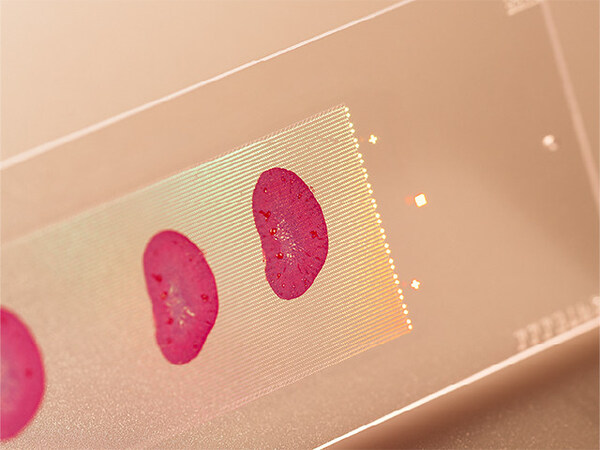
Illumina Launches StrataMap Spatial Solution: A High-Performance, End-to-End Spatial Whole-Transcriptome Research Solution
“Spatial biology offers a new perspective on how genetic information is expressed in the human body,” said Dr. Steve Barnard, Chief Technology Officer at Illumina. “Our customers are already leveraging the exceptional discovery capabilities of StrataMap Spatial to map complex tissues and study tumor development. This launch combines this novel spatial transcriptomics solution with our customized bioinformatics workflows, furthering Illumina’s commitment to building an ecosystem of biological insights that transforms scalable data into boundless scientific discovery.”
The Most Sensitive Spatial Transcriptomics Technology, Delivering Comprehensive Transcriptomic Insights
StrataMap Spatial combines large, flexible capture areas, single-cell resolution, and unbiased whole-transcriptome analysis. These features enable customers to systematically assess spatial relationships at the cellular, regional, and structural levels, providing deeper insights into tissue organization and function. Compared to other panel-based technologies, StrataMap Spatial uses a sequencing-based approach to detect more than twice the number of genes per sample. This solution covers not only the coding transcriptome but also non-coding genes and pseudogenes, revealing underlying biological signals driving tissue function and disease. Additionally, StrataMap Spatial is compatible with various enrichment techniques, including those for identifying relevant immune response markers such as VDJ clonotypes.
StrataMap Spatial meets the growing demand from research and biopharmaceutical customers for scalable spatial biology studies through the following features:
- Capture Area: A 7.5 cm² capture area supports serial tissue section analysis, helping researchers understand tissue architecture from multiple dimensions. Users can also perform parallel analysis of multiple fresh-frozen tissue sections of varying sizes and shapes. The solution is species-agnostic, compatible with various eukaryotic tissue samples and tissue RNA of different quality levels. Illumina is actively developing a dedicated solution for FFPE samples, planned for initial customer access in 2027.
- Scale: StrataMap Spatial can process over 2,000 samples per year.
- Speed: Supports parallel processing of multiple slides, with library preparation and sequencing using traditional NGS methods; sequencing can be completed in as little as 22 hours. Including imaging, sequencing, and analysis, customers can go from sample to insights within five days.
- Accessibility: Customers can integrate StrataMap Spatial into existing histopathology workflows without investing in expensive dedicated systems, and run it on NovaSeq and NextSeq series sequencers, providing an accessible entry point for spatial biology research for existing customers.
Dedicated Spatial Transcriptomics Software Provides Powerful, Scalable Multi-Omics Analysis Capabilities
StrataMap Spatial offers end-to-end bioinformatics support, helping customers conduct research from initial imaging to data analysis. DRAGEN and Illumina Connected Multiomics efficiently process large-scale spatial data while maintaining the depth, resolution, and sensitivity achieved by StrataMap Spatial. The DRAGEN StrataMap analysis pipeline simplifies spatial exploration through machine learning-driven cell segmentation, transcript assignment, and initial clustering. Illumina Connected Multiomics combines tissue-level visualization with data filtering, clustering optimization, and downstream biological interpretation, enabling interactive, data-driven spatial analysis. The platform also supports integrating transcriptomic data with genomic, epigenomic, and proteomic data, providing a more comprehensive understanding of the biological processes shaping human health through multi-omics overlay analysis.
Early Applications of StrataMap Spatial Focus on Tumor Microenvironment Research and Complex Tissue Development Mapping
In a pilot study, researchers from Beth Israel Deaconess Medical Center (BIDMC) used StrataMap Spatial to create spatial maps of long-difficult-to-analyze lymphatic tissues and constructed the first whole-transcriptome spatial dataset of human lymphatic collecting vessels. Dr. Ioannis Vlachos, Director of the Spatial Technology Platform at BIDMC, and his team used serial section imaging data from StrataMap Spatial to reconstruct three-dimensional models of tissue architecture at cellular resolution.
“Illumina’s StrataMap Spatial demonstrated high sensitivity, allowing us to analyze these challenging samples,” said Dr. Vlachos. “Its large capture area enabled us to place multiple serial sections simultaneously, constructing whole-transcriptome, single-cell resolution 3D maps of these extremely precious tissues and uncovering new biological mechanisms.”
Researchers from the Cancer Research UK Cambridge Institute and the University of Cambridge have conducted initial validation studies of StrataMap Spatial on a set of primary central nervous system (CNS) tumor samples. The project is led by Dr. Richard Mair, a neurosurgeon at Addenbrooke’s Hospital and researcher at the University of Cambridge, in collaboration with the Spatial Profiling and Analysis Centre of Excellence (SPACE) led by Dr. Dario Bressan. The team analyzed brain glioma and glioblastoma tissues to characterize their complex tumor microenvironments, with the ultimate goal of supporting more precise surgical strategies and personalized treatments.
“Previously, we could not study large tissue sections of CNS and other tumor types at whole-transcriptome, single-cell resolution,” said Dr. Ania Piskorz, Genomics Lead at the Cancer Research UK Cambridge Institute and the University of Cambridge. “Now, being able to spatially resolve these large tissue sections will help us better understand the tumor microenvironment, build more informative tumor maps, identify mechanisms of treatment resistance, and improve our ability to predict patient treatment responses.”
Dr. Ania Piskorz will present the team’s preliminary findings at the European Association for Cancer Research (EACR) Annual Meeting on June 10. From June 8 to 11, visit Illumina’s booth at the EACR Annual Meeting to learn how StrataMap Spatial can support your cancer research.
StrataMap Spatial is available for pre-order this month.
Click here to learn more about StrataMap Spatial.
Forward-Looking Statements
This press release may contain forward-looking statements that involve risks and uncertainties. Important factors that could cause actual results to differ materially from those in any forward-looking statements include: (i) challenges inherent in developing and launching new products and services, including adjusting and scaling manufacturing operations and relying on third-party suppliers for key components; (ii) our ability to manufacture robust and reliable instruments and consumables and develop reliable software solutions; and (iii) customer acceptance and adoption of our newly launched or updated products, which may or may not meet our and customer expectations; in addition to other factors detailed in our filings with the U.S. Securities and Exchange Commission, including our most recent Form 10-K and Form 10-Q, or disclosed in public conference calls, the dates and times of which will be announced in advance. We undertake no obligation, and do not intend, to update these forward-looking statements, review or confirm analysts’ expectations, or provide interim reports or updates on the progress of the current quarter.
About Illumina
Illumina is dedicated to advancing and inspiring genomics to improve human health. Our focus on innovation has made us a global leader in gene sequencing and array technologies, serving customers in the research, clinical, and applied markets worldwide. Our products are widely used in life sciences, oncology, reproductive health, agriculture, and other emerging fields. For more information, please visit www.illumina.com or follow Illumina on WeChat.