

 |
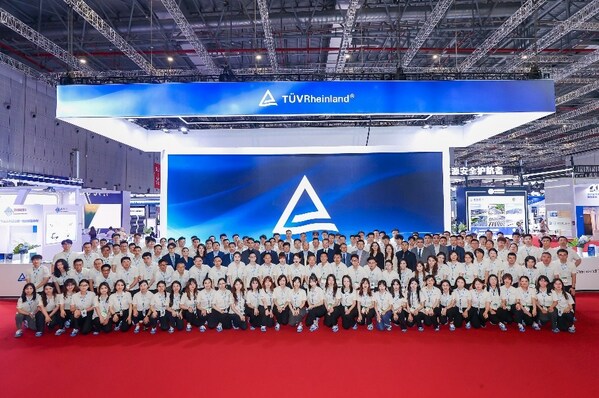
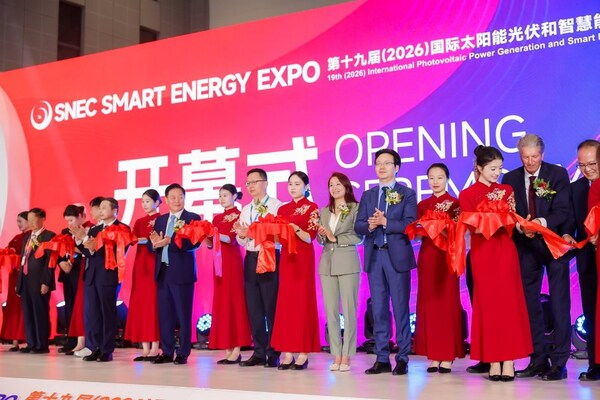
ShanghaiJune 9, 2026 /PRNewswire/ — From June 3 to 5, the 2026 SNEC SMART E International Smart Energy Conference & Exhibition was held at the National Exhibition and Convention Center (Shanghai). TÜV Rheinland Greater China (referred to as “TÜV Rheinland”), an internationally independent third-party testing, inspection, and certification organization, once again appeared at this exhibition, comprehensively showcasing its technical expertise and service capabilities covering various segments of the new energy industry chain, spanning top-level design, technical standards, market access, and ecological cooperation.
TÜV Rheinland Appears at 2026 SNEC SMART E, Professionally Safeguarding New Pathways for Energy Transition
TÜV Rheinland Appears at 2026 SNEC SMART E, Professionally Safeguarding New Pathways for Energy Transition
During the exhibition, Li Weichun, Senior Vice President of Solar and Commercial Products Services and Global Power Electronics Products Services at TÜV Rheinland Greater China, was invited to host a themed roundtable forum titled “Carrying Forward the Past and Ushering in the Future.” He engaged with corporate leaders from Trina Solar Home, BOE Energy, Skyworth PV, Hongdao New Materials, Sineng Electric, Chint Power, Ant Digital Technologies, and Caesar New Energy. The discussion revolved around three core topics: building a secure and efficient data flow system with trusted technology, implementing sustainability as a full-chain zero-carbon practice, and upgrading from product exports to the export of technology, standards, and ecosystems. From bottlenecks in AI digital intelligence implementation to the foundational value of upstream new materials, from brand shortcomings in energy storage exports to pathways for trusted data circulation, guests shared unique insights based on challenges and practices in their respective sectors.
Facing increasingly complex new power systems, TÜV Rheinland’s expert team delivered multiple technical sessions covering full-chain quality and safety from equipment to systems. Topics included:
- In-depth analysis of the IEC 62786 series standards, the “operating rules” for distributed energy grid integration
- Traceable ESG value chain management practices for power stations
- Anti-glare performance evaluation at airports and along transportation routes
- Space environment adaptability testing for commercial aerospace photovoltaic modules
- Reliability analysis of perovskite products and interpretation of multi-scenario application solutions
- Opportunities and challenges for lightweight non-metallic materials in the energy storage sector
- Quantitative reliability assessment framework for TOPCon photovoltaic modules
Focusing on European Green Access, Interpreting New “French Carbon” Policies
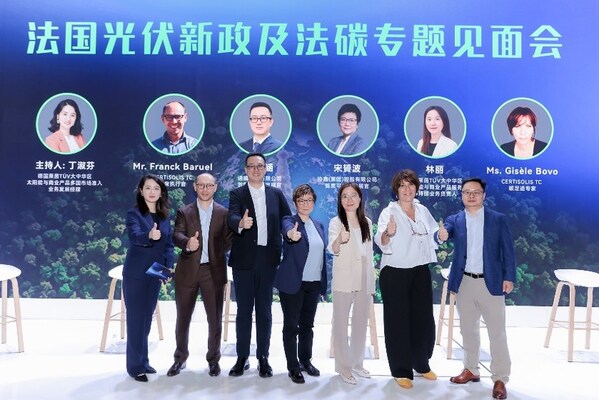
In response to increasingly stringent green access requirements in the EU market, TÜV Rheinland, in collaboration with French authoritative body CERTISOLIS TC, held a “Special Meeting on New French Photovoltaic Policies and French Carbon.” At the meeting, Mr. Franck Baruel, CEO of CERTISOLIS TC, along with corporate representatives from Tongwei Co., Ltd. and GCL Group, jointly interpreted key provisions of new policies such as PPE3 and NZIA. They provided practical compliance ideas and implementation pathways for Chinese enterprises to address challenges like mandatory carbon footprint certification and circular economy management.
Leading Technical Standards, Two Industry Specifications Released
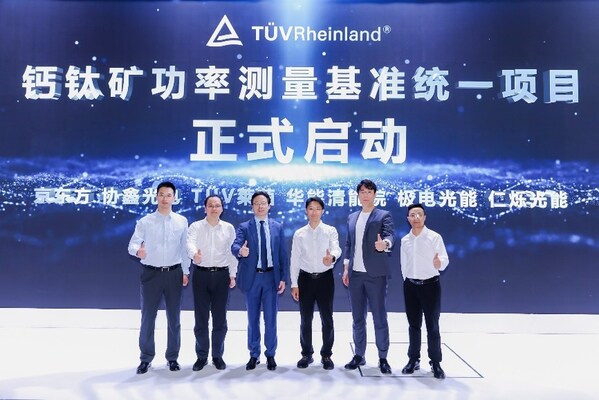
In the field of cutting-edge technology, TÜV Rheinland collaborated with upstream and downstream industry players to promote the establishment and unification of industry standards. TÜV Rheinland, together with Huaneng Clean Energy Research Institute, and leading companies such as GCL Optoelectronics, GCL Photoelectric, BOE, and Renshine Solar Energy, officially launched the “Unification of Power Measurement Benchmarks for Perovskite Photovoltaic Modules,” laying a critical standard foundation for the commercial application of this technology.
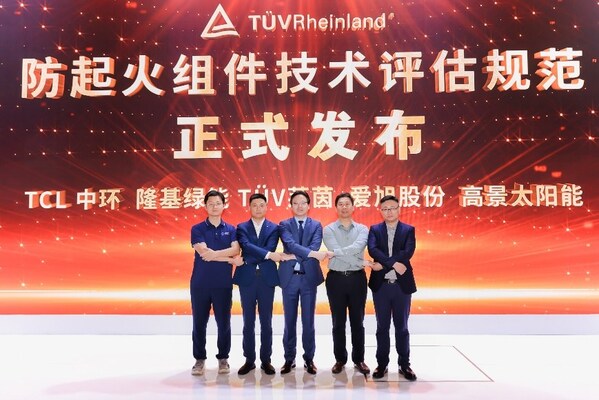
At the same time, TÜV Rheinland, in collaboration with leading enterprises such as LONGi Green Energy, TCL Zhonghuan, Aiko Solar, and Gokin Solar, jointly released the “Technical Specification for Fire-Proof Modules.” This industry specification, exceeding national standards, aims to enhance the safety performance of photovoltaic products and safeguard the asset security of power stations throughout their lifecycle.
Deepening Ecological Cooperation, From “Compliance Safeguarding” to “R&D Collaboration”
During this exhibition, TÜV Rheinland also held a series of strategic cooperation signing and certification ceremonies with leading companies such as Sungrow Power, LONGi, and Chint. TÜV Rheinland’s role is shifting from traditional “back-end certification” to “front-end R&D collaboration.” By intervening early in product design, it helps companies avoid compliance risks at the initial stage of development, thereby shortening product time-to-market and enabling faster responses to market demands.
As global energy transformation continues to deepen, TÜV Rheinland will continue to leverage its professional technical expertise and global service network to assist Chinese new energy enterprises in moving toward a safer, more efficient, and more sustainable “zero-carbon” future.