

ShanghaiJune 24, 2026 /PRNewswire/ — As the 28th Shanghai International Film Festival and the 31st Shanghai TV Festival kicked off with great fanfare, the AI-era Legal Forum on Film and TV Investment, Licensing, and Dispute Resolution was successfully held on the afternoon of June 20 at the Shanghai Exhibition Center. Hosted by Dentons Law Firm, co-hosted by the Shanghai Internet Industry Association and the Shanghai Vancouver Film School, this forum was a forward-looking legal professional exchange event within the industry segment of this year’s Shanghai International Film and TV Festival. The event brought together senior lawyers from the firm, university IP scholars, legal professionals from leading entertainment companies, and experts from overseas law firms, among other guests from government, industry, academia, and legal circles. They engaged in in-depth discussions on core industry pain points such as IP licensing, investment and financing, copyright determination, cross-border rights enforcement, and governance of new types of infringement, all against the backdrop of AIGC’s comprehensive penetration of the film and TV industry chain, aiming to achieve a dynamic balance between technological innovation, copyright protection, and industrial development.
Dentons China Regional Management Committee Deputy Director and Dentons Shanghai Managing Partner Fu Qiang delivered the opening address, welcoming the attending guests from academia, industry, and the legal field. Lawyer Fu pointed out that AI technology is deeply reshaping the entire film and TV industry chain. While unleashing industrial efficiency, it has also spawned new legal challenges, including infringement of AI training materials, definition of ownership of generated content, protection of portrait and voice rights, blurred boundaries of IP licensing, and inadequate adaptation of investment and financing rules. High-quality industrial development urgently requires a sound rule system for protection. Lawyer Fu introduced that Dentons Shanghai has long been deeply involved in legal services for entertainment IP and TMT, with professional teams dedicated to film and TV investment and financing, IP operations, copyright enforcement, and industry compliance, continuously tracking the new legal challenges brought by AI. Lawyer Fu Qiang emphasized that this forum builds a cross-sector dialogue platform for industry, academia, research, and law, aiming to bridge the communication gap between law and the film and TV industry, allowing legal services to meet the real needs of the industry. He looks forward to diverse viewpoints from all sides colliding to form practical solutions, using the rule of law to safeguard the healthy development of the film and TV industry, and wished the forum a successful conclusion.
Shanghai Vancouver Film School Vice Dean Chen Xiaoda delivered a speech. Dean Chen stated that holding this AI film and TV legal forum during this year’s Shanghai International Film Festival is timely. As AI comprehensively reshapes the film and TV creation chain, common industry challenges such as copyright confirmation, IP licensing, and infringement governance urgently require cross-sector collaboration to solve. Dean Chen proposed that technology empowers creation but cannot replace humanistic value; algorithms improve efficiency but cannot cross ethical boundaries. The school’s teaching always integrates IP protection and the concept of technology for good into the entire talent cultivation process. Currently, the school is aligning with international standard systems, implementing Shanghai’s first AI ethics certification training pilot, and building standardized industry norms around algorithm governance, privacy protection, and rights and responsibility allocation. Dean Chen Xiaoda hopes that this forum will serve as a link to deepen collaboration between schools, industry, and the legal community, jointly cultivating composite film and TV talents with both technical literacy and legal thinking, and wished the forum fruitful results.
Dentons China IP and Technology Innovation Committee Co-Leader, Dentons Shanghai Technology, Media & Telecommunications (TMT) Industry Group Leader Li Weihua gave a keynote speech titled “From Story to Film: Key Clause Design in Film Adaptation Licensing Contracts.” Lawyer Li Weihua pointed out that currently, the market share of IP adaptation projects in the film and TV industry is significantly higher than that of original content. High adaptation licensing fees coupled with industry iteration have led to numerous copyright ownership disputes. Clarifying the legal boundaries of adaptation rights and establishing a comprehensive contractual framework have become top priorities for industry risk control. Based on the legal rules of dual licensing for derivative works in copyright law and combined with several typical judicial cases, he systematically outlined eight core risk control clauses. Addressing existing industry pain points, he emphasized that contracts should clearly define the scope of licensing for emerging carriers like micro-dramas and web films, detail the specifications for work attribution, quantify the boundaries of adaptation creation to prevent risks of infringing on the right to integrity of the work, and rely on traceable carriers such as electronic mail and blockchain evidence storage for the delivery of original works. Lawyer Li Weihua concluded that relying on standardized and detailed pre-designed contract clauses can resolve commercial disputes and copyright conflicts under IP adaptations from the transaction source, laying a solid legal foundation for the long-term operation of the full cycle of film and TV IP.
Dentons Shanghai Partner Fu Gang gave a speech titled “Differences in Copyright Enforcement for Film and TV Works between China and the US: Insights from the Sony v. Cox Communications Case.” Lawyer Fu Gang reviewed the complete judicial process of the case, which, after three trials and a massive damages award, was unanimously overturned by the US Supreme Court. He clarified that the US judicial system finds internet service providers liable for contributory copyright infringement only in two types of subjective fault: actively inducing infringement or providing services specifically designed for infringement. He systematically compared the differences between Chinese and US copyright enforcement systems from five dimensions: legal sources, platform business models, infringing entities, evidence paths, and protected objects. The US relies on case law, while China has established a comprehensive “constructive knowledge presumption” adjudication system based on statutory norms like the Civil Code and Copyright Law. Lawyer Fu Gang proposed that the adjudication logic of this case has multiple layers of inapplicable preconditions and cannot be directly applied to domestic film and TV enforcement scenarios. Industry entities should base their actions on domestic judicial rules, comprehensively utilizing objective evidence such as copyright evidence storage, algorithm distribution records, and repeat infringement logs to penetrate platforms’ technology neutrality defenses, thereby improving the efficiency and effectiveness of film and TV copyright enforcement.
Tongji University Shanghai International College of Intellectual Property Doctoral Supervisor Professor Liu Wei shared insights on “Frontier Issues in Trademark Law Protection of Film and TV Work Titles.” Professor Liu Wei, drawing on typical domestic judicial cases like “Xie Wang Zhui Qi” and “Ghost Blows Out the Light,” analyzed the adjudication divergence when a film or TV title has been previously deemed by administrative authorities to have adverse effects, questioning whether the rights holder can then invoke anti-unfair competition law to claim goodwill protection. He pointed out that the determination of adverse effects is temporally fluid, and the discretion standards of administrative and judicial bodies differ, so mechanically applying prior administrative conclusions is inappropriate. He compared the US Dastar case with the domestic classic “Lost in Thailand,” distinguishing the differences in defining “source of goods” for commercial signs between the Chinese and US regulatory systems, correcting the one-sided view that narrows the scope of trademark law protection to tangible product carriers. Professor Liu Wei pointed out that film and TV works possess both cultural attributes and market commodity attributes. Film and TV titles with a certain degree of fame can achieve residual protection through anti-unfair competition law. Judicial adjudication should clearly delineate the boundary between the public domain of copyright and the goodwill rights of signs, coordinate the application logic of trademark law, copyright law, and anti-unfair competition law, and build a layered and comprehensive IP protection system for film and TV work titles.
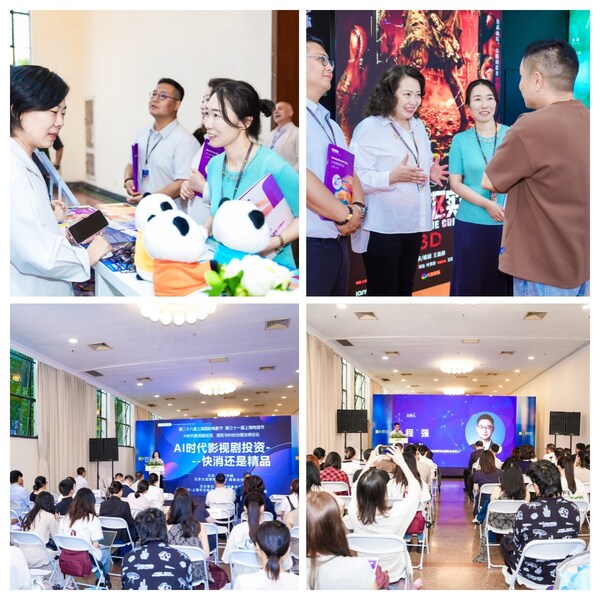
Dentons Beijing Partner Jiang Yurong conducted an in-depth industry sharing session titled “Film and TV Investment in the AI Era: Fast Fashion or Premium Products?” Using the systemic risks triggered by the high-speed turnover model in the real estate industry as a mirror, Lawyer Jiang Yurong analyzed the tendency towards fast-food development in the industry, characterized by the emergence of batch-produced lightweight short dramas after AI technology significantly reduces computing costs and shortens production cycles. She pointed out that the current market unilaterally exaggerates the low-cost advantages of AI, only accounting for tool computing expenses while ignoring core original values such as world-building, narrative refinement, and humanistic conception. Tracing the underlying logic of artistic creation, Lawyer Jiang emphasized that the core competitiveness of a work stems from the creator’s inner expression and emotional resonance. Blindly relying on AI assembly-line mass production not only loses the creative process of content refinement but also squeezes the practical growth paths for young practitioners, damaging the industry’s talent cultivation system. Combining domestic market practice cases of full-process AIGC animated films, she proposed that the industry should avoid being coerced by technology, adhere to the underlying logic of “content is king,” and position AI as an auxiliary tool for improving quality and efficiency. Investors need to balance capital turnover efficiency with content quality, improve the full-chain investment and financing risk prevention and control system, and promote the premium and sustainable development of the film and TV industry.

Scene Photo
Yuewen Group Senior Legal Expert Dr. Tang Haozhen shared on the topic “Copyright Protection Involving AI Large Models.” Using the “Medusa” AI model infringement case from “Battle Through the Heavens” as a typical sample, Dr. Tang systematically dismantled the IP legal risks across the entire chain of large model operations: material extraction, fine-tuning training, model release, and commercial generation. He delved into the four core points of contention in the case: the judicial determination that the Medusa anime character design in question possessed distinct originality and should be protected as an artistic work under copyright law; whereas “Medusa” is originally a classical mythological symbol and cannot form a unique and stable corresponding relationship with the IP in question, so the related anti-unfair competition trademark protection claim was not supported. He stated that infringement of the reproduction right can only be found when the technical means substantially reproduces the original work’s original expression. He also proposed that content generated purely by algorithms lacks human intellectual creative input and does not meet the statutory requirements for a work. Regarding the obligations of large model platforms, Dr. Tang explained the dual review standards of foreseeability and avoidability established by the judiciary, clarifying that AI service platforms need to implement a dual mechanism of “notice and takedown plus forward notice,” providing practical guidance for the entertainment industry to handle copyright disputes arising from large models.
Dentons Shanghai Partner, Dentons Shanghai IP and Technology Innovation Practice Group Leader Liu Feng shared insights on “Intellectual Property Protection of Film and TV Works in the AI Environment.” Lawyer Liu Feng analyzed three major industry characteristics: the significantly compressed AI film and TV production cycle, the high reuse of material elements, and the cascading amplification of infringement risks. He categorized three types of creation models: fully AI-generated comics, simulated human short dramas, and AI-assisted traditional film and TV, clarifying the differentiated legal risks corresponding to different business forms, such as portrait rights and character art copyright. Combining judicial precedents from various regions, he reviewed the adjudication standards for the ownership of AIGC outputs, clarifying that only when the creator makes substantial intellectual contributions such as screening, tuning, and narrative integration can the generated content fall within the scope of copyright protection. Lawyer Liu Feng constructed a full-chain proactive risk control path, proposing to complete full-process evidence storage by retaining prompts, iteration versions, and engineering source files, combined with blockchain and timestamps. He also suggested that the industry improve ownership clauses in model procurement, outsourced creation, and platform cooperation agreements, clarify the licensing boundaries for commercial use, cross-border dissemination, and reuse of portraits and voices of AI content, and establish a normalized infringement monitoring and tiered enforcement system to systematically resolve IP legal risks in the AI film and TV track.
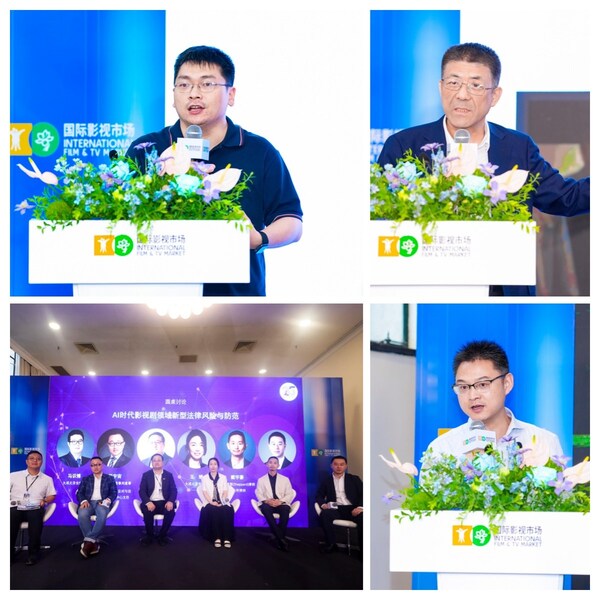
The roundtable forum topic was “New Legal Risks and Prevention in the Film and TV Field in the AI Era,” hosted by Dentons Beijing Partner Ma Shibo. Participating guests included Dentons China Board Director, Dentons Shanghai Public Opinion Response and Governance Legal Research Center Director Yang Yuzhou, Shanghai Vancouver Film School Vice Dean Chen Xiaoda, Dentons Beijing Partner Wang Juan, Sheppard Mullin Richter & Hampton LLP Lawyer Dai Yuhao, and Dentons Shanghai Partner Luo Lida. The roundtable exchanged views on five dimensions: public opinion crisis management, AI creation ethics, full project compliance, cross-border copyright rules, and protection of artists’ digital images. It focused on practical pain points such as AI face-swapping rumors, compliance of large model training materials, legal conflicts in cross-border AI creation, and licensing of digital avatars and portraits. Guests proposed that public opinion management should run parallel legal and PR tracks, distinguishing between B2B commercial use and C2C personal use to set differentiated review standards. They also compared the differences in the fair use doctrine between China and the US, advising overseas projects to complete full-chain copyright licensing in advance. For new types of infringement involving AI fusion and extraction of artist images, voices, etc., it was suggested to add independent personality rights licensing clauses in cooperation agreements. All parties reached a consensus that the industry needs to establish mechanisms for thorough material verification and manual final inspection, and collaborate with schools, platforms, and legal service institutions to build a collaborative governance system, filling the legal support gaps in intelligent film and TV creation.
At the conclusion of the forum, Dentons China IP and Technology Innovation Committee Co-Leader, Dentons Shanghai TMT Industry Group Leader Li Weihua delivered closing remarks. Lawyer Li Weihua stated that this forum is another attempt by Dentons Shanghai to leverage the Shanghai International Film and TV Festival to build an entertainment legal exchange platform. The firm will continue to regularly hold a series of professional activities, deeply cultivate the legal service track for film and TV entertainment IP, and build a long-term industry communication bridge. He also expressed sincere gratitude to the organizers, co-organizers, all sharing guests, and attending industry colleagues, looking forward to gathering again next year to continue exploring new paths for compliant governance of the AI film and TV industry.
The forum was hosted by Dentons Shanghai Partner, IP and Technology Innovation Practice Group Co-Leader Cheng Qiang.
Scene Photo
As an important legal supporting activity of the Shanghai International Film and TV Festival, this forum successfully integrated legal, film and TV, academic, and cross-border service resources, effectively filling the gap in legal exchanges for the AI film and TV industry, and was highly recognized by attending industry practitioners. The successful conclusion of this event is not only an important practice for Dentons to leverage Shanghai’s position as an international cultural hub to empower the high-quality development of the entertainment industry but also fully demonstrates Dentons Shanghai’s integrated IP comprehensive service capability, rooted in the Yangtze River Delta, radiating across the country, and connecting globally. Looking ahead, Dentons Shanghai will take this forum as a new starting point, anchoring Shanghai’s development positioning as a forefront of building a culturally strong nation, continuing to deeply cultivate the full-chain legal services for film and TV entertainment IP, and continuously enhancing the industry’s professional service landscape and strategic stance.
Scene Photo