

 |
ShanghaiJune 25, 2026 /PRNewswire/ — Recently, the globally authoritative environmental information disclosure organization CDP (Carbon Disclosure Project) officially released the 2025 Supplier Engagement Assessment results. Brother Industries, Ltd. (hereinafter referred to as “Brother Group”) once again achieved the highest rating—”Supplier Engagement Leader,” retaining this honor for the second consecutive year. This year’s CDP environmental information disclosure attracted participation from over 22,100 companies worldwide, with only a few ultimately receiving this certification based on their comprehensive value chain carbon reduction systems. This international recognition not only serves as strong evidence of the Group’s low-carbon governance capabilities in its supply chain but also underscores Brother’s steadfast commitment to sustainable development through innovative green technologies, spanning the entire lifecycle from supply chain and manufacturing to end products.
Brother once again achieves the highest rating—’Supplier Engagement Leader’
Deepening Supply Chain Management, Honored with CDP’s Highest Rating for Two Consecutive Years
The “CDP Annual Supplier Engagement Assessment” rigorously evaluates participating companies across five core dimensions: collaborative emission reduction with suppliers, indirect emission management in the value chain, climate risk management, environmental governance strategy, and quantified emission reduction targets. It comprehensively assesses a company’s overall ability to drive climate change responses among upstream and downstream partners.
For a long time, Brother Group has prioritized reducing CO₂ emissions and resource recycling as core environmental issues. It not only actively advances its own Scope 1, 2, and 3* carbon reduction and new resource usage cuts but also extends environmental concepts throughout the entire supply chain. By sharing environmental policies and standards with suppliers and establishing robust confirmation and improvement mechanisms, Brother Group deeply promotes environmentally friendly procurement activities across the supply chain. The Group emphasizes that carbon neutrality is not a solitary effort by a single company; only by linking suppliers, factories, and end users to create a complete green chain from raw materials to waste recycling can a significant reduction in environmental impact be truly achieved.
Guided by the “Brother Group Environmental Vision 2050,” the Group aims to achieve carbon neutrality in all business activities and minimize CO₂ emissions across the entire value chain by fiscal year 2050. To this end, the Group has set a quantified target for reducing Scope 3 (Categories 1, 11, 12)** CO₂ emissions by fiscal year 2030—a 28.5% reduction compared to fiscal year 2022.
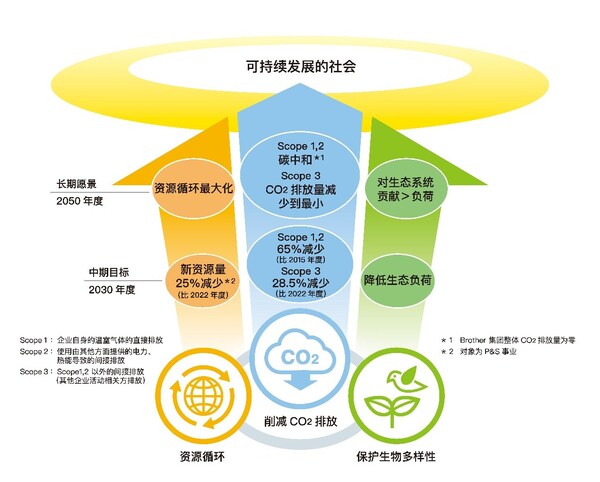
Brother Group Environmental Vision 2050
Practicing Green Manufacturing, Multiple Innovative Technologies Reduce Environmental Load at the Source
Beyond the top-level design of macro strategy and supply chain management, Brother Group deeply embeds environmental concepts into every stage of product development and manufacturing. Through multiple innovative green technologies, Brother Group reduces environmental load at the source, providing users with high-quality products that combine environmental and economic benefits.
- Drum and Toner Separation Technology: Precise Replacement, Cost Reduction, and Waste Minimization
In traditional integrated drum and toner designs, the entire cartridge must be replaced when toner runs out. This leads to higher procurement costs for individual original toner cartridges and waste when the drum is discarded before reaching its lifespan. Brother adopts “drum and toner separation” technology, allowing users to replace only the specific consumable when toner is depleted or the drum reaches its end of life. This significantly reduces the frequency of consumable replacements and waste generation, enhancing environmental benefits while effectively lowering users’ long-term usage costs.
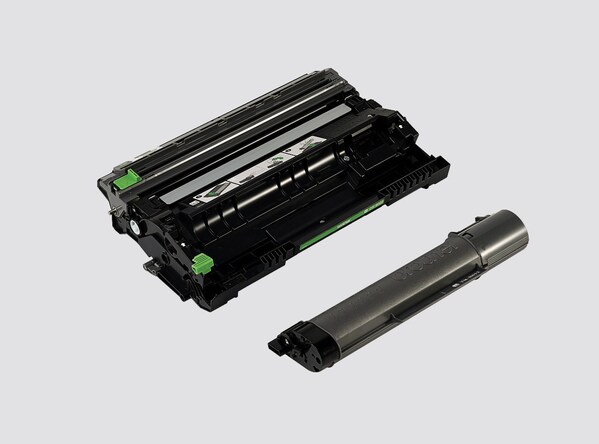
Drum and toner separation technology reduces costs and waste
- Uncoated Process: Eliminating VOCs, Combining Texture and Environmental Friendliness
Traditional exterior coating processes inevitably generate volatile organic compound (VOC) pollution, harming the environment. Brother Group proactively introduced “uncoated” technology, eliminating coating treatment on the outer layers of printers. This process ensures the machine maintains a high-quality appearance while completely preventing VOC emissions at the source, effectively reducing environmental load.
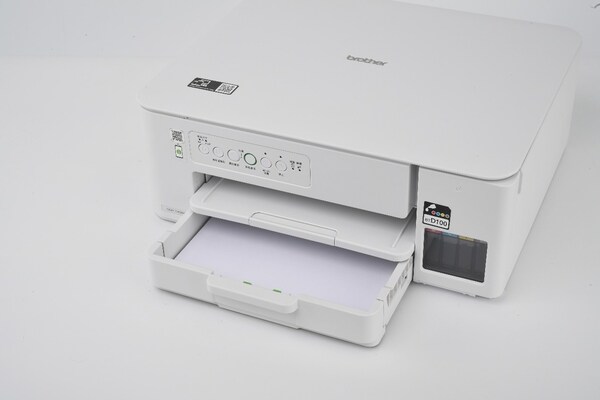
Uncoated process effectively reduces volatile organic compounds
- Plastic-Reduced Packaging: Pulp Substitution, Protecting Marine Ecosystems
Traditional expanded polystyrene (EPS) cushioning packaging is difficult to degrade, and improper disposal can easily lead to marine plastic pollution. Addressing this global challenge, Brother Group developed a one-piece “molded pulp cushioning material.” This material provides equivalent compression and shock protection while using easily recyclable and more environmentally friendly pulp materials, marking a transition from “reducing EPS” to “eliminating EPS.” While ensuring safe machine transportation, it reduces cushioning material usage and fundamentally eliminates EPS use, effectively lessening the burden on marine environments and ecosystems.
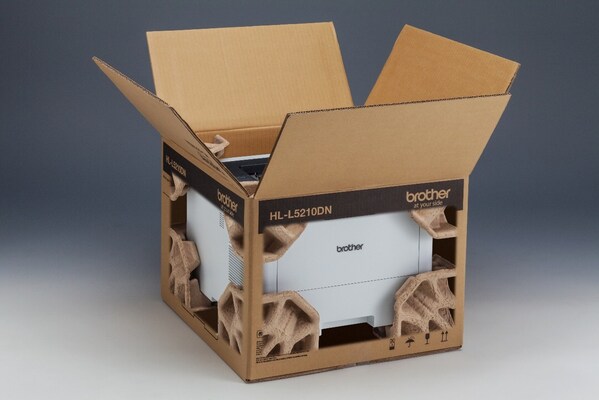
Molded pulp cushioning material
Achieving the highest CDP “Supplier Engagement Leader” rating for two consecutive years is both a milestone and a new starting point. Moving forward, Brother Group will continue to uphold the “Brother Group Environmental Vision 2050,” actively engage in activities that balance the global environment, empower product innovation with green technology, and collaborate with global suppliers and users to jointly move toward a zero-carbon, sustainable future.
|
*Scope 1: Direct emissions from a company’s own activities; Scope 2: Indirect emissions from the use of electricity, heat, etc., provided by others; Scope 3: Indirect emissions other than Scope 1 and Scope 2 (emissions from other related parties in business activities) |
|
**Category 1: Purchased goods and services; Category 11: Use of sold products by customers; Category 12: Disposal of sold products |