

HangzhouJune 11, 2026 /PRNewswire/ — Recently, the “Smart Engineering & Integrated Future – 2026 China Intelligent Manufacturing and Talent Cultivation Industry-Education Integration Innovation and Development Seminar” was held at the headquarters of Dahua Technology. The seminar was led and hosted by Dahua Technology, co-organized by Henan University of Engineering and Henan Vocational and Technical College, and co-supported by Xinyang Vocational and Technical College, Zhengzhou Vocational and Technical College, Xinxiang University of Engineering, and Zhejiang Fashion Institute of Technology. It received full support from Rongjiao Huilian (Shanghai) Network Technology Co., Ltd., with a total of 15 universities participating. During the seminar, university experts, scholars, and representatives from the industrial chain engaged in in-depth discussions on topics such as AI empowering industry-education integration, intelligent manufacturing talent cultivation, and school-enterprise collaborative education, jointly exploring new pathways for deeply integrating engineering talent cultivation with industrial demands in the new era.
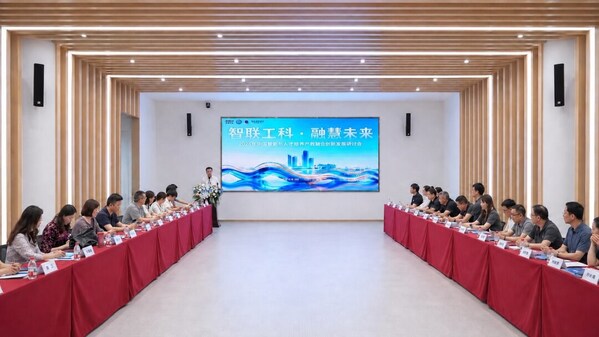
Currently, as digital industrialization and industrial digitalization accelerate, fields such as intelligent manufacturing, smart IoT, and artificial intelligence place higher demands on high-quality, versatile, and application-oriented talent. How to align talent cultivation more closely with the frontlines of industry, ensure professional development matches technological evolution, and enable school-enterprise cooperation to truly serve industrial development became key themes of this seminar.
Deepening School-Enterprise Collaboration to Cultivate Industry-Needed Talent
In his address, Qin Chunhong, Executive Vice President of Dahua Technology’s Domestic Marketing Center, stated that industry-education integration is a vital bridge connecting talent cultivation with industrial demands, as well as a key pathway to promoting school-enterprise collaborative development and achieving resource sharing and value co-creation. As a company in the smart IoT field, Dahua Technology has long focused on industrial talent cultivation and educational ecosystem development, continuously opening its technical capabilities, industrial platforms, and practical resources to universities and partners to drive deep collaboration across research, production, learning, and application.
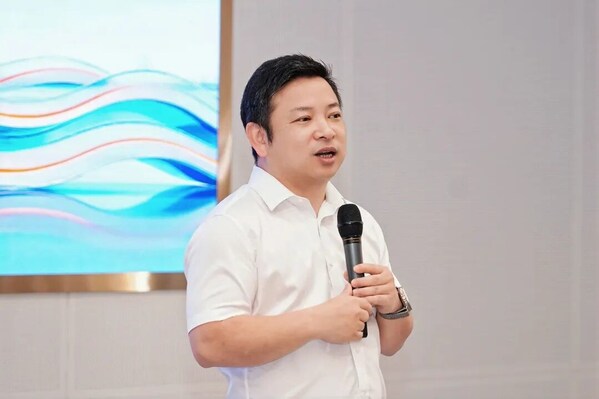
To meet the development needs of the intelligent manufacturing and smart IoT industries, Dahua will continue to deepen cooperation with universities in areas such as co-building industrial colleges, co-developing curriculum systems, sharing training bases, and jointly nurturing teaching staff. By integrating real corporate technologies, real-world scenarios, and actual projects into the entire talent cultivation process, Dahua aims to help universities cultivate more high-quality, application-oriented talent who understand technology, can practice effectively, and adapt to industrial development.
School-Enterprise Practices: Exploring Pathways for Industry-Education Integration Implementation
At the seminar, education experts and industry technology leaders took turns on stage, sharing innovative achievements in industry-education integration from multiple dimensions such as technological iteration, university practices, and industrial empowerment. They delivered new ideas for high-quality talent cultivation, creating a cross-sector intellectual feast.
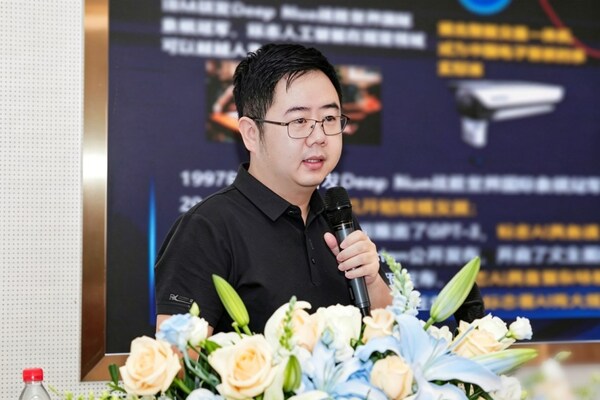
Deng Zhiji, Dean of Dahua Technology’s Central Research Institute, delivered a talk titled “From Vision to Intelligence: The Evolution of Converged Technologies in the AI Era,” sharing the trends in AI technology development within the smart IoT field. He noted that AI is profoundly transforming how industries operate, while also imposing new requirements on the knowledge structure and practical skills of future talent. University talent cultivation must keep pace with industrial technology iteration, deeply integrating cutting-edge technologies such as AI, big data, and IoT into professional development and teaching systems. This ensures students can engage with real industrial problems and understand practical application scenarios during their studies, enhancing their digital literacy, engineering practice capabilities, and innovation skills.
Focusing on the practical implementation of industry-education integration, speakers including Zheng Weidong, President of Zhejiang Fashion Institute of Technology; Yan Zhengxiang, Vice President of Xinyang Vocational and Technical College; Tian Zhengjun, Party Secretary of the Business School at Henan University of Engineering; and Lou Songtao, Head of the School of Electronics and IoT at Henan Vocational and Technical College, shared insights based on their respective institutions’ characteristics and professional development achievements. They exchanged practical experiences in digital and intelligent upgrading of vocational education, school-enterprise co-built industrial colleges, industrial software talent cultivation, and the transformation of scientific and technological achievements into courses, showcasing diverse pathways for different types of institutions to drive talent cultivation reforms in response to industrial demands.
Representatives from industrial chain companies such as Lingban Technology, Changchuan Technology, and Qingtong Vision, starting from technological development and job requirements, shared technical solutions for university teaching and training scenarios. These covered directions such as AI+AR mixed reality training, semiconductor industry talent cultivation, and multimodal data collection with robot intelligent training, providing more industrial perspectives and practical references for engineering talent cultivation.
Liu Xiaoyong, Vice President of Dahua Smart IoT Operation Service Co., Ltd., systematically summarized innovative practices in industry-education integration within the digital intelligence field. He innovatively proposed a three-tier cooperation mechanism—”Lightweight Cooperation, Industrial College Construction, and Industry-Campus Operations”—to build a talent cultivation system covering the entire industrial chain. He stated that Dahua will collaborate with ecological partners like Rongjiao Huilian to continuously expand the dimensions and deepen the levels of school-enterprise cooperation, driving the effective implementation of industry-education integration.
Following the insightful thematic presentations and exchanges on school-enterprise practice cases, attending guests actively engaged in interactive discussions. Wang Li, General Manager of the Education Industry at Dahua Technology’s Domestic Marketing Center, emphasized the need to bridge the “last mile” between talent cultivation and job requirements by embedding real projects, equipment, and scenarios into teaching. Chen Mingzhu, General Manager of the Testing Center at Dahua Technology’s R&D Center, pointed out that the rapid iteration of AI places higher demands on students’ engineering practice and interdisciplinary skills, suggesting that schools and enterprises jointly develop courses and training focused on industrial problems, allowing students to encounter frontline challenges while still at school.
Stepping into the Frontlines of Industry: Sensing the Pulse of Intelligent Manufacturing Development
On the day of the event, attending guests also visited Dahua Technology’s exhibition hall, Dahua Fuyang “Future Factory,” and related industrial chain companies for on-site study. They gained an up-close understanding of comprehensive smart IoT scenario solutions, intelligent manufacturing production lines, digital control systems, and related cutting-edge applications, further deepening their comprehension of industrial development trends, job competency requirements, and directions for talent cultivation.
Through the format of “theoretical discussion + industrial practice,” this event further facilitated precise alignment between universities and enterprises, while also consolidating a consensus on collaborative education between industry and academia.
Talent is the foundation of industrial development, and education is a long-term project oriented toward the future. Facing the new phase of accelerated integration between AI and intelligent manufacturing, Dahua Technology will continue to leverage its industrial accumulation in smart IoT, AI, and intelligent manufacturing. By deepening collaboration with universities and industrial chain partners, it aims to drive the deep integration of technology, scenarios, platforms, and educational resources, cultivating more high-quality, application-oriented talent for the industry and injecting sustained momentum into the high-quality development of China’s intelligent manufacturing.