

Boao, HainanMay 18, 2026 /PRNewswire/ — From May 15 to 17, the 2026 National Rare Disease Management Conference, co-organized by the Chinese Hospital Association and the China Alliance for Rare Diseases, was successfully held in Boao, Hainan. As a globally leading biotechnology company and a deep participant in China’s rare disease ecosystem, CSL Behring attended and shared in-depth insights into its practical pathways in China’s rare disease management field and its collaborative models with local ecosystem partners.
On May 16, Wang Yu, General Manager of CSL Behring China, was invited to attend a roundtable forum themed “A Decade of Institutional Guidance: Driving Deep Synergy Between Rare Disease Initiatives and Industry to Build an Innovative Ecosystem,” where she delivered a keynote speech. Wang Yu stated: “CSL Behring has always been committed to bringing globally leading innovative therapies to China. Building on our deep expertise in plasma proteins, we start from blood products and carry the mission of developing treatments for rare diseases. Facing the complex diagnostic and therapeutic challenges in China, we are accelerating the expansion of our rare disease business with the ‘3N Strategy’—New Product, New Collaborations, New Efficiency—as our action framework, striving to become an indispensable and deep collaborative partner in building China’s rare disease ecosystem.”
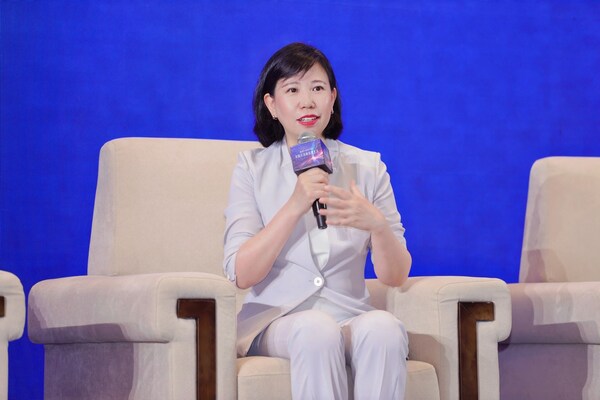
(Wang Yu, General Manager of CSL Behring China, shares forward-looking industry insights at the roundtable forum)
Deepening Roots in China, Accelerating Innovation to Benefit Rare Disease Patients
According to the “2026 Rare Disease Industry Trend Observation Report,” China has up to 20 million rare disease patients, with over 200,000 new cases annually. Their diagnosis, treatment, drug accessibility, and social security systems still face numerous challenges. In the first year of the “15th Five-Year Plan,” China’s rare disease prevention and treatment efforts have entered a critical period of deepening system construction.
As a biotechnology company with years of deep involvement in the blood products field, CSL Behring has been closely linked to the rare disease treatment domain since its inception. Blood products, such as clotting factors and immunoglobulins, are extracted from human plasma and widely used to treat diseases with extremely low incidence but severe threats to patients’ lives, such as hemophilia and hereditary angioedema. It can be said that rare diseases have always been rooted in CSL Behring’s business DNA.
Leveraging over a century of deep expertise in plasma proteins, CSL Behring has built a comprehensive capability system covering the entire hematology R&D chain—from early target discovery to clinical development—providing a natural advantage for expanding innovative therapies for rare and critical diseases. Simultaneously, through its three strategic scientific platforms—plasma fractionation, recombinant protein technology, and cell and gene therapy—CSL Behring continues to invest in cutting-edge fields such as gene therapy, small molecule drugs, and biologics, further strengthening the R&D support for rare disease solutions.
Relying on a century of accumulated expertise, CSL Behring continues to rapidly bring globally leading therapies to China. In recent years, through the “Hong Kong and Macau Drug and Device Access” policy, CSL Behring has facilitated the introduction of its anti-D immunoglobulin[1] into three medical institutions in mainland China, benefiting nearly 4,000 Rh-negative (panda blood type) pregnant women. Meanwhile, in the field of hemophilia, two of CSL Behring’s innovative products have recently completed enrollment for Phase III clinical trials in China.
Additionally, for hereditary angioedema (HAE)—a rare, potentially life-threatening genetic disease—CSL Behring is accelerating the introduction of the world’s first and currently only targeted activated factor XII (FXIIa) inhibitor monoclonal antibody (garadacimab) into China. Professor Zhi Yuxiang, Chief Physician of the Department of Allergy at Peking Union Medical College Hospital, expressed high interest in this, stating: “The ultimate goal of HAE treatment is to achieve complete disease control (zero attacks) and normalize patients’ lives. Long-term prophylactic treatment can minimize the frequency and severity of attacks, helping patients return to normal life as much as possible.”
Deepening Collaboration, Co-building a Closed-Loop Rare Disease Ecosystem in China
This year marks the 40th anniversary of CSL Behring’s continuous deep engagement in the Chinese market. Upholding the firm commitment of “In China, for China,” while actively introducing and developing innovative therapies, CSL Behring is exploring collaborative models with upstream and downstream partners in the industry chain to achieve “1+1>2” synergy, aiming to promote the construction of a more complete and resilient rare disease ecosystem.
To achieve this goal, CSL Behring is actively partnering with various stakeholders across the ecosystem value chain, supporting diverse innovative models to meet different needs. For example, as a Vice President unit of the Guangdong-Hong Kong-Macao Greater Bay Area Biomedical Innovation Promotion Association (GBAAPI), it deeply participates in policy research, promoting the introduction of international innovative therapies and the construction of multi-tiered security systems; it explores innovative models in pilot zones such as Boao Lecheng and Beijing Tianzhu to accelerate drug accessibility.
Furthermore, CSL Behring actively engages in long-term strategic collaborations with platforms like the China Alliance for Rare Diseases (CHARD), continuously promoting high-quality development in rare disease diagnosis and treatment through policy advocacy, disease burden research, and professional education. Li Linkang, Vice President of the Chinese Hospital Association and Executive Director of the China Alliance for Rare Diseases, stated: “As a key link connecting patients, enterprises, medical institutions, and policymakers, the China Alliance for Rare Diseases firmly believes that through collaborative efforts and unremitting endeavors, the accessibility of diagnosis and treatment and the quality of life for rare disease patients will be continuously improved, allowing them to have a brighter future.”
At the same time, “In China, for the World” is a key direction for CSL Behring’s next strategic phase. Leveraging its global market strategy and commercialization capabilities, CSL Behring will continue to explore collaborations with local biotechnology companies and value chain partners, driving a closed-loop innovation ecosystem through mutual empowerment.
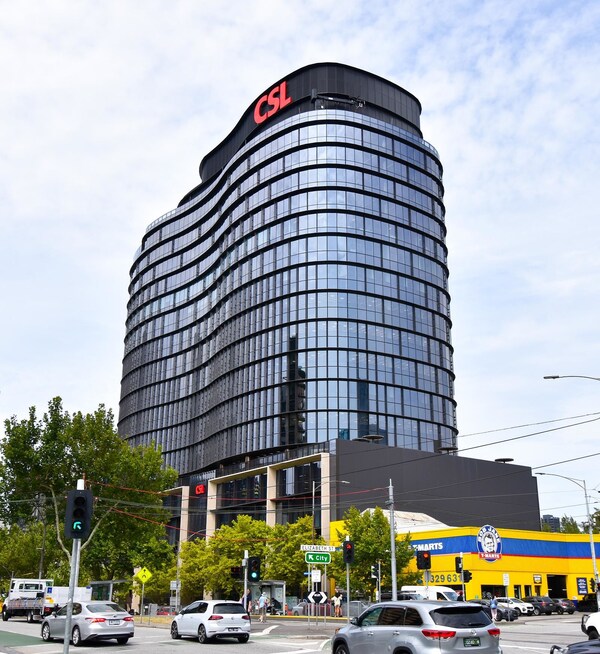
(CSL Limited)
Looking ahead, Wang Yu stated: “As a truly trustworthy backbone force in China’s rare disease ecosystem, CSL Behring bears the significant responsibility of co-building a sound and robust rare disease ecosystem in China. We will deeply embed ourselves in the entire chain of the local industry, working hand in hand with partners to make lasting contributions to the development of the ‘Healthy China’ strategy in the field of rare diseases.”
About CSL Behring
Dedicated to saving lives, CSL Behring is a pioneer in global biotherapeutics. We are committed to meeting patient needs with innovative technologies, developing and producing innovative drugs that help treat immune deficiencies, coagulation disorders, cardiovascular and metabolic diseases, respiratory diseases, and transplant rejection. We utilize three strategic scientific platforms—plasma fractionation, recombinant protein technology, and cell and gene therapy—to support continuous innovation and continuously improve products to address unmet medical needs and enhance patients’ quality of life.
CSL Behring operates one of the world’s largest plasma collection networks, CSL Plasma. Its parent company, CSL (ASX:CSL; USOTC:CSLLY), headquartered in Melbourne, Australia, employs 29,000 people and provides life-saving medical treatments to over 100 countries worldwide.
Since 1986, CSL Behring has been providing human albumin to Chinese patients and has become one of the main suppliers of this product in the Chinese market. Currently, CSL Behring conducts sales operations in China through its wholly-owned subsidiary, Guangzhou Junxin Pharmaceutical Co., Ltd., and has offices in five major Chinese cities: Shanghai, Beijing, Chengdu, Guangzhou, and Wuhan.
For more exciting stories about our commitment to biopharmaceuticals, please visit the website CSLBehring.com/Vita.
For more information, please refer to the website content at www.cslbehring.com.cn.
|
[1] Anti-D immunoglobulin is a special imported drug under the Hong Kong and Macau Drug and Device Access policy. It is limited to use at the University of Hong Kong-Shenzhen Hospital, the First Affiliated Hospital of Sun Yat-sen University, and Shenzhen Bao’an District Maternal and Child Health Hospital, and has not yet been approved for marketing in other regions of mainland China. This product is a prescription drug. For related use, please consult clinical medical professionals. This communication does not represent any clinical opinion or recommendation. |