

Protecting Public Health Through Medicine Assistance and Grassroots Empowerment
OrdosJune 25, 2026 /PRNewswire/ — Every year during the transition from summer to autumn, Artemisia pollen arrives as scheduled on the Ordos grasslands, ushering in another peak allergy season for tens of thousands of allergic rhinitis patients. On June 25, the public welfare assistance project for anti-allergy medications for hay fever patients in Ordos City was officially launched. The project is hosted by the China Medical and Health Development Foundation, coordinated and guided by the Ordos Municipal Health Commission, with professional academic guidance from the expert team of Peking Union Medical College Hospital, Chinese Academy of Medical Sciences, and pharmaceutical and financial support provided by Bayer. According to the project plan, the Ordos Municipal Health Commission will coordinate the specific implementation and execution of the project. Anti-allergy medications will be distributed through designated distribution points in public hospitals, community health service centers, and township health centers within the jurisdiction, expected to benefit approximately 50,000 local allergy patients. Before the medication distribution, the expert team from Peking Union Medical College Hospital will conduct targeted physician training for relevant units and primary healthcare institutions participating in the project, helping local medical facilities more effectively prepare for the peak pollen allergy season.
Zhang Yanping, Deputy Secretary-General of the China Medical and Health Development Foundation; leaders from the Ordos Municipal Health Commission; Professor Guan Kai, Director of the Department of Allergy at Peking Union Medical College Hospital, Chinese Academy of Medical Sciences; Gan Fengying, Head of the Strategic Cooperation Business Unit for Bayer Consumer Health China; and heads of local medical institutions jointly attended the project launch meeting.
Proactive Preventive Medication Intervenes Early, “Nipping Allergies in the Bud”
Ordos City is located in the transitional zone between the northern grasslands and the desert. Due to climatic and geographical influences, allergenic plants such as Artemisia are widely distributed. In recent years, the incidence of summer and autumn hay fever in the area has shown a significant upward trend, becoming a prominent public health issue. The local incidence rate of allergic rhinitis is as high as 50% to 60%. Allergic rhinitis in the region exhibits distinct seasonal characteristics, with symptoms gradually worsening from late spring and entering a concentrated outbreak phase from July to August each year.
Deputy Secretary-General Zhang Yanping of the Foundation stated: “After receiving the application for allergy medication support from the Ordos Municipal Health Commission this year, we promptly issued a public welfare project recruitment letter, seeking support from socially caring forces. We would like to extend special thanks to Professor Guan Kai’s team from Peking Union Medical College Hospital for providing professional guidance and primary care physician training, as well as to the caring enterprise Bayer for its swift response after the recruitment letter was issued. We will provide the Ordos Municipal Health Commission with products valued at approximately 7 million RMB in the market, including 110,000 bottles of Clarityne Mometasone Furoate Nasal Spray and 78,000 bottles of Clarityne Loratadine Syrup.”
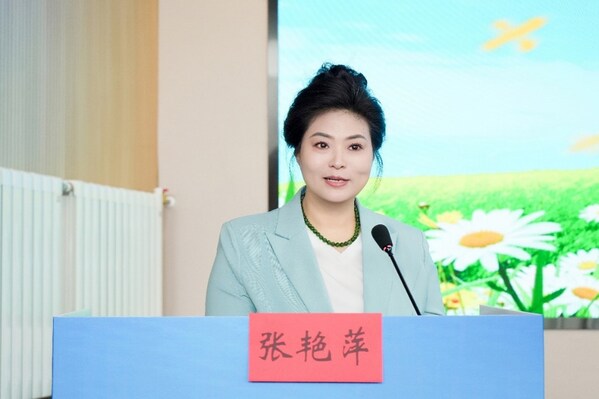
Deputy Secretary-General of the China Medical and Health Development Foundation, Zhang Yanping, delivers a speech
“Primary healthcare facilities in Ordos have insufficient reserves of anti-allergy medications, with a clear shortage of first-line guideline-recommended drugs such as intranasal corticosteroids and antihistamines. This makes it difficult to meet the standard diagnosis and treatment needs of patients during the peak pollen season, leaving patients facing the real dilemma of ‘lacking good medications and needing urgent access.’ This project was deliberately implemented before the allergy season because the key to allergy prevention and treatment lies in ‘acting ahead of time,'” Professor Guan Kai stated at the launch meeting. He noted that launching the project before the July pollen peak itself serves as a practical demonstration of the scientific concept of “preventive medication.”
Professor Guan Kai further explained, “Allergic rhinitis is a chronic inflammatory disease. Anti-allergy medications and preventive measures should be introduced before the outbreak of allergy symptoms. For seasonal pollen allergies, regular medication can be started 2 to 4 weeks before the allergy season begins. Early intervention can suppress the initial inflammatory response, ‘nipping inflammation in the bud,’ thereby reducing the severity of symptoms and the risk of complications throughout the entire allergy season. Waiting until symptoms are fully active before passively taking medication means the inflammatory response has already been fully triggered, often yielding half the results with twice the effort and making control more difficult.”
He specifically reminded that the timing of the allergy season varies by region. In northern grassland areas, the primary allergens are weed pollens from summer and autumn. “I recommend that the public develop the habit of paying attention to weather forecasts, as well as pollen and allergy indices. Take medication proactively before warnings are issued, combine it with physical protection such as wearing masks and goggles during peak periods, and reduce outdoor activities during high-concentration hours.”
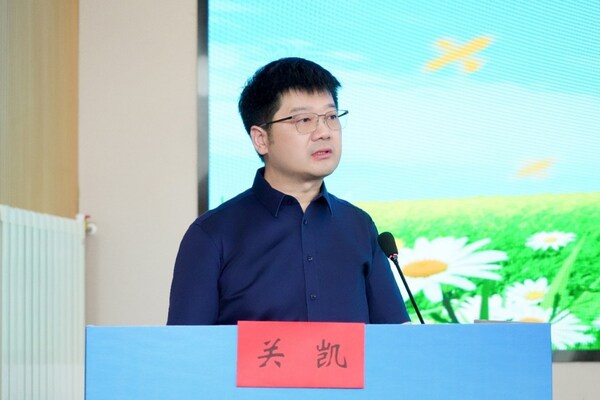
Professor Guan Kai, Director of the Department of Allergy at Peking Union Medical College Hospital, Chinese Academy of Medical Sciences, delivers a speech
Both “Blood Transfusion” and “Blood Production”: The PUMCH Team Brings High-Quality Medical Resources to the Grassroots of the Grasslands
This project is not just a one-time medication donation; it also focuses on the long-term capacity building for allergy disease prevention and treatment in the region. Currently, the Department of Allergy at Peking Union Medical College Hospital, Chinese Academy of Medical Sciences, has established a close medical consortium partnership with Ordos Second People’s Hospital (Ordos Allergic Rhinitis Diagnosis and Treatment Center).
As early as May this year, as part of deepening Beijing-Inner Mongolia medical collaboration and promoting the sinking of high-quality medical resources to the grassroots, Professor Guan Kai led a team to Ordos Second People’s Hospital to sign a medical consortium agreement. The two sides are engaging in in-depth cooperation in areas such as discipline co-building, clinical diagnosis and treatment, talent cultivation, scientific research, and patient referral. Concurrently, a clinical diagnosis and treatment training course on pollen allergy diseases was held, providing training to over 200 local medical personnel involved in allergy disease diagnosis and treatment. The PUMCH expert team also conducted clinical teaching consultations and public welfare clinics, providing “hands-on” guidance to grassroots physicians in real clinical settings.
“The Ordos region has a wide distribution of Artemisia plants, leading to prominent seasonal pollen allergy issues with a large patient base. The need for standardized diagnosis, treatment, and long-term management is very urgent,” said Professor Guan Kai. He stated that the PUMCH team plays a role in providing comprehensive professional support for this project, guiding the formulation of precise medication distribution strategies and designing and implementing systematic training for grassroots doctors. “We hope to combine ‘blood transfusion’ support with ‘blood production’ cultivation, fully leveraging the radiation and leading role of national-level high-quality medical resources. In the future, we will continue to promote the homogenization of allergy disease diagnosis and treatment levels in the region through regular expert dispatches, remote consultations, and accepting physicians for further training.”
Professor Guan Kai added: “Capacity building for grassroots doctors is a crucial part of allergy disease prevention and treatment. Primary care is the first line of defense. Only by solidifying the basic skills of grassroots doctors and establishing standardized diagnostic and treatment thinking can we truly achieve ‘minor illnesses treated at the grassroots level’ and promote the implementation of an integrated continuous medical service model of ‘prevention-diagnosis-treatment-follow-up’ at the grassroots level, allowing high-quality medical achievements to benefit more people in Ordos.”
Starting with Public Welfare, Multiple Parties Join Hands to Build a Long-Term Mechanism for Allergy Prevention and Treatment
As the project host, Deputy Secretary-General Zhang Yanping of the China Medical and Health Development Foundation emphasized: “This public welfare project will distribute first-line guideline-recommended anti-allergy medications valued at approximately 7 million RMB in the market through local medical institutions and community health centers from July 1 to December 31, 2026, expected to benefit about 50,000 allergic rhinitis patients. Additionally, the donated funds will be used for the distribution and management of donated medications, project execution, and targeted offline training for grassroots doctors. We would like to extend special thanks to Professor Guan Kai’s team from Peking Union Medical College Hospital for providing professional guidance and primary care physician training, as well as to the caring enterprise Bayer for its swift response after the recruitment letter was issued. It is thanks to the support from multiple parties that this ‘timely rain’ can be delivered when patients need it most.”
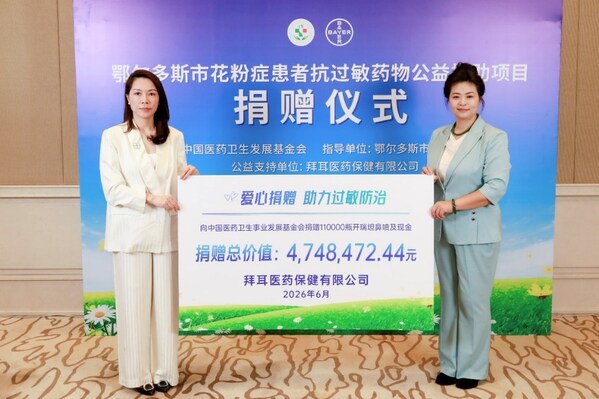
Donation ceremony site (first batch)
Gan Fengying, Head of the Strategic Cooperation Customer Business Unit for Bayer Consumer Health China, stated: “Participating in such a public welfare project is highly consistent with Bayer’s corporate vision of ‘Health for All, Hunger for None.’ Ensuring that local patients in Ordos can ‘access and use good medications’ during the peak allergy season is our original intention. We are willing to leverage our professional capabilities in the health field to bring tangible help to local patients, allowing scientific and standardized allergy prevention and treatment concepts to benefit more families. In the future, we will continue to work with all sectors of society to make health products and professional support accessible, helping the public stay free from allergy troubles and fulfilling our corporate social responsibility.”
With the official launch of the public welfare assistance project for anti-allergy medications for hay fever patients in Ordos City, a health protection initiative spanning the summer and autumn allergy seasons has begun. Starting from public welfare and leveraging grassroots empowerment, this public welfare assistance project is bound to effectively enhance the scientific understanding of allergy prevention and treatment among the local population. The model it explores—”public welfare medication donation + academic empowerment + regional implementation”—also has the potential to provide a replicable and scalable template for allergy disease prevention and treatment in more transitional zone areas across northern China.