

HangzhouMay 30, 2026 /PRNewswire/ — On May 29, the 2026 NetEase Innovation Enterprise Conference grandly opened in Hangzhou. With the theme “Integration of Intelligence and Action,” the conference brought together over a thousand industry experts from across the AI ecosystem to explore the pathways for AI implementation in various industries. Zhao Yuning, President of Zhejiang Dahua Technology Co., Ltd. (hereinafter referred to as Dahua Technology), was invited to attend and delivered a speech titled “Visual Intelligence ╳ AI Agent: Integrating Intelligence into Vision, Reshaping Industry Value,” systematically elaborating on Dahua’s forward-looking understanding of AI, as well as the core pathways and innovative practices driving digital and intelligent upgrades across industries.
In recent years, AI has developed explosively at an unprecedented pace, from underlying computing power to large model iterations, with some foundational models even iterating on a three-month cycle. However, strong foundational model capabilities do not necessarily guarantee real value creation. No matter how good the model, if it cannot be integrated with vertical industries and business scenarios, it is difficult to translate into actual productivity. The AI industry is facing a “fire and ice” situation: on one side, rapid technological advancement; on the other, practical difficulties in implementation, hard-to-quantify value, and unclear business models.
Zhao Yuning stated that the focus of AI industry development is shifting from “comparing parameters and demos” to “comparing implementation, value closure, ROI, and industry understanding.” What truly determines whether AI can generate value is not just the model itself, but the ability to capture real business scenarios, form high-quality data support, and transform understanding of workflows into industry capabilities deeply integrated with large models.
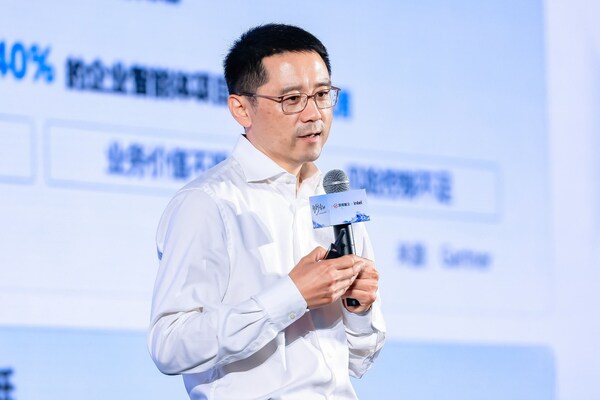
As a globally leading provider of video-centric smart IoT solutions and operational services, Dahua Technology’s overall business focuses on two core directions: helping cities achieve more efficient governance, and driving enterprises to improve safety levels and operational efficiency. One of the key capabilities supporting this business layout is Dahua’s multi-dimensional perception capability, which has been deeply cultivated for decades. Dahua’s perception capabilities have expanded from video perception to audio, sound waves, X-rays, radar, voiceprints, and other multi-dimensional perceptions, continuously advancing the evolution of intelligent perception. Leveraging a deep understanding of thousands of industries, Dahua has accumulated over 8,000 industry scenarios in fields such as public safety, transportation, energy, finance, culture, education, and healthcare, forming nearly 300 mature solutions.
Zhao Yuning stated that in the AI era, Dahua is deeply integrating its profound industry accumulation, high-quality multi-dimensional perception core capabilities, and AI large model capabilities to build a cloud-edge-device integrated industry intelligent agent, truly achieving a full-chain closed loop of perception, understanding, decision-making, and execution, promoting the scenario-based and value-driven implementation of AI.
Dahua Technology’s AI capability development has gone through three stages of transition: from “seeing clearly” to “understanding,” and now to “moving towards autonomous cognition,” gradually acquiring capabilities for early warning, decision support, and a certain degree of autonomous execution.
On this basis, Dahua Technology launched the Xinghan Large Model, continuously deploying in three directions: language, multimodal, and vision, comprehensively upgrading AI applications and scenario-based implementation capabilities. The L-series language large model moves from simple human-machine interaction to human-machine collaboration, leveraging deep industry knowledge and business understanding to enable data to play a greater role. The M-series multimodal large model drives AI from “object recognition” to “scene understanding,” allowing AI to not just recognize a single object but understand the complete business process and specific scenarios. For example, in a restaurant scenario where food falls and is picked up and placed back on a plate, previously AI could only see the action but couldn’t determine if it was a violation, but the large model can understand the entire process and judge it as non-compliant behavior. The V-series visual large model, based on visual features, achieves stronger generalization capabilities and the ability to recognize everything. Previously, a complete image was needed for recognition, but now partial features can also become effective clues.
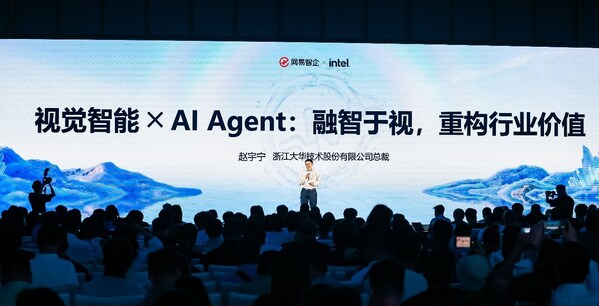
Dahua’s AI capabilities are accelerating implementation across various industry scenarios. Zhao Yuning stated that Dahua does not pursue coverage across thousands of industries but instead prioritizes focusing on the most core and pain-point-intensive scenarios in each field, creating targeted vertical industry large models to deepen industry expertise and solidify value.
In smart transportation, through knowledge extraction and AI Agents, a large amount of intersection optimization experience can be embedded into large model algorithms, replacing complex operational processes with natural language interaction to assist signal tuning. Multimodal large models are applied to highway incident detection, integrating spatiotemporal information with multi-source video streams to achieve full-element correlation warnings for risks such as debris, pedestrian intrusion, and tire detachment. While improving alarm accuracy, invalid alarms are reduced by 70%, and emergency response times are shortened from “minutes” to “seconds.”
In wildlife protection scenarios, monitoring areas are often remote and difficult to identify, previously relying heavily on expert judgment. Dahua innovatively uses audio-video dual-modal perception and reasoning large models to transform identification tasks that originally required experts into monitoring results understandable by forest rangers. Currently, Dahua has accumulated long-term species memory capabilities for over 1,000 animals, aiding ecological protection work to become more intelligent and scientific.
In the smart retail sector, addressing issues such as low store inspection coverage and difficulty in attributing business performance, Dahua launched a digital supervision system. Focusing on high-frequency inspection items such as safety, fire protection, service, and operations, the system enhances AI inspection capabilities through detailed small models and multimodal large models, achieving automatic identification, automatic inspection, and automatic analysis. Additionally, based on information such as customer flow conversion funnels, customer behavior, dwell time, and explanation processes, the system helps stores quickly identify operational issues.
In the field of safety production, particularly in high-risk industries such as coal mining and electric power, Dahua uses multi-camera systems, multimodal large models, combined with models for wearable recognition, fire and smoke detection, etc., for secondary analysis. The system can detect potential risks from multiple scenarios and details, achieving early warnings and helping enterprises move from “seeing appearances” to “identifying essential risks.”
Finally, Zhao Yuning emphasized that the endgame of AI is never technology itself, but enabling every industry to benefit from the dividends of intelligence. Any new technology will go through a period of inflated expectations, and AI is no exception. The key to the sustainable and steady development of AI technology in the future lies in achieving large-scale industrial implementation. If enterprises cannot translate AI into actual value, they may instead face pressure from rising costs in computing power, storage, etc. For enterprises to use AI effectively, they need to combine their own capability accumulation, focus on core strategic control points, and deeply integrate with AI technology to leverage the multiplier effect of AI.
“Engineering capability is also key to AI implementation,” Zhao Yuning added. “Dahua will further strengthen its engineering capabilities to ensure effective AI implementation, building an engineering system driven by business closure, scenario-matched deployment, and on-site optimization implementation, connecting the entire chain from algorithm models to system engineering, truly establishing a comprehensive engineering system to transform AI from technical to scenario-based and value-driven.”
Looking ahead, Dahua Technology will continue to leverage its deep understanding of business scenarios, multi-dimensional perception capabilities centered on visual perception, and integrate AI technology to create industry-specific AI Agents. Collaborating with ecosystem partners, Dahua aims to drive AI from laboratories to workshops, streets, mountains, and fields, ensuring that technological innovation truly serves urban development and people’s well-being. In this era of change and opportunity in AI, Dahua Technology is committed to being a steadfast “value creator,” working with all enterprises and organizations to embark on a new chapter of high-quality development.