

ShanghaiJune 1, 2026 /PRNewswire/ — On May 26, 2026, Chando Group held the release of its “2025 Sustainable Development Report” and a media salon at Oriental Beauty Valley • Chando Future Cosmetics City, gathering nearly 40 media representatives and industry experts to witness the Group’s fifteenth consecutive year of publishing a sustainable development report.
At the event, Dr. Chen Juanjuan, General Manager of Public Affairs at Chando Group, delivered a keynote speech titled “Green Beauty, Beautiful World,” sharing the Group’s sustainable development practices in 2025. She used three keywords—”deepening environmental impact, broadening social influence, and upgrading digital and compliant governance”—to connect the Group’s years of sustainable development actions. In terms of biodiversity protection, the “Plant Grass in the Himalayas” initiative has restored greenery to 6.66 million square meters of land, boosting local agricultural income, and was upgraded last year to a five-year biodiversity protection project. She specifically noted that the Blue Jade Dragon’s Gentian flower, artificially cultivated in the Chando Group’s public botanical garden in Lulang Town, Nyingchi, has become Tibet’s first new cosmetic raw material through protective development and utilization, serving as a vivid example of technology empowering ecology. On the social front, the Group continues to carry out the Spring Bud Scholarship initiative, supports Shanghai’s Scientific Research Return Program to help female tech professionals return to their posts, and rushed to aid the disaster area immediately after the Shigatse earthquake. She reflected, “Corporate sustainable development is not just about growth numbers, but about the quality of that growth. Chando has been rooted in the Himalayas for 17 years since its founding 25 years ago, and we have walked steadily and resolutely.”
Professor Yang Yongping, a researcher from the Xishuangbanna Tropical Botanical Garden of the Chinese Academy of Sciences, shared from the perspective of biodiversity protection the unique value of the Himalayas as one of the world’s 36 biodiversity hotspots, delving into the region’s ecological significance and conservation challenges. He vividly compared the vertical vegetation zones from the southern slope’s base to its summit to compressing the span from Hainan Island to Changbai Mountain into a single wall, hosting over 10,000 vascular plant species, one-third of which are endemic. However, climate change is causing glacier retreat and plant migration to higher altitudes, making conservation urgent. He commended Chando Group’s long-term efforts in the Himalayas, from “Plant Grass in the Himalayas” to the upcoming publication “Mysteries of the Himalayas: A Common Plant Guide to Sejila Mountain,” which integrates scientific conservation with community participation.
Dr. Ren Hui, Head of Raw Materials at Chando Group’s R&D Center, discussed from a technological perspective how the Group employs cutting-edge interdisciplinary science to advance proprietary raw material R&D for green breakthroughs. From the “Remarkable Chinese Ingredient” polar yeast Himayin to the successful registration of Blue Jade Dragon’s Gentian and Snow Lotus cell clusters, these achievements stem from the Group’s long-term investment in core raw material technology. “True competitiveness lies in controlling the core raw material technology ourselves.” This capability ensures that green beauty is not just a concept but a sustainable driver of product innovation.
Official Release of the “2025 Sustainable Development Report” Upholding a Long-term Commitment
The report provides a panoramic view of the Group’s strategic layout, key initiatives, and practical outcomes across environmental, social, and governance dimensions. It announces a 2030 carbon reduction target aligned with the Science Based Targets initiative standard, expanding disclosure boundaries to six key categories under Scope 3. Socially, the Spring Bud Scholarship has supported 860 Tibetan female students, and the “Plant Grass in the Himalayas” initiative has been upgraded to a five-year biodiversity project. In governance, the Group secured a legal victory against code-scraping violations on e-commerce platforms, setting a judicial precedent for market order in the industry. These practices mark Chando Group’s transition from “fulfilling sustainable development responsibilities” to a new phase of “science-driven quantification and full-chain transparent management,” providing a measurable and verifiable benchmark for green and low-carbon transformation in China’s beauty industry.
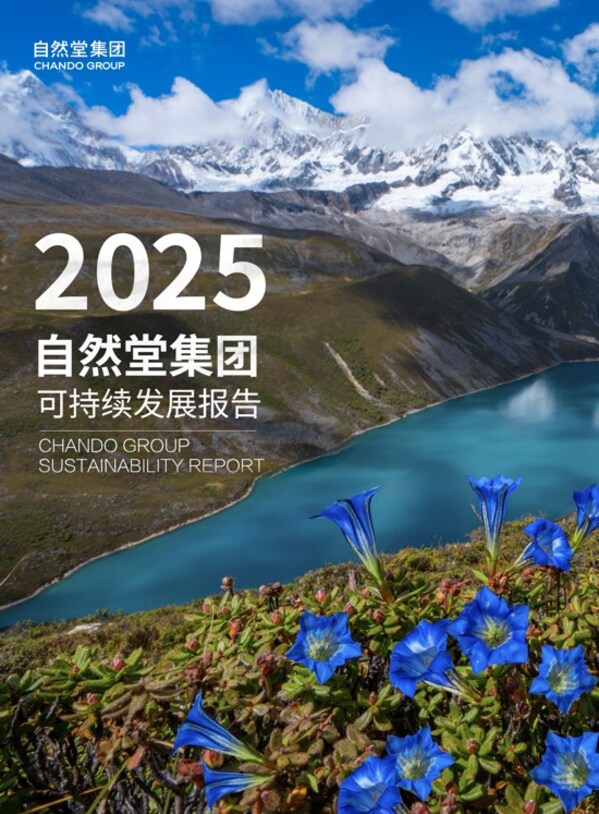
Image: 2025 Chando Group Sustainable Development Report
Zheng Chunying, Chairman and President of Chando Group, stated in the report that the Group stands at a golden starting point of historic opportunities for Chinese beauty brands. Three clear trends—sustained market growth, domestic brands becoming mainstream, and industry consolidation—are emerging. Shifting from an effort-driven to an adaptive mindset, embracing change through continuous learning, systematic judgment, and rapid adjustment, will turn historical opportunities into a sustainable future. With collective effort, Chando Group achieved healthy, high-quality growth in 2025, with revenue exceeding expectations and robust performance across both online and offline channels.
Creating Green Beauty, Protecting Beauty and Nature
Addressing global climate concerns, Chando Group has made “addressing climate change and protecting biodiversity” the primary core goal of its 2030 sustainable development strategy. In 2025, the Group conducted comprehensive greenhouse gas inventories for Scope 1, Scope 2, and six key Scope 3 categories, establishing a clear reduction pathway: using 2023 as the baseline, Chando Group commits to reducing absolute Scope 1 and Scope 2 emissions by 42% by 2030, aligning with the Science Based Targets initiative standard.
Oriental Beauty Valley • Chando Future Cosmetics City Launch: A New Benchmark for Green Manufacturing and Industrial Tourism
As the core practical carrier of this strategy, the “Chando Future Cosmetics City” in Shanghai’s Oriental Beauty Valley officially opened on October 28, 2025. Integrating photovoltaic power generation, smart logistics, and industrial tourism, it has been selected as one of “Shanghai’s Top Ten Landmark Cultural Tourism Projects for 2025” and recognized as a “2024 Advanced Smart Factory.” This space is not just an industrial tourism site but a new starting point in Chando Group’s development journey. It embodies a fresh vision for the future of the beauty industry, redefining industrial tourism through a fusion model of “culture, tourism, commerce, sports, and exhibitions.”
Chando Group believes that a future-oriented factory’s core lies in transforming industrial resources into cultural tourism experiences, turning production lines into immersive experience spaces and communication media. This is not merely about creating a corporate showroom or tourist attraction but converting industrial hard power into cultural soft power, making brand values perceptible, cultural narratives experiential, and consumption conversion more direct.
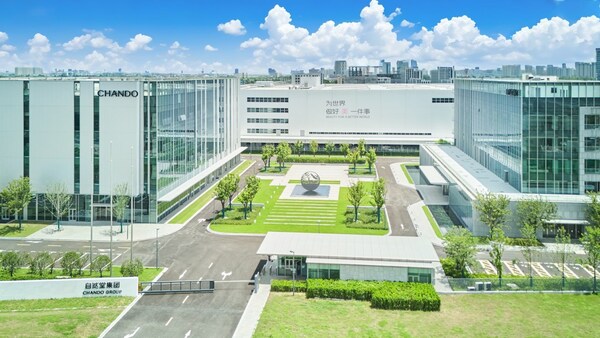
Image: Panoramic view of Oriental Beauty Valley · Chando Future Cosmetics City
In energy management, the Future Cosmetics City is fully integrated into the Group’s production base. The factory rooftop features a 3.1 MW distributed photovoltaic project operating on a self-consumption, surplus-grid-injection model, with an estimated annual power generation of 3.8 million kWh, a self-consumption rate of 95.26%, and a factory green electricity coverage rate of 24.62%. This reduces annual CO2 emissions by 1,787 tons, equivalent to planting 89,350 trees. Replacing traditional electricity with solar clean energy lowers production costs, improves energy efficiency, deeply implements the dual-carbon strategy, strengthens the ESG green development system, and establishes a benchmark for low-carbon production in domestic beauty brands.
In operations, the Future Cosmetics City introduces a “lights-out” smart logistics system, using automation and intelligent scheduling to significantly reduce energy consumption in warehousing and transportation. Concentrated water recovery and steam condensate recovery projects enhance water efficiency, while digital twin systems and smart supply chain platforms enable fine-grained management of materials and energy, providing a solid data foundation for full-chain carbon reduction. This sustainable benchmark, integrating green manufacturing, digital empowerment, and experiential communication, showcases the excellence of Chinese manufacturing to the public, earning deep consumer trust.
A Decade of Biodiversity Protection: Safeguarding the Himalayas and Benefiting Communities
From 2016 to 2025, over ten years, Chando Group has consistently focused on ecological protection in the Himalayas, the brand’s origin, without interruption. Since 2016, the Group has partnered with the China Environmental Protection Foundation to establish the “Chando Himalayan Environmental Protection Public Fund,” with cumulative donations reaching 29.2 million yuan.
As a key action fulfilling corporate sustainability and biodiversity commitments, the “Plant Grass in the Himalayas” public welfare initiative has run for eight consecutive seasons. The project has planted 6.66 million square meters of green wheat grass in the Shigatse region of Tibet. This grass not only prevents wind erosion, stabilizes soil, and improves soil quality but also provides high-quality forage, alleviating winter pasture shortages. In March 2025, the eighth-season dividend ceremony was held in Gangxi Village, Lhaze County, Shigatse. The 2024 net income reached 950,000 yuan, partly distributed as dividends to 706 villagers across 155 households and partly used to purchase machinery for the village collective cooperative. By creating jobs and boosting agricultural income, the project achieves a win-win synergy between ecological restoration, economic benefits, and social development.
In technology-empowered ecology, the Blue Jade Dragon’s Gentian flower extract, cultivated in collaboration with Tibet Agricultural and Animal Husbandry University, was successfully registered as a new cosmetic raw material with the National Medical Products Administration in 2025, becoming the first such raw material registered in the history of the Tibet Autonomous Region. This raw material originates from the artificially domesticated Blue Jade Dragon’s Gentian grown sustainably in the Chando Himalayan Public Botanical Garden. By establishing its own cultivation base, the project achieves protective development of rare plants while creating local employment and sustained economic value for the community, truly forging a sustainable development path of ecological stewardship, technological empowerment, and community benefit.
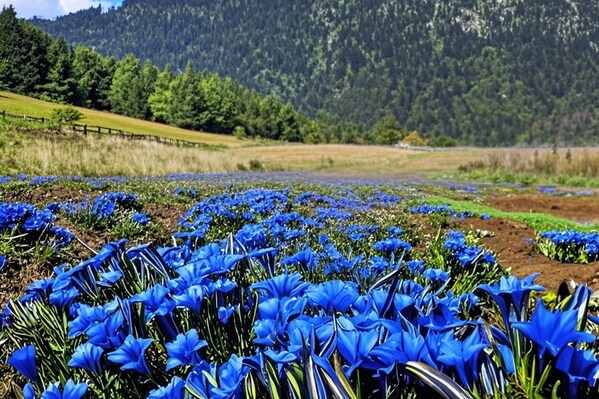
Image: Chando Blue Jade Dragon’s Gentian Ecological Cultivation Base
Notably, following the Blue Jade Dragon’s Gentian, Chando Group has achieved another breakthrough in rare plant raw material R&D. In March 2026, the Group’s Snow Lotus cell cluster successfully completed registration as a new cosmetic raw material with the National Medical Products Administration. Snow Lotus is a rare species found only in the high-altitude Himalayas and is a Class II nationally protected endangered wild plant. Chando Group’s plant raw material R&D team obtained permission to collect a small number of seeds, using plant tissue culture technology in the lab to induce germination and obtain cell tissues, achieving large-scale cultivation and industrial application of rare alpine plant callus. This breakthrough not only marks a significant advance in plant cell culture technology for Chando Group but also sets a new benchmark for the sustainable use of rare plant resources in the cosmetics industry.
Adhering to Green Technology and Raw Materials: Building the Foundation for Sustainable Beauty
Chando Group understands that true green beauty is not simply about piling on natural ingredients but about leveraging cutting-edge technology to unlock the potential of natural resources, achieving a perfect balance of efficacy, safety, and environmental friendliness. Adhering to the philosophy of “Derived from Nature, Effective through Technology,” the Group integrates green technology across its R&D platform, raw material technology, efficacy verification, and safety technology. In August 2025, the Chando Group R&D Center Shanghai Microbiology Laboratory, fully applying fifth-generation intelligent bio-fermentation technology, was officially launched and put into operation, marking a higher level of independent control over key bioactive raw materials. The lab focuses on large-scale, high-quality autonomous production of core yeast and lactic acid bacteria raw materials. Batch production capacity has increased approximately fivefold, with annual capacity expected to exceed 1,000 tons. Crucially, the production process achieves 100% raw material conversion with zero waste, and wastewater and exhaust gases are purified or recycled, achieving “zero emissions.”
For example, the Group’s proprietary patented ingredient Himayin, developed using fifth-generation intelligent fermentation technology, comes from natural raw materials. The fermentation process is mild and efficient, increasing active ingredient extraction rates by 300% and reducing production energy consumption by 25%, while also achieving 100% raw material conversion and biodegradable zero emissions.
In raw material selection, the Group prioritizes renewable resources. Using “living flower scent capture and replication technology,” the Group collects natural fragrances from high-altitude flowers without damaging the original ecology and achieves molecular replication. This technology is now applied to over ten natural scents, covering skincare, hair care, color cosmetics, and other product lines. Simultaneously, the Group uses plant tissue culture technology to achieve protective development of rare plants without consuming natural resources. For instance, the core ingredient of Chando Pink Diamond Space Rose Cream comes from a rare rose seed resource bank at 3,300 meters above sea level in the Pan-Himalayas. Through space microgravity breeding and plant cell tissue culture, it enriches higher levels and greater diversity of effective skincare ingredients.
Green Packaging and Circular Economy: Reshaping the Industry’s Low-Carbon Chain
On the industrial side, promoting green packaging and circular economy is another highlight of the report’s environmental chapter. Chando Group actively develops green product packaging, simplifies packaging design, advances large-scale and standardized process optimization, and vigorously promotes product refills to reduce resource consumption and packaging waste at the source. In 2025, the R&D Center advanced plastic reduction and emission reduction improvements covering 90 product SKUs. For example, the Chando Little Purple Bottle Essence produced 370,000 refill units annually, saving approximately 0.54 tons of virgin plastic. The oil-control volumizing shampoo and snow-skin brightening soft body wash produced 326,000 bag refills annually, saving approximately 14 tons of virgin plastic.
The Chando Ice Skin Water bottle uses the world’s first one-shot forming gradient blow-molding technology, developed over seven years. Compared to traditional spray painting processes, it reduces carbon emissions by over 90% and achieves zero paint consumption. The packaging cartons for the Group’s professional baby skincare brand, which addresses children’s skin issues, use FSC-certified paper, strictly controlling the production process to reduce forest damage.
In the circular economy field, the Chando Empty Bottle Recycling Program continues to deepen. Since its launch, over 10,000 consumers have participated. Consumers can drop off empty bottles at designated stores to earn membership points and free facial care services. The Group collects, sorts, and environmentally processes the recycled bottles, forming a low-carbon, circular green recycling chain, consistently practicing the concept of green beauty and zero-waste beauty. In 2025, Chando Group was selected as a Shanghai municipal-level “Zero-Waste City Cell” exemplary case, demonstrating the Group’s firm commitment and tangible results in environmental protection.
Adhering to a People-Oriented Approach: Weaving a Diverse Responsibility Network
Chando Group’s sustainable development philosophy is rooted in a comprehensive consideration of environmental, social, and governance factors, with the core being to unwaveringly benefit humanity and give back to society while ensuring the Group’s healthy development.
Socially, the Group continuously strengthens its strategic goal dimensions of public welfare and community impact, using public welfare as a link to actively build a responsibility network covering educational equity, cultural heritage, and regional economic development. In 2025, the Chando Spring Bud Scholarship initiative donated another 2 million yuan to the Tibet Autonomous Region Women’s Federation to support 350 outstanding female students from Tibet University, Tibet University of Tibetan Medicine, and Tibet Agricultural and Animal Husbandry University. As of 2025, the initiative has donated a total of 5.6 million yuan over three years, supporting 860 female college and high school students in Tibet. Beyond financial support, the Group empowers students through career planning lectures, tech literacy training, and social practice in Shanghai, enhancing their comprehensive abilities.
Additionally, the Group actively fulfills social responsibilities by responding swiftly to urgent societal needs. In January 2025, a 6.8-magnitude earthquake struck Dingri County, Shigatse, Tibet. Chando Group, in partnership with the China Environmental Protection Foundation, donated urgently needed relief supplies to the affected area. The Group also launched a “Love Alliance, Warm the Plateau” used clothing collection campaign, gathering 638 kg of warm clothing to help children in Sertar County and Batang County, Garze Tibetan Autonomous Prefecture, Sichuan, endure the cold winter. In supporting female tech talent, the Group donated 500,000 yuan in September 2025 to support the pilot “Shanghai Scientific Research Return Program,” providing systematic support for female tech professionals who temporarily left research due to childbirth, helping them smoothly return to their scientific careers.
Strengthening Corporate Governance: Fostering a Trustworthy Business Environment
In corporate governance, Chando Group has established a three-tier ESG governance structure of “governance layer, management layer, and execution layer” to systematically drive the implementation of its sustainable development strategy.
In intellectual property protection, the Group achieved a milestone with industry-wide significance. The Group took legal action against “code-scraping and code-pasting” violations on e-commerce platforms, securing a landmark trademark infringement victory in December 2025 at the Hangzhou Yuhang District People’s Court. This set a judicial precedent for regulating distribution channels in the beauty industry, earning the Group the “Shanghai Intellectual Property Innovation Award (Protection).”
In R&D innovation, as of the end of 2025, Chando Group had filed a total of 559 patents, including 290 invention patents, and had been granted 238 patents, including 111 invention patents, continuously strengthening the R&D barriers of domestic beauty brands with hardcore technology.
In digitalization and data security, Chando Group continues to advance its digital transformation. In 2025, AI technology was gradually integrated into marketing content production, live streaming operations, and intelligent customer service. The Group also completed Level 3 cybersecurity protection assessments for five core systems, ensuring consumer data security.
Comprehensive ESG Practice: Chando’s Sustainable Development Report Card
“Fulfilling social responsibility is both an initial commitment and a lasting dedication,” emphasized Zheng Chunying, Chairman and President of Chando Group. For Chando, corporate social responsibility is not merely a charitable act for embellishment but an essential duty and long-term strategy for the brand’s survival.
When 6.66 million square meters of gravel land are transformed into fertile soil through green wheat grass cultivation, when Spring Bud girls progress from the plateau to R&D labs, when tens of thousands of consumers participate in empty bottle recycling, and when the first code-scraping legal victory sets a benchmark for the industry—these practices affirm Chando Group’s core values: sustainable development is not a cost but a long-term value choice.
Standing at the new starting point of its 25th anniversary, Chando Group will continue to uphold the philosophy of “Together, More Beautiful,” joining hands with consumers, partners, and all sectors of society to write the next chapter of sustainable development for Chinese beauty brands.