

DongyingMay 22, 2026 /PRNewswire/ — On the occasion of the 26th International Day for Biological Diversity, FrieslandCampina’s “Protect Earth’s Immunity Project Launch and FrieslandCampina Crested Ibis Home Inauguration Ceremony” was successfully held in the Shandong Yellow River Delta National Nature Reserve. Zhang Quanzhou, Secretary-General and Office Director of the China Green Foundation; Liu Jing, Deputy Director of the Management Committee of the Yellow River Delta National Nature Reserve; and Yang Guochao, Senior Vice President of FrieslandCampina China, attended the event. They conducted field research on the reserve’s ecological construction and engaged in in-depth discussions on crested ibis breeding and rewilding, as well as wetland biodiversity conservation.
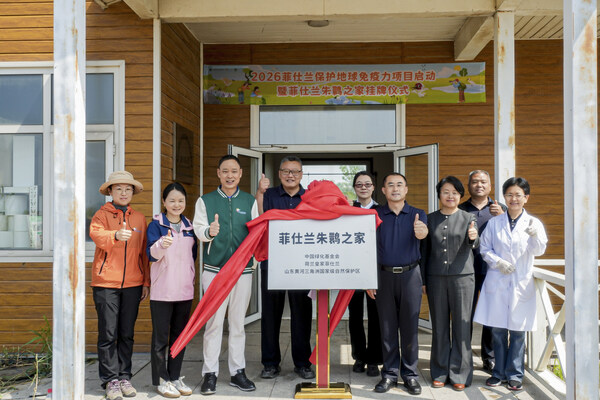
FrieslandCampina Crested Ibis Home officially inaugurated
With the official inauguration of the “FrieslandCampina Crested Ibis Home,” FrieslandCampina’s 2026 “Protect Earth’s Immunity” project has also been fully launched. Yang Guochao, Senior Vice President of FrieslandCampina China, stated: “Biodiversity constitutes the Earth’s immunity. In May last year, FrieslandCampina took the lead in establishing the ‘Protect Earth’s Immunity Alliance,’ linking industry chain partners to build a collaborative sustainable development community. A year later, witnessing the crested ibis home, whose restoration was supported by the alliance, come into use has strengthened our resolve to deepen biodiversity protection. In 2026, FrieslandCampina will continue to work with alliance partners and consumers, taking practical actions to protect Earth’s immunity and safeguard a harmonious coexistence between humans and nature.”
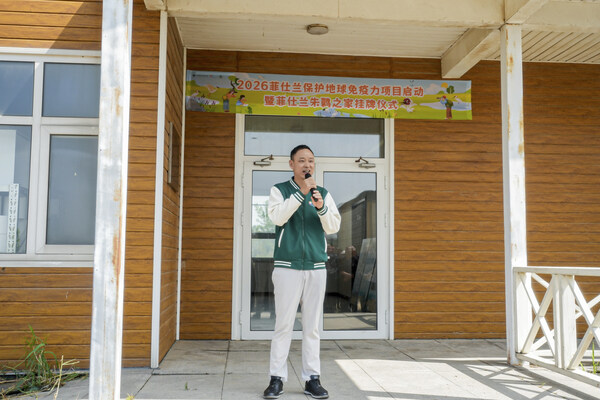
Speech by Yang Guochao, Senior Vice President of FrieslandCampina China
Steadfast Protection of Wetland Biodiversity
As a historical distribution area for the crested ibis and a crucial global bird migration stopover, the Yellow River Delta National Nature Reserve bears the important mission of expanding the crested ibis population and protecting wetland biodiversity. In June 2025, the reserve was hit by extreme winds of magnitude 15, damaging the crested ibis breeding base and rewilding enclosures. To aid in the restoration of the crested ibis habitat, FrieslandCampina, during the 99 Charity Day, partnered with 36 maternal and infant channel partners to launch a “One Walk” donation-matching campaign. Now, the fully renovated enclosures have not only restored their functions but have also been expanded and reinforced with enhanced protection levels. According to reports, 19 crested ibises artificially incubated at the reserve this year have successfully hatched, and the “FrieslandCampina Crested Ibis Home” will serve as a safer sanctuary for them.
Liu Jing, Deputy Director of the Management Committee of the Shandong Yellow River Delta National Nature Reserve, pointed out: “The revival of the crested ibis population is a landmark achievement in China’s biodiversity conservation. The ‘Crested Ibis Home’ brings together the goodwill of FrieslandCampina and various sectors of society, embodying the attention and expectations placed on biodiversity conservation. We firmly believe that with the strong support of the China Green Foundation and the deep involvement of corporate partners, the wetland ecological protection efforts in the Yellow River Delta will reach new heights.”
That day, witnessed by all parties, four adult crested ibises were released into the wild for the first time. These ibises, hatched in 2025, underwent nearly a year of adaptive training before officially returning to nature. This year, the reserve plans to release a total of 20 crested ibises, each fitted with satellite trackers to ensure continuous monitoring of their wild habitats.
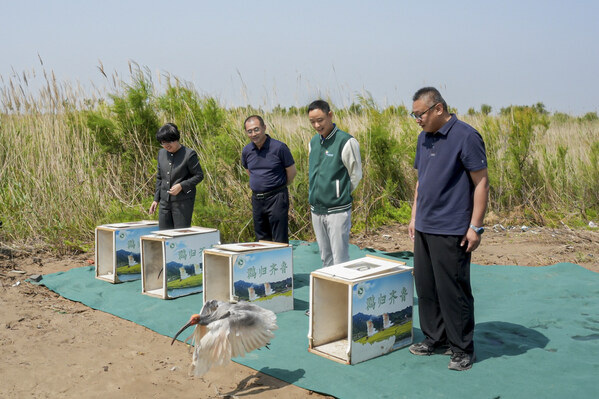
FrieslandCampina and other parties jointly release crested ibises
According to experts at the reserve, the global crested ibis population has reached 11,000, but the wild population still exhibits a narrow distribution range and low genetic diversity. The Yellow River Delta, with its superior ecological foundation and unique coastal wetland conditions, is critical for breeding and rewilding crested ibises, helping to enhance their environmental adaptability, improve physical functions, and restore migratory habits. Recently, the reserve monitored a crested ibis, numbered 162, released in 2024, which had reached Inner Mongolia, 300 kilometers away. This “expeditionary” ibis, having flown 11 hours in a single day and covering 260 kilometers, set two records in China’s history of crested ibis wild population migration observation: longest continuous flight time and distance. This marks a significant turning point in the reconstruction of the eastern migratory population of crested ibises.
To help the released crested ibises better adapt to wild survival, the 700-mu rice paddy—a crested ibis habitat donated by FrieslandCampina in 2025—has entered its second year of planting. By retaining 10% open water surfaces and avoiding the use of pesticides and fertilizers, the habitat is designed to support crested ibis foraging. Meanwhile, the income from rice cultivation is reinvested into the ongoing operation of the habitat, creating a sustainable development loop that integrates agricultural production, wetland conservation, and species protection.
Comprehensive Deepening of “Protect Earth’s Immunity”
Building on years of biodiversity conservation practices in areas like the Yellow River Estuary, FrieslandCampina innovatively proposed the public welfare initiative “Cherish Biodiversity, Protect Earth’s Immunity” in 2025. By leveraging the widely understood concept of “immunity,” the initiative makes biodiversity more tangible and relatable. It has gradually established a multi-scenario, three-dimensional public welfare model encompassing “rare species protection, industry chain stakeholder participation, and children’s sustainable development education,” continuously expanding its social impact.
In 2026, FrieslandCampina will further broaden and deepen the project. In terms of species protection, it will continue to support the breeding and rewilding of crested ibises at the Yellow River Estuary, providing nutritional support such as chick formula and loach supplementation. In nature education, it will collaborate with authoritative institutions to host biodiversity-themed exhibitions, connecting nature with daily life and promoting the mainstreaming of biodiversity. Additionally, it will support the Yellow River Estuary International Bird Watching Festival through activities like parent-child research trips and bird-watching competitions, inspiring public action, especially among families, and fostering ecological awareness in the next generation to respect and protect nature. In alliance cooperation, it will link more enterprises and platform partners, leveraging key moments like the 99 Charity Day to influence more consumer families, turning “Protect Earth’s Immunity” into accessible daily actions.
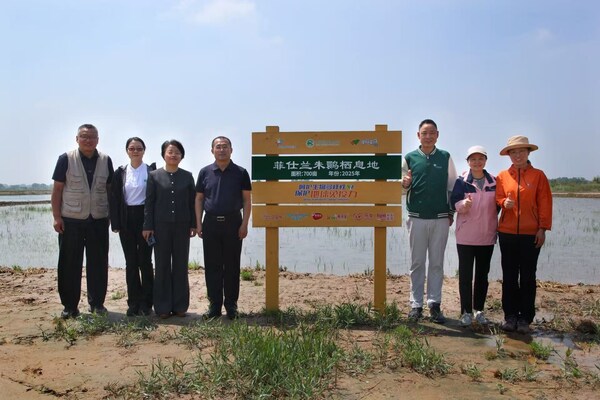
FrieslandCampina Crested Ibis Habitat Innovatively Explores ‘Rice-Bird Symbiosis’ Ecological Farmland Model
Zhang Quanzhou, Secretary-General and Office Director of the China Green Foundation, highly praised FrieslandCampina’s public welfare practices: “This year’s theme for the International Day for Biological Diversity is ‘Protect One Species, Benefit All Life.’ Over the years, FrieslandCampina has vividly embodied this theme with strong corporate responsibility and action. By creatively integrating ‘Earth’s immunity’ with health concepts, the company demonstrates a forward-thinking and heartfelt approach. In the future, the China Green Foundation will continue to play its role as a bridge for national-level public welfare platforms, working hand in hand with FrieslandCampina to attract more social forces to engage in wetland and biodiversity protection.”
Mutual Empowerment of “Earth’s Immunity” and “Maternal and Infant Immunity”
Humans and nature share a common destiny. FrieslandCampina’s “Protect Earth’s Immunity” strategy is rooted in the deep logic of mutual empowerment between “Earth’s immunity” and “maternal and infant immunity.” Guided by its corporate mission of “Nourishing Nature,” FrieslandCampina’s global sustainable development strategy focuses on three dimensions: “Nutrition, People, and Planet.” The company firmly believes that only a healthy ecosystem with strong “Earth’s immunity” can nurture pure pastures and high-quality nutrition, providing the most solid nutritional foundation for “maternal and infant immunity” at the source. By scientifically nurturing “maternal and infant immunity” and raising a more ecologically responsible next generation, this will in turn continue to support “Earth’s immunity,” safeguarding the global community of life.
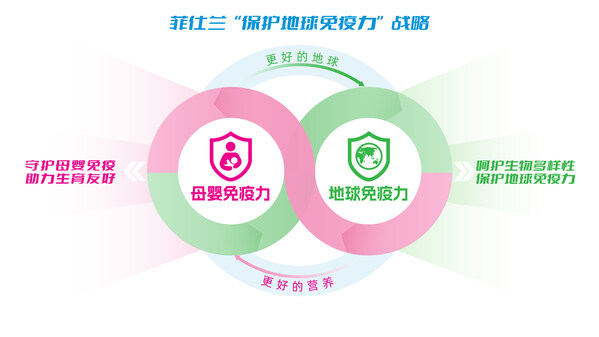
FrieslandCampina’s ‘Protect Earth’s Immunity’ Strategy
From Dutch pastures to Chinese wetlands, from a can of formula to a species, from humanity’s future to the planet’s future, FrieslandCampina is building a protective loop of mutual empowerment between “Earth’s immunity” and “maternal and infant immunity,” centered on “Nourishing Nature.” This is not only an extension of corporate social responsibility under business strategy but also a profound practice of sustainable development principles. With the full launch of the 2026 “Protect Earth’s Immunity” project, FrieslandCampina will join hands with all parties, using long-term mechanisms and practical actions, to continue laying a solid health foundation for the next generation and safeguard a sustainable home.