

ShanghaiJune 2, 2026 /PRNewswire/ — On May 14, 2026, ICON hosted a symposium in Shanghai titled “From Early Development to Global Markets: Empowering Chinese Innovation on the International Stage,” moderated by Yingying Hou, ICON APAC Marketing Manager. The event brought together experts from clinical research, investment, multinational pharmaceutical companies, and CROs, engaging in in-depth discussions across multiple dimensions including industry trends, translational medicine, clinical practice, and globalization strategies. Enterprise Ireland attended the event and co-organized the dinner.
In an environment of heightened uncertainty, Chinese innovation is accelerating its global expansion, with “how to proceed steadily and far” emerging as a core topic of this discussion.
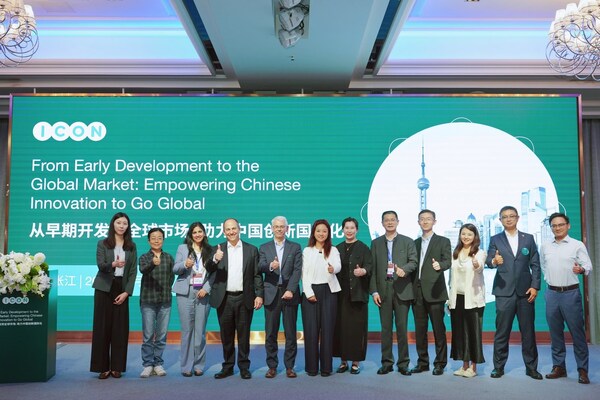
On May 14, 2026, ICON hosted the symposium in Shanghai titled “From Early Development to Global Markets: Empowering Chinese Innovation on the International Stage”
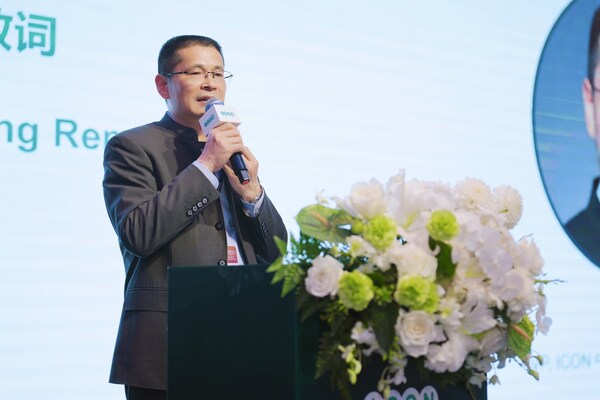
Yao Zhong (ICON Vice President, General Manager of Greater China and Hong Kong)
Yao Zhong (ICON Vice President, General Manager of Greater China and Hong Kong) noted in his opening remarks that against the backdrop of rising global uncertainty, Chinese innovative pharmaceutical companies are facing new development opportunities and challenges. He emphasized that cross-border collaboration and systematic capability building will become crucial pillars supporting Chinese innovation in its global journey. Meanwhile, the role of CROs is also evolving from executors to strategic partners.
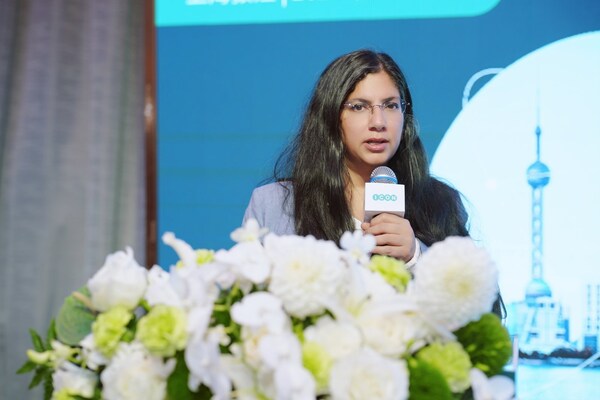
Deepali Suri (President of ICON Biotech)
Deepali Suri (President of ICON Biotech) shared key trends in the biopharmaceutical industry based on global research. She pointed out that in the current complex and volatile environment, differences in corporate competitiveness increasingly stem from operational capabilities and collaboration models, rather than scientific innovation alone. She also emphasized that end-to-end integrated solutions and flexible partnership models are becoming critical enablers for Biotech companies to achieve efficient development and navigate through cycles.
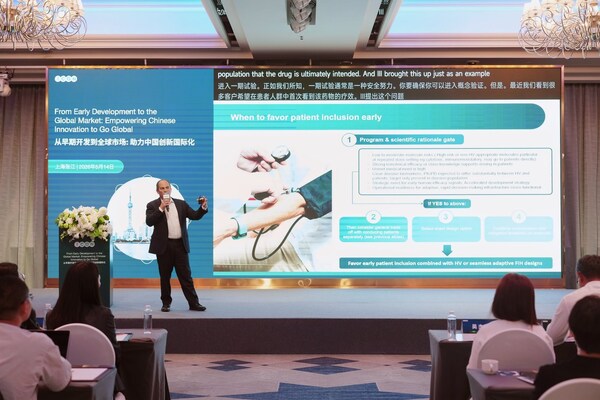
Keith Fern (ICON Senior Vice President, Early Clinical and Bioanalytical Solutions)
Keith Fern (ICON Senior Vice President, Early Clinical and Bioanalytical Solutions) noted that incorporating multi-regional patient data at an early stage helps enhance the global acceptability of projects and lays the foundation for subsequent international development. He emphasized that whether to obtain patient data early is essentially a strategic trade-off, not merely a technical pathway choice.
Regarding development pathways, he summarized three common globalization models for Chinese companies and pointed out that designing clinical development according to international standards from the project’s inception is key to reducing late-stage adjustments and rework. He also shared core success factors for entering the US and European markets, as well as differences in regulatory and execution aspects across regions.
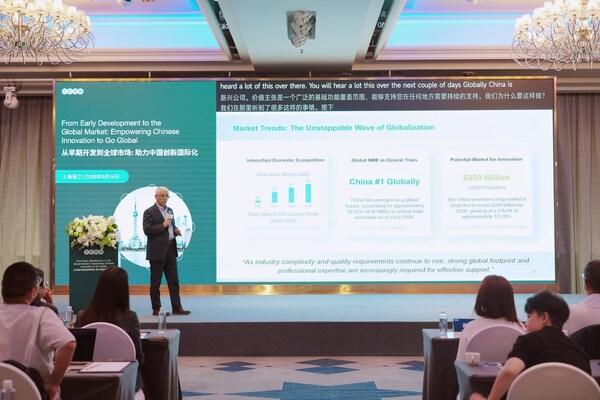
Tony Southers (President of ICON Strategic Solutions)
Tony Southers (President of ICON Strategic Solutions) shared practical pathways for supporting companies’ global expansion through strategic partnerships, focusing on the FSP model. He pointed out that FSP has evolved into a flexible and scalable collaboration model, which can combine various delivery methods such as FSP and FSO to achieve more efficient resource allocation and global synergy. In actual cases of collaboration with ICON, this model helps companies control costs while improving operational efficiency and supports their scaling at different stages of development.
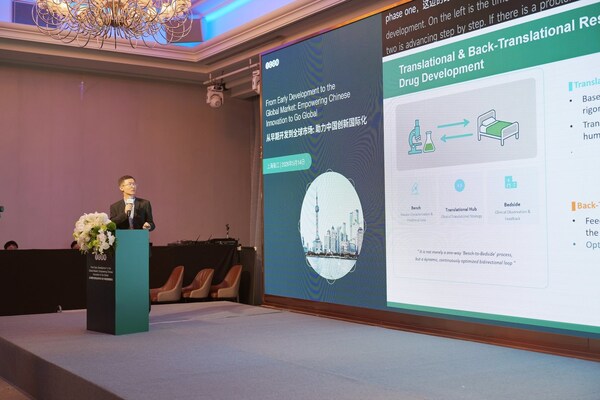
Yunxin Chen (ICON China Laboratory Senior Medical Director)
Yunxin Chen (ICON China Laboratory Senior Medical Director) focused on the core role of translational medicine in early clinical development. He noted that translational medicine is a key engine connecting preclinical research and early clinical trials. By deeply understanding disease mechanisms and preclinical data, designing systematic translational medicine strategies, and incorporating reverse translational research from clinical results back to the lab, R&D strategies and trial designs can be continuously optimized, thereby improving the efficiency and success rate of early clinical development.
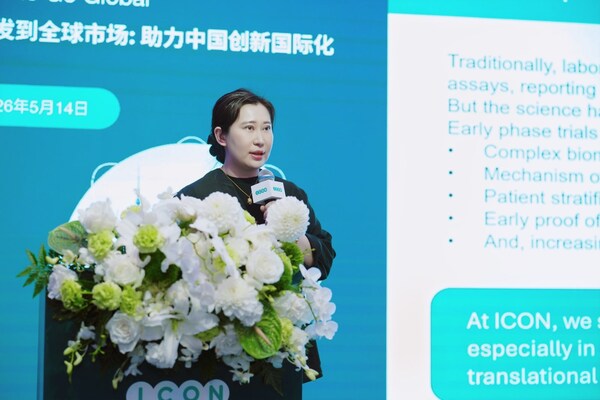
Wanni Zhao (ICON Central Laboratory APAC Commercial Director)
Wanni Zhao (ICON Central Laboratory APAC Commercial Director) emphasized from a laboratory perspective that the value of a central laboratory extends far beyond testing execution. She pointed out that by engaging earlier in trial design, providing biomarker validation and data support, the laboratory can become a crucial “decision think tank” for sponsors, significantly improving project success rates and efficiency.
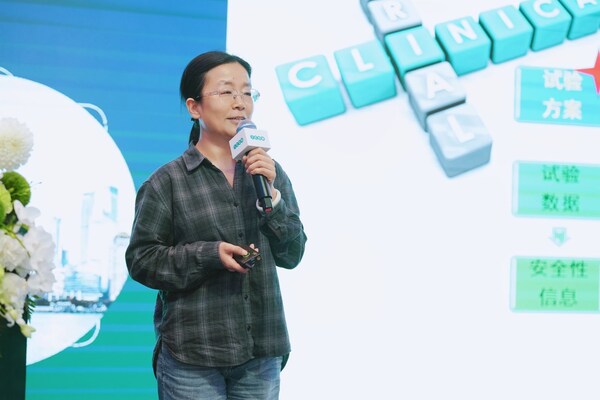
Professor Ling Zhang (Shanghai Pulmonary Hospital)
Professor Ling Zhang (Shanghai Pulmonary Hospital) shared insights on “China Speed” in clinical research from a clinical institution perspective. She noted that by optimizing processes, implementing parallel approvals, and leveraging efficient patient resources, Chinese institutions can significantly shorten trial timelines. At the same time, she emphasized that high-quality clinical trial design and cross-functional collaboration are key to achieving genuine acceleration.
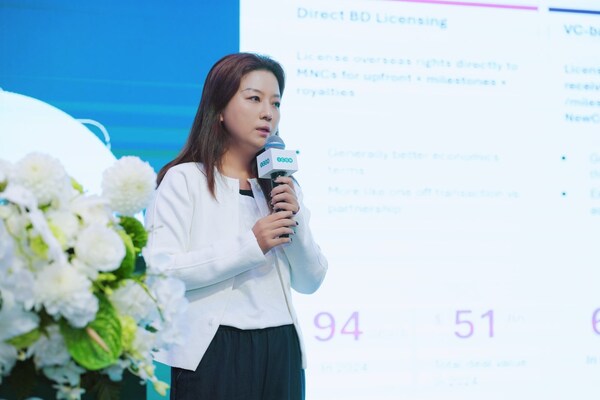
Jie Wu (Head of MPM BioImpact Asia)
Jie Wu (Head of MPM BioImpact Asia) pointed out from an investment perspective that the globalization of Chinese Biotech is shifting from “opportunity-driven” to “value-driven.” She emphasized that in the current capital environment, companies need to establish clear differentiated value and global development pathways early on, and achieve international expansion and long-term value realization through flexible collaboration models and capital strategies.
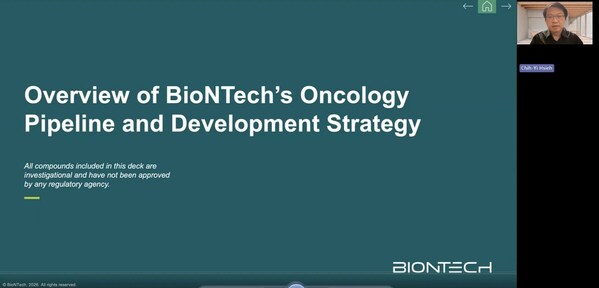
Chih-Yi Hsieh (BioNTech Vice President of Clinical Development) shared remotely BioNTech’s R&D pipeline and clinical strategy layout, as well as the construction approach and practices of the BioNTech China Innovation Center.
Panel Discussion
In the subsequent panel discussion, Su Heng, ICON Head of Commercial for Greater China, engaged in dialogue with several guests on globalization development, focusing on key issues related to CRO collaboration and capital value. The discussion reached a consensus that the significance of early global clinical trials extends beyond registration; its essence lies in supporting commercial value with high-quality, multi-regional data. Additionally, guests pointed out that Chinese innovation often falls into the trap of “locally optimal design” when going global, making it difficult to achieve global applicability. Furthermore, coordination difficulties and hidden challenges in cross-border execution were identified as significant factors affecting project success.
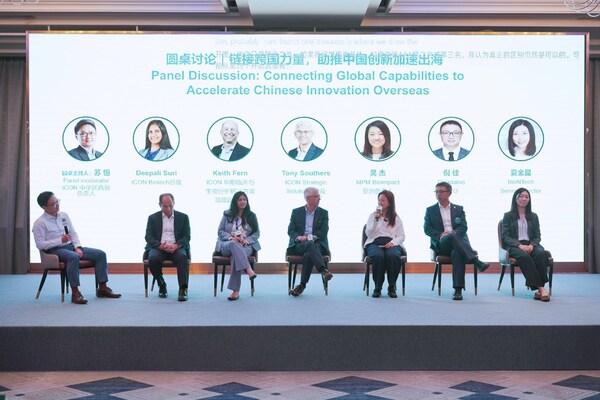
Panel Discussion
Key Insights
The core consensus of this symposium is that Chinese innovation going global has shifted from being opportunity-driven to capability-driven. Future competition will no longer rely solely on single-point technological breakthroughs but will depend on early clinical design capabilities, clinical execution efficiency, global collaboration models, and capital and strategic synergy. How to build systematic and sustainable innovation and implementation capabilities will be key to Chinese innovation’s journey to the global stage.