

GuangzhouMay 26, 2026 /PRNewswire/ — From May 22 to 24, 2026, the 4th Breast Milk Science Conference and the 2026 Maternal and Child Nutrition Academic Annual Meeting, hosted by the Chinese Nutrition Society, was grandly held in Guangzhou. The conference focused on cutting-edge issues in the fields of maternal and child nutrition and breast milk science, conducting multi-dimensional, high-level academic discussions, and invited national-level health education experts to disseminate knowledge related to breast milk science and maternal and child nutrition.
During the conference, media outlets including People’s Daily Health Times, Xinhua Net, YXJ, MedSci, and Maternal and Infant Industry Observation conducted exclusive interviews on topics related to breast milk science. Yang Zhenyu, Director of the Maternal and Child Nutrition Division at the Chinese Center for Disease Control and Prevention, and Sara Colombo Mottaz, Head of Medical, Scientific and Regulatory Affairs for Nutrition, Health and Wellness at Nestlé, engaged in in-depth discussions on the scientific value and health significance of breast milk, cutting-edge developments in global and local Chinese breast milk science research, and the innovative research and application value of key components such as HMO (Human Milk Oligosaccharides).
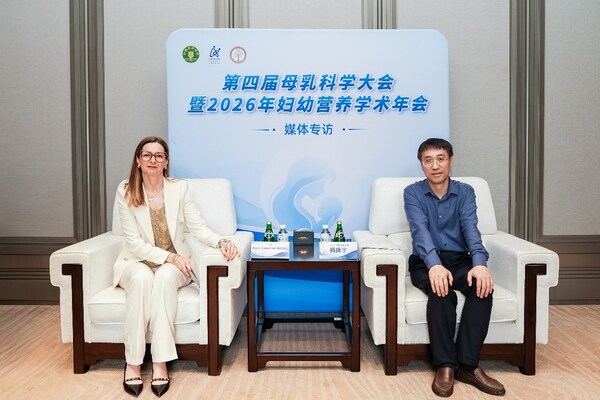
Yang Zhenyu, Director of the Maternal and Child Nutrition Division at the Chinese Center for Disease Control and Prevention, and Sara Colombo Mottaz, Head of Medical, Scientific and Regulatory Affairs for Nutrition, Health and Wellness at Nestlé, being interviewed by media
Yang Zhenyu, Director of the Maternal and Child Nutrition Division at the Chinese Center for Disease Control and Prevention, stated: Breast milk science is not only a research hotspot in nutrition but also a crucial part of exploring the code of life sciences, and it is a guarantee for the nation’s future high-quality fertility. Through breast milk science research, we aim to contribute to the development of maternal and child nutrition and health in China and advance the implementation of the Healthy China strategy.
Nestlé’s Long-Term Breast Milk Research Experience Establishes a Global Benchmark for Breast Milk Research
Nestlé adheres to the principle of “promoting breast milk, studying breast milk, and learning from breast milk,” drawing inspiration from breast milk nutrition and conducting science-based innovation and R&D. It has accumulated a long-term track record of breast milk research and achievements, gradually building a globally leading research system in terms of research depth, data scale, and academic influence, playing a significant leading role in the international landscape of breast milk science research.
The LIFE (Lactation for Infant Feeding Expertise) breast milk study is a core component of Nestlé’s breast milk research system. This project covers 20 countries worldwide, has enrolled over 3,600 researchers, collected more than 10,000 breast milk samples, and published over 160 research papers, establishing one of the largest, longest-running, and most systematic breast milk research databases globally.
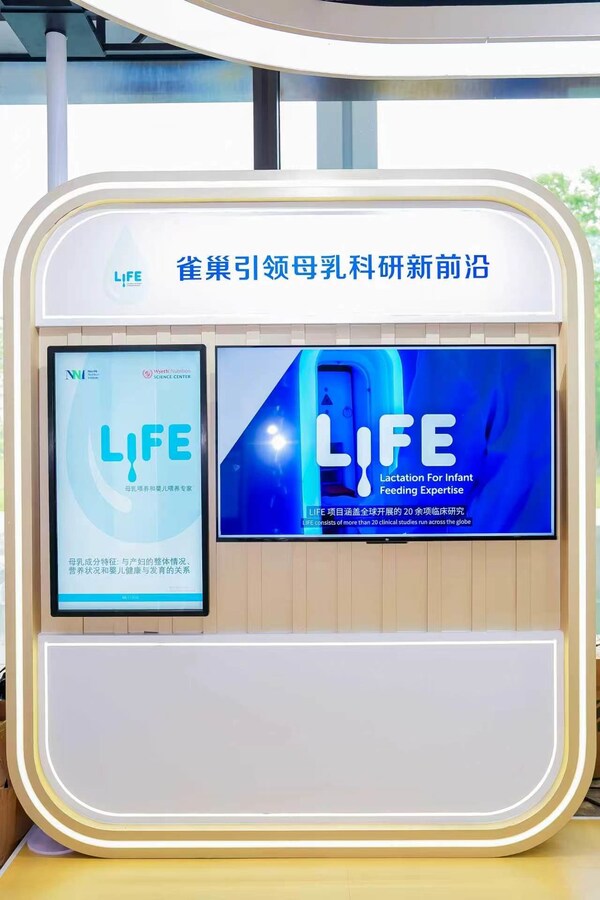
Nestlé possesses a globalized, systematic, and continuous comprehensive scientific research system, building a complete scientific evidence-based framework from breast milk observational studies, mechanism analysis, population interventions, to real-world validation. Supported by this robust research system, its research direction has expanded from exploring single nutritional components to studying the synergistic effects of multiple HMOs, probiotics, and other bioactive ingredients. The research scope not only focuses on immune and gut health but also covers key health areas such as bones, brain, and metabolism.
Adhering to Scientific Evidence-Based Principles, Precisely Tailored to the Needs of Chinese Mothers and Infants
To precisely meet the needs of Chinese mothers and infants and further focus on the characteristics of the Chinese population, Nestlé has become a key participant in promoting the establishment of a local breast milk composition research system through long-term and stable scientific research investment in the field of Chinese breast milk research.
- For example, Nestlé China’s “Ming” study, in collaboration with Peking University, has been implemented for several years, deeply exploring the composition and characteristics of breast milk from healthy Chinese mothers, providing clear and sustained scientific evidence for the nutrition and health of Chinese children. As China’s first large-sample dietary survey comprehensively covering all relevant healthy populations during the first 1,000 days of life, dozens of research findings have been published in domestic and international professional journals.
- Building on this, in July 2022, Nestlé, together with the National Institute for Nutrition and Health at the Chinese Center for Disease Control and Prevention and the Chinese Nutrition Society, jointly launched the “Ming+” project. This project focuses for the first time on the impact of different delivery modes on specific nutrient content in breast milk and its association with infant health outcomes, delving into the differentiated nutritional needs of Chinese mothers and infants and providing more scientific, comprehensive, and targeted nutritional solutions.
Overall, the maternal and infant cohort studies such as “Ming” and “Ming+” conducted in China cover 17 provinces, municipalities, and autonomous regions nationwide, systematically characterizing key components such as macronutrients and HMOs in Chinese breast milk. These efforts have promoted deep dialogue between Chinese breast milk research findings and international academic frontiers, demonstrating the contribution of regional characteristics to global science, while providing critical scientific support for localized product innovation.
Years of Deep Cultivation, Exploring the “Immune Code” in Breast Milk, Facilitating the Translation of Scientific Achievements
Nestlé is not only a pioneer in HMO R&D but has also consistently focused on the in-depth exploration of the diverse structural and functional value of HMOs. In 1988, Nestlé published the world’s first academic article on HMOs, systematically revealing the molecular structure and potential functions of HMOs. To date, it has been deeply involved in the HMO field for over 30 years. In terms of translating scientific achievements and forward-looking布局, Nestlé has established a globally leading research matrix in the HMO field, covering basic research, clinical interventions, and application of results.
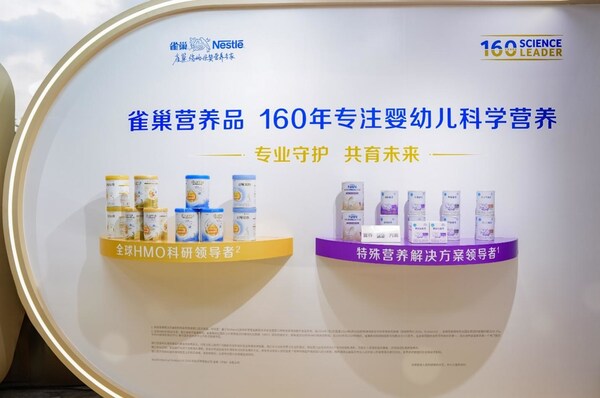
Nestlé Nutrition booth at the 4th Breast Milk Science Conference and the 2026 Maternal and Child Nutrition Academic Annual Meeting
Global Leader in HMO Scientific Research
Nestlé holds over 370 global patents, has conducted over 65 scientific studies, and published over 90 scientific papers, achieving the highest number of global patents and empirical evidence in the same HMO field1, making it the global leader in HMO scientific research.
From Single HMO Research to Research on the Diversity and Synergy of 10 HMOs
At the scientific research level, Nestlé has confirmed the diversity and synergy of 10 HMOs. This achievement marks a leap in HMO research from validating the efficacy of single components to studying the synergistic effects of multiple HMOs with probiotics and other bioactive ingredients, and has been clinically proven to bring multiple benefits to infants.
RCT Study on 10 HMOs Validates Their Application Value
Currently, the world’s first infant formula, Illuma Future 10 HMO, has been confirmed through a high-quality randomized controlled trial (RCT) to significantly reduce the incidence of upper respiratory tract infections in infants by approximately 50%2, reduce the risk of recurrent upper respiratory tract infections by 91%3, and delay the time of first infection in infants by about 20 days.
Accumulation of Clinical Evidence for HMOs in Chinese Infants
In terms of clinical intervention research, through collaboration with top-tier tertiary hospitals nationwide, a randomized controlled clinical study (STARLIT study) on HMO-fortified infant formula in Chinese infants is being conducted, accumulating clinical data on HMOs in Chinese infants and providing a solid scientific basis for the localized application of HMOs.
Continuous Innovation in the Future, Leading New Research Directions
Nestlé will continue to focus on the synergistic effects of multiple HMOs, as well as the synergistic research between HMOs, probiotics, and other bioactive ingredients, further exploring the value of key breast milk components in supporting infant health.
Utilizing AI technology to empower breast milk research, integrating global breast milk research data and cutting-edge analytical methods to deeply explore the synergistic effects of HMOs and bioactive ingredients. Nestlé will continue to use breast milk as the gold standard, exploring the scientific significance of different breast milk components, bioactive substances, and their combinations for infant health and development, laying the foundation for subsequent nutritional research and innovation directions.
Synergy of Industry, Academia, Research, and Application, Empowering Maternal and Child Nutrition
Translating scientific research results from the laboratory to the market is a necessary path for the落地 and transformation of HMO research findings, as well as a difficulty and challenge, requiring close cooperation among all parties throughout the lengthy process.
Yang Zhenyu, Director of the Maternal and Child Nutrition Division at the Chinese Center for Disease Control and Prevention, affirmed Nestlé’s important role in promoting the development of Chinese breast milk science from the perspectives of academic research and public health. He stated that Chinese breast milk research data can supplement global breast milk science research, providing a scientific basis for local maternal and child nutrition guidance, breastfeeding support, scientific feeding recommendations, and related health services.
Taking his multi-center breast milk study as an example, the research shows that human milk oligosaccharides (HMOs) change dynamically with lactation duration. This result corroborates international authoritative research and further provides important data support for Chinese breast milk science research.
Yang Zhenyu emphasized that breast milk research needs to be based on the characteristics of the Chinese population, using large-sample, long-term cohort studies to accurately characterize the nutritional profile of Chinese breast milk. These research data will provide a scientific basis for formulating infant and toddler nutrition standards in China and optimizing complementary feeding strategies, helping to improve the nutritional health level of Chinese women and children.
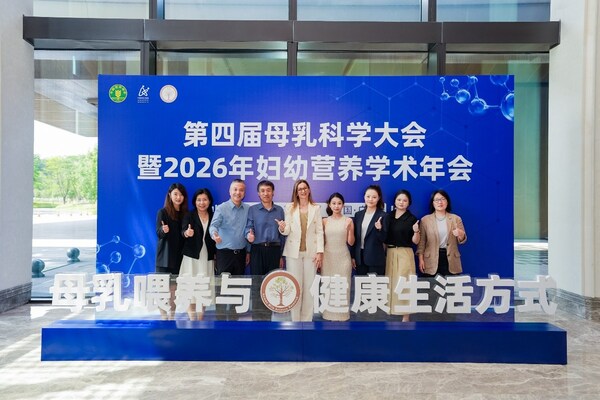
Group photo of experts and authoritative media at the conference venue
Looking ahead, Nestlé will continue to rely on its global scientific research system and localized innovation practices, collaborating with academic and industrial partners to drive breast milk science research to greater depths, accelerate the translation and application of scientific achievements, and build a more solid scientific support system for maternal and infant health in China.
References:
- Number one globally in HMO patents: Based on the statistical period from January 1, 2004, to February 6, 2025, using “human milk oligosaccharide (HMO)-related terms and their various expressions” as keywords to search for authorized patents globally (including invention patents, utility models, and design patents), including but not limited to authorized patents entering the national phase under the Patent Cooperation Treaty, authorized patents obtained through local applications in various countries, and authorized patents entering other countries under the Paris Convention. According to data retrieved by an independent third-party professional institution through authoritative databases, the Nestlé Group, to which Wyeth Nutrition belongs, ranks first globally in the number of authorized patents during the aforementioned statistical period; Number one globally in empirical evidence: Search report on global clinical intervention studies on human milk oligosaccharides for infants and children published by the National Science Library, Chinese Academy of Sciences, on April 7, 2025.
- Clinical studies show that the infant formula group containing active protein OPN had an approximately 50% reduction in discomfort compared to the control group without active protein OPN. BoL8nnerdal, et al. J Pediatr Gastroenterol Nutr. 2016.
- Compared to the control group, cesarean-born infants fed the test formula supplemented with 2’FL+LNnT had an approximately 91% reduction in the incidence of bronchitis. Puccio et al. JPGN, 2017.