

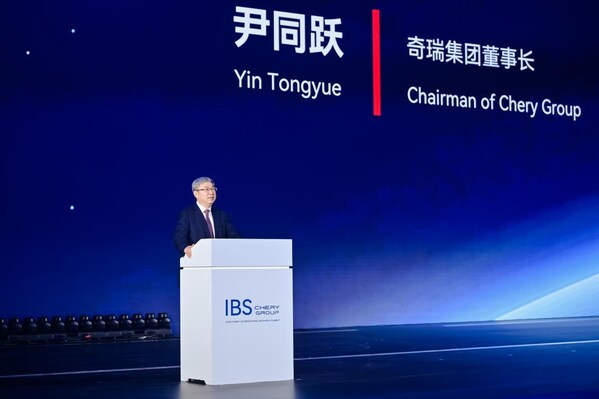
China WuhuApril 29, 2026 /PRNewswire/ — On April 27, the global launch event of Chery Mojia, themed “Scenario-Driven, Collaborative Co-Prosperity,” was held in Wuhu, Anhui Province. Chery Group Chairman Yin Tongyue attended the event and delivered a speech, systematically elaborating on Chery’s strategic considerations for entering the robotics industry. At the conference, the Mojia product lineup—including the humanoid robot Moyin, intelligent police robots, medical guide robots, and robotic dogs—made a collective appearance. Additionally, a thousand-unit signing and a hundred-unit batch delivery of intelligent police robots were completed, talent cultivation cooperation was initiated with a hundred universities, and a new strategic vision along with a robot leasing platform were unveiled. This comprehensively showcased the complete path of Chery Mojia robots from technological research and development, scenario validation, to large-scale industrial implementation.
Accelerating Scale: From Automotive Intelligence Capabilities to Robotics Industry Implementation
Chery Group Chairman Yin Tongyue noted in his speech that Chery has always adhered to the “T+T” strategy, learning from Toyota for ultimate quality and system capabilities, as well as from Tesla for innovative spirit and disruptive thinking. “We least want to be defined as an automotive company, but rather as a future-oriented, high-tech, embodied innovation company,” he said. He stated that Chery’s biggest advantage in making robots lies in the high degree of homology in underlying technologies such as perception, planning, and control between robots and intelligent vehicles, with smart cars being essentially mobile robots.
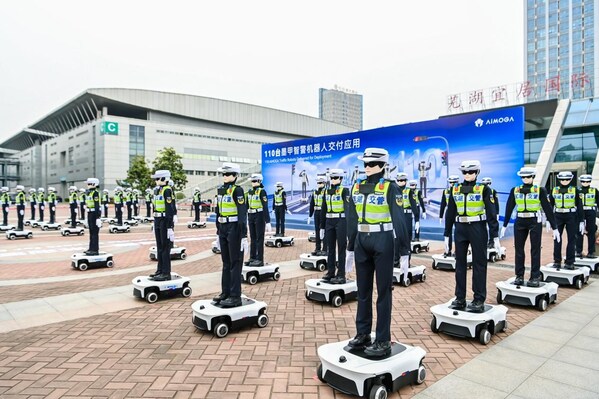
Yin Tongyue emphasized that Chery focuses on three main tasks: first, making robots’ reliability, cost, and lifespan suitable for batch application; second, repeatedly refining them in over 100 real-world scenarios across more than 50 countries; and third, achieving the hundred-unit delivery and thousand-unit signing of Mojia intelligent police robots today. “This marks that Mojia has fully entered a new phase of large-scale commercial application.”
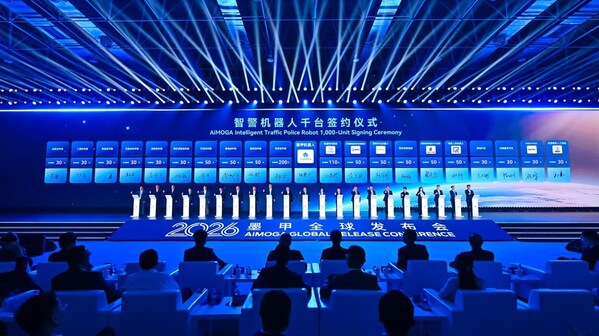
Signing and Delivery: Thousand-Unit Signing, Hundred-Unit Delivery, Intelligent Police Robots Entering Large-Scale Deployment Phase
At the launch event, the thousand-unit signing and hundred-unit batch delivery ceremony for intelligent police robots became a key highlight. A partner representative from Vietnam shared the cooperation journey from initial contact to formal signing with Mojia robots, and expressed plans to jointly build a robot experience center and intelligent industrial park, promoting the application of robots in more fields such as transportation, healthcare, and education.
This thousand-unit signing and hundred-unit delivery signify that Mojia intelligent police robots are no longer limited to single-point trials and scenario demonstrations, but have entered a phase of large-scale deployment and systematic operation.
Currently, Mojia intelligent police robots have been deployed in various city and event scenarios, including school guard posts in Wuhu, the Jiangyin Marathon, and the Changzhou Super League. They cover practical tasks such as peak-hour traffic guidance, illegal parking capture, non-motor vehicle violation management, and event traffic support, effectively supplementing frontline police forces and enhancing urban traffic management efficiency.
From single-city trials to multi-city, multi-scenario implementation, and from scattered application validation to thousand-unit centralized signing, Mojia intelligent police robots are rapidly integrating into the daily operational systems of urban traffic management, serving as a typical example of embodied intelligence serving public governance.
At the same time, Mojia robots have signed strategic cooperation agreements with a hundred universities, focusing on collaboration in robot technology research and development, scenario application, talent cultivation, and industry-education integration, laying a solid talent foundation for the long-term development of the robotics industry.
Strategic Release: Scenario-Driven Technology, Ecosystem-Supported Commercialization
At the conference, Chery Mojia Robot General Manager Zhang Guibing officially unveiled the new strategic vision for Mojia robots. He stated that Mojia robots will adhere to the development path of “scenario-driven, collaborative co-prosperity”: defining technological direction through clear scenarios, validating product value through real-world applications, and then feeding back into scenario expansion through technological iteration.
Around this strategy, Mojia robots plan to advance industrial implementation in three phases: Phase one, creating affordable robots for children’s companionship scenarios; Phase two, developing robots for public service and enterprise service scenarios; Phase three, ultimately bringing robots into households as intelligent assistants in daily life.
Zhang Guibing pointed out that for the robotics industry to truly achieve commercialization, it cannot rely solely on single product capabilities but requires forming a complete closed loop. This closed loop includes clear application scenarios, a talent team familiar with robots and scenario needs, sufficient technological reserves, a competitive industrial chain, stable sales channels, a financial leasing platform, a after-sales service system, and a data collection and feedback center. Only by connecting the entire chain of R&D, manufacturing, delivery, operation, service, and data feedback can robots continuously evolve in real-world scenarios.
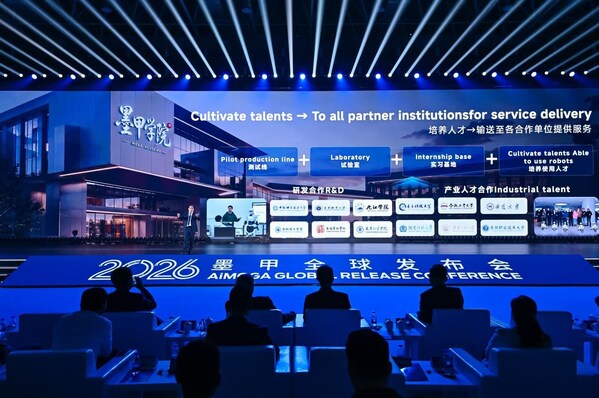
To this end, Mojia robots have already laid out 31 innovative application laboratories across six major fields, and simultaneously established the Mojia Academy to cultivate professional talent through testing lines, laboratories, and internship bases, continuously supplying application-oriented robot talent to partner organizations. At the same time, Mojia robots are proactively planning a core component industrial park to further build cost advantages and large-scale manufacturing capabilities.
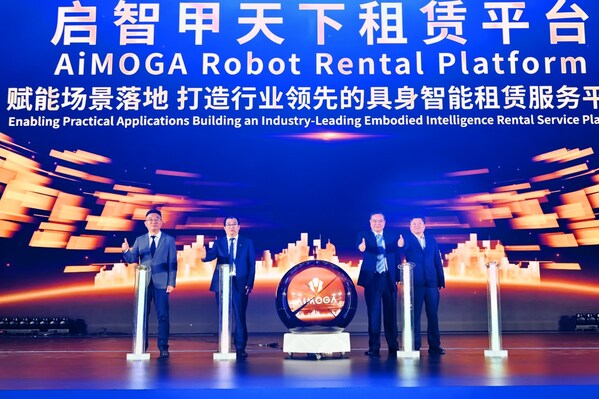
At the conference, Mojia robots also announced the establishment of the “Qizhi Jia Tianxia Robot Leasing Platform,” which, through innovative models such as leasing, financial services, and operational support, lowers the barrier for customer use and accelerates the promotion and application of robots across more industries and scenarios.
Conclusion:
From the “AI Night” technology showcase at the beginning of the year to the thousand-unit signing, hundred-unit delivery, hundred-university cooperation, and leasing platform launch at this global launch event, Mojia robots are providing the Mojia answer to the industrialization of embodied intelligence through real scenarios, real orders, and real deliveries.
Looking ahead, Mojia robots will continue to adhere to the long-termist path of “practical technology, real scenarios, human assistant,” leveraging Chery’s accumulation in manufacturing systems, supply chain capabilities, global layout, and intelligent technology to create trustworthy intelligent assistants for humanity, jointly building a robotics industry ecosystem with global partners, and promoting embodied intelligence to truly enter cities, industries, and daily life.