

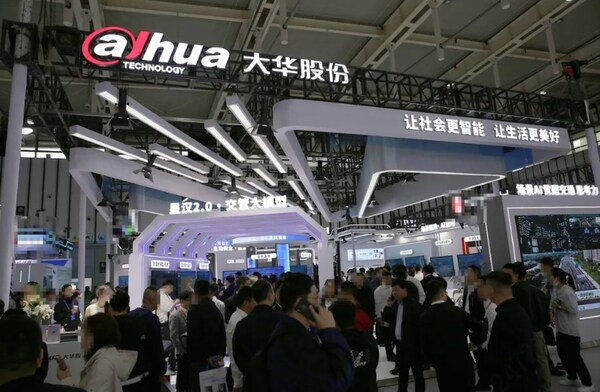
Hangzhou and NanjingApril 23, 2026 /PRNewswire/ — On April 22, the 16th China International Road Traffic Safety Products Expo grandly opened at the Nanjing International Expo Center. Zhejiang Dahua Technology Co., Ltd. (referred to as Dahua Technology) made a stunning appearance with the theme “Scenario AI Awakens Traffic Thinking Power,” comprehensively showcasing cutting-edge exploration and practical achievements centered on the Xinghan Traffic Management Large Model 2.0, and deeply interpreting the integrated application and value empowerment of scenario AI in traffic management.
Leveraging the multimodal and visual analysis capabilities of the Xinghan Large Model 2.0, Dahua Technology has achieved implementation in multiple business scenarios, including clue mining for hidden hazardous vehicles, early warning for accident-prone situations, tracking of high-concealment vehicles, and effective early warning for traffic incidents, helping to advance traffic management towards intelligence and precision.
In terms of hazard identification, multimodal AI retrieval technology breaks down the boundaries between text and images, supporting arbitrary searches for motor vehicles, non-motor vehicles, pedestrians, and their attributes and behaviors. It is widely used for clue mining of risky behaviors such as truck overloading and distracted driving, achieving an efficient closed loop for evidence collection. For example, in distracted driving identification scenarios, users can quickly locate vehicles with dangerous driving behaviors, such as looking down to use a mobile phone, from massive images of vehicles passing through checkpoints through natural language dialogue.
For special vehicles prone to accidents, such as three-wheeled vehicles carrying people and “old man’s music” (low-speed electric vehicles), Dahua Technology has launched a multimodal AI early warning function. Combining text-based deployment and model fine-tuning technology, it achieves precise identification and real-time early warning of complex behaviors. The system can accurately distinguish between front-seat passengers and cargo-carrying situations in the vehicle compartment, effectively avoiding false alarms caused by front-seat passengers and significantly reducing accident rates.
In the management of high-concealment vehicles, multimodal AI image search technology supports identification and retrieval based on arbitrary features, aiding in identity restoration and precise tracking in cases such as abnormal license plate recognition and hit-and-run incidents involving non-motor vehicles. Taking the management of “bull’s-eye lamp abnormal license plates” as an example, by selecting the highlighted area of a vehicle’s front end in nighttime checkpoint images, the system can correlate and find the vehicle’s passing records during the daytime when the strong lights are not turned on, restoring the true license plate information and improving management efficiency.
In traffic incident monitoring, the use of large and small model collaborative technology significantly improves the detection accuracy of events such as debris and traffic accidents, reducing false alarms. The large model can intelligently distinguish types of debris, actively filtering out lightweight events like cardboard boxes and plastic bottles that do not require police response, enhancing the effectiveness of early warning information and processing efficiency.
At the same time, Dahua Technology has innovatively launched an AI interactive cockpit, supporting functions such as dialogue-based traffic congestion management and intelligent traffic report generation, achieving efficient human-machine collaboration and making management more convenient and intelligent.
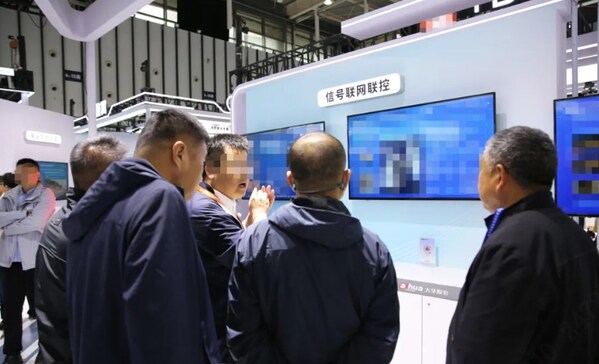
In the area of signal control management, Dahua Technology focuses on the networking and coordinated control of full-area signal machines, offering two types of solutions: new standard protocol integration and signal machine core replacement. These solutions address industry challenges such as the coexistence of multiple brand platforms and the inability of devices to connect to networks, reducing renovation costs and construction difficulty. Leveraging holographic traffic flow perception and scenario-based intelligent signal control, it achieves refined traffic management models such as full-time intersection control, dynamic green wave corridors on road sections, and safe merging at entrances and exits.
Based on the 92GHz new standard radar-video integrated machine, Dahua Technology has upgraded software and hardware to improve traffic flow collection accuracy in congestion scenarios to 95%, significantly enhancing the adaptability of intelligent signal control across all time periods and multiple scenarios. This fully supports intelligent signal control applications such as intersection adaptive control, dynamic green wave corridors on road sections, safe merging at entrances and exits, and elevated road plan coordination, effectively improving road traffic efficiency.
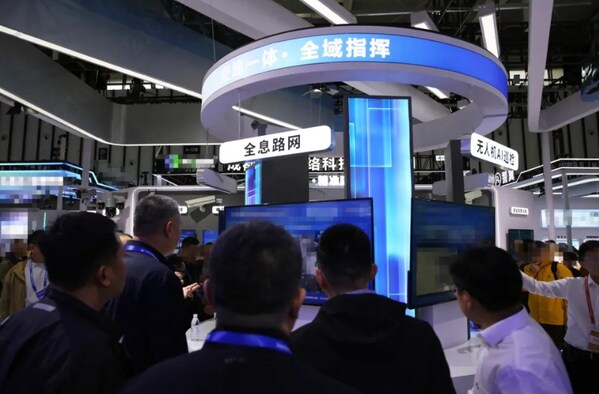
In terms of air-ground coordination, Dahua Technology has built a three-dimensional command system combining “air-ground AI inspection + AR high-altitude mobile real view + digital holographic road network.” Air-ground AI inspection with high-altitude intelligent patrol drones can quickly detect and handle 9 types of events, including congestion and road construction, and 9 types of violations, such as illegal parking and lane crossing. AR high-altitude mobile real view provides a unified display of air-ground video resources, enhancing duty management efficiency. Holographic + VR real-view command achieves 720° panoramic monitoring without blind spots or distortion, combined with 3D digital twin technology, empowering core scenarios such as holographic intersections, tunnels, elevated roads, and special security operations.
Additionally, Dahua Technology continues to advance precise management of traffic violations and safety hazards. The Firefly Large Model Camera 3.0 enables a single device to capture both motor vehicles and non-motor vehicles, reducing construction investment. By loading large model capabilities on the edge side, it further improves recognition accuracy in complex scenarios such as not wearing seat belts, using mobile phones while driving, signal light failures, and non-standard license plates. For the challenge of electric bicycle management, it has introduced a three-tier governance system integrating compliance rate AI assessment, intelligent recognition control, and electronic guidance, achieving scientific guidance and precise control.
In the future, Dahua Technology will adhere to a technology innovation-driven approach, promoting the deep integration of scenario AI into the entire chain of traffic management, strengthening the foundation for refined traffic governance and long-term safety development, and continuously contributing new strength to the development of intelligent traffic management.