

ShanghaiMay 28, 2026 /PRNewswire/ — The “Regular Cycle, Not Heavy, Not Painful” International Menstrual Day film screening event, hosted by Bayer, a global supporter of International Menstrual Day, was held in Shanghai. The event also received support and guidance from the Pudong Women’s Federation and the Pudong Women Talent Promotion Association, responding to the social issue of “Women’s Full Lifecycle Care.” It aimed to enhance public scientific awareness of menstrual cycle regularity and common gynecological health issues, help women understand the health signals behind menstrual changes, and encourage them to proactively seek professional support and medical help when abnormalities occur. The event’s philosophy deeply resonated with the themes of female bodily autonomy and medical decision-making rights presented in the film “I, Xu Ke.” Before the screening, authoritative gynecologists, film critics, representatives from the Women’s Federation, and Bayer engaged in dialogue and sharing with the audience, promoting public discussion on women’s health from multiple perspectives—social advocacy, medical rationality, and personal experience—conveying a clear and firm value proposition: women should value the signals their bodies send, actively seek professional support, and have the right to make decisions for themselves.
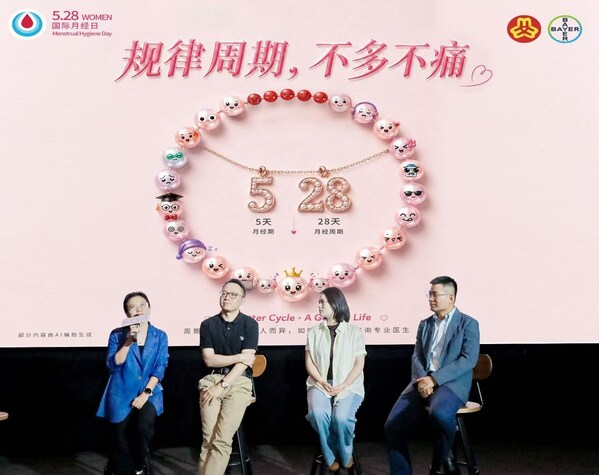
“Regular Cycle, Not Heavy, Not Painful” International Menstrual Day Film Screening Held in Shanghai
Cai Li, Director of the Women’s Development Department of the Shanghai Pudong New Area Women’s Federation and Secretary-General of the Women Talent Promotion Association, stated: “The Pudong Women’s Federation has always regarded women’s full lifecycle care as an important mission. Through relevant projects, we promote the organic integration of technology empowerment, community co-governance, and women’s growth, ensuring that every woman can be seen, understood, and supported. This International Menstrual Day event is a vivid practice of this philosophy. We hope to promote a more rational and open social awareness based on science, jointly creating a favorable environment for women’s health. With the joint efforts of all parties, we believe that society’s attention and support for women’s health issues will continue to improve, making care a part of everyday life.”
International Menstrual Day is observed annually on May 28, with “5” representing the five-day menstrual period and “28” representing the 28-day cycle—a set of numbers that inscribes the most regular yet often overlooked cycle in a woman’s body into a specific date. Dr. Gu Zhuowei, Chief Physician of the Obstetrics and Gynecology Department at Renji Hospital, Shanghai Jiao Tong University School of Medicine, said: “The menstrual cycle is not necessarily fixed at 28 days. As long as the fluctuation is within 7 to 9 days, the current international consensus considers it relatively regular. What we focus on more is not the exact number of days, but whether each cycle is roughly stable. This is also the core message that this year’s ‘Regular Cycle’ theme aims to convey.”
When discussing “menorrhagia” (heavy menstrual bleeding) under the “Not Heavy, Not Painful” theme, Dr. Gu Zhuowei explained: “Menorrhagia not only affects daily life but can also lead to iron-deficiency anemia, causing fatigue, dizziness, palpitations, and even increasing the cardiovascular burden. First, the cause should be identified. It may be related to uterine fibroids, endometrial polyps, or ovulation disorders. Typically, ultrasound examination is needed, and if necessary, further evaluation with hysteroscopy. After excluding malignant lesions, whether the bleeding is due to ovulation disorders or structural abnormalities like adenomyosis or polyps, combined oral contraceptives (COCs) are a first-line treatment option for adolescents and women of reproductive age who have contraceptive needs and no contraindications. They can effectively stop bleeding, reduce menstrual flow, and regulate the cycle while providing contraception. For bleeding caused by adenomyosis or endometrial issues, the levonorgestrel-releasing intrauterine system is also a common clinical option, which reduces bleeding by locally releasing progesterone to thin the endometrium.”
Regarding dysmenorrhea (painful periods), Dr. Gu Zhuowei emphasized: “Pain should not be seen as an ‘inevitable cost’ of menstruation. If the pain progressively worsens, lasts longer, or significantly impacts study, work, and sleep, it is necessary to be alert to secondary dysmenorrhea caused by conditions like endometriosis or adenomyosis. In such cases, relying solely on short-term pain relief is often insufficient; long-term, standardized management is needed. Clinically, combined oral contraceptives (COCs) are commonly used as a first-line medication to relieve both primary and secondary dysmenorrhea. Additionally, progestin-only preparations containing dienogest or the levonorgestrel-releasing intrauterine system also have substantial evidence-based medical support for pain relief and recurrence prevention.”
Yuan Junjie, General Manager of Bayer China’s Women’s Health Business, said: “Bayer has been deeply involved in women’s health for a century, committed to meeting women’s health needs at different life stages—adolescence, reproductive age, and perimenopause—through scientific innovation. We not only continuously provide evidence-based original innovative solutions but also actively participate in various science popularization activities, working with all sectors of society to promote awareness. Bayer is a long-term global supporter of International Menstrual Day. This time, we collaborated with the Pudong Women’s Federation to host this event, with the core advocacy of ‘Regular Cycle, Not Heavy, Not Painful,’ hoping to help more women understand the signals their bodies send, obtain scientific answers and professional support when needed, and make confident choices for their health.”