

Jinan, ChinaJune 10, 2026 /PRNewswire/ — On June 7, 2026, the “Multi-Center Research Academic Conference on Agent-Based Interpretation of Laboratory Reports and Launch Meeting of Expert Consensus on Agent-Based Interpretation of Laboratory Reports”, hosted by the Laboratory Medicine Professional Committee of the Chinese Research Hospital Association, was grandly held in Jinan. This conference brought together top experts and scholars in the field of laboratory medicine nationwide to conduct in-depth discussions on the cutting-edge applications, practical implementations, and future trends of large language models and agent technology in laboratory medicine. It also officially initiated the development of China’s first “Expert Consensus on the Application of Agents in the Interpretation of Laboratory Reports (2026 Edition)”, marking a new stage of standardized and normalized development in the intelligent transformation of China’s laboratory medicine.
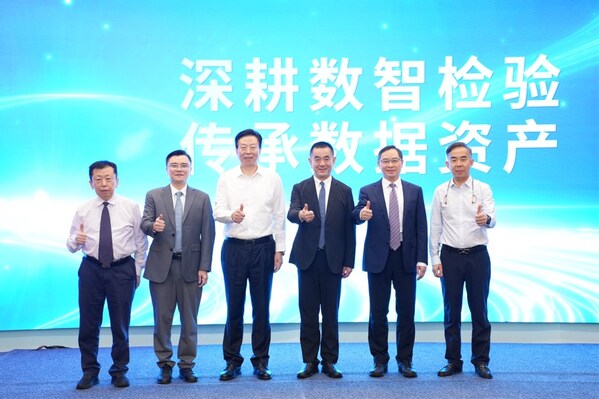
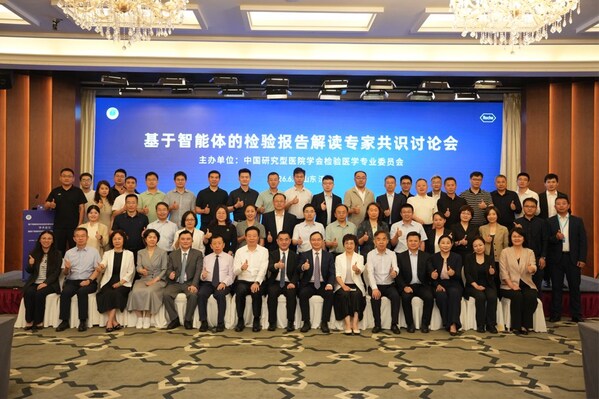
Figure: Consensus Launch Ceremony
Professor Wang Chuanxin, Chairman of the Laboratory Medicine Branch of the Chinese Medical Association and Qilu Hospital of Shandong University, pointed out in his address: “With the continuous expansion of laboratory test items and the explosive growth of data volume, traditional manual interpretation models can no longer meet the demands of the precision medicine era. The rise of large language models and agent technology has brought revolutionary development opportunities to laboratory medicine, effectively unlocking the clinical value of laboratory data and improving diagnostic efficiency and quality. The expert consensus launched this time is a guiding document that systematically standardizes the application of agents in the interpretation of laboratory reports within the industry. It will provide standard basis for the safe, trustworthy, and standardized application of the technology, promoting the high-quality development of China’s smart laboratory medicine.”
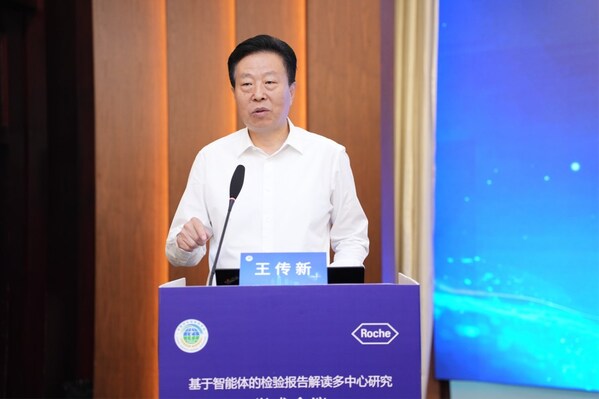
Figure: Professor Wang Chuanxin
AI Reshaping Laboratory Medicine: Solving Industry Pain Points, Unlocking Data Value
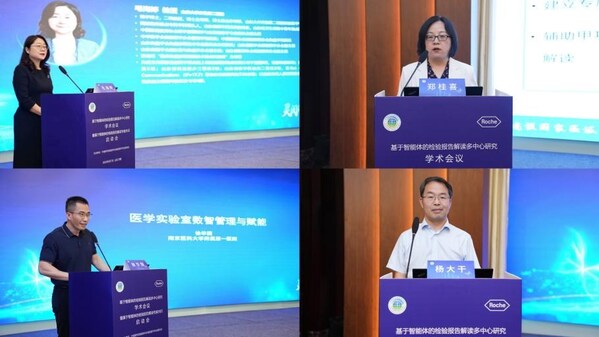
The rise of large language models and agent technology provides a new path to solve these industry pain points. At the conference, experts including Professor Mao Haiting from the Second Hospital of Shandong University, Professor Zheng Guixi from Qilu Hospital of Shandong University, Professor Xu Huaguo from Jiangsu Province Hospital (The First Affiliated Hospital of Nanjing Medical University), and Professor Yang Dagan from the First Affiliated Hospital of Zhejiang University School of Medicine shared the latest research results and clinical practice experiences of large model agents in the field of laboratory medicine, including assisting in report interpretation, anomaly identification, disease-specific prediction, and human-machine collaboration. Experts unanimously agreed that AI technology is evolving from “indicator-level interpretation” to higher-order capabilities such as “multi-indicator correlation analysis, structured report generation, and dynamic trend warning.” In the future, it will develop towards disease-specific models, multi-center validation, full-process integration, and hybrid intelligence architectures, driving the transformation of laboratory medicine from a “data provider” to a “clinical decision-making participant.”
Expert Consensus Launch: Filling Standard Gaps, Leading Normalized Development
As the exploration of large language models and agent technology in the field of laboratory medicine deepens, the need for unified technical standards and risk mitigation is increasing. Against this backdrop, the conference officially initiated the development of China’s first “Expert Consensus on the Application of Agents in the Interpretation of Laboratory Reports (2026 Edition)”. This is the first expert consensus in China to systematically standardize the application of large language model agents in the interpretation of laboratory reports, filling a gap in the industry.
The consensus will be compiled by a writing group composed of authoritative experts from multiple large tertiary general hospitals and key medical research institutions nationwide. It will systematically review the application scenarios and clinical value of agents in laboratory report interpretation, and clarify the full lifecycle management standards for agents, covering all aspects including needs analysis, data preparation, model construction, validation and evaluation, deployment and integration, and continuous optimization.
Addressing the industry-wide concern about model “hallucinations,” the consensus will establish a quantitative grading evaluation system, categorizing hallucinations into four types: fabrication, contradiction, misattribution, and factual exaggeration, and setting grading thresholds and response mechanisms. At the same time, the consensus will also clarify quality assessment methods, standard operating procedures for human-machine collaboration, risk management requirements, and data security and privacy protection standards, providing comprehensive and actionable guidance for medical institutions applying agent technology.
Chen Jintian, Deputy Director of the Medical Equipment Development Promotion Working Committee of the China Medical Education Association, stated: “Technological innovation and standard construction together form the dual-engine driving the high-quality development of the medical industry. Currently, artificial intelligence technologies such as large language models are showing great potential in the field of laboratory medicine, but the standardized development of technology cannot be achieved without unified and scientific standards. The launch of this expert consensus is an important opportunity for the industry to pool wisdom and jointly address the intelligent transformation. We look forward to transforming artificial intelligence technology into clinically accessible, safe, and trustworthy application capabilities through multi-party collaboration, promoting China’s laboratory medicine to a higher level and truly benefiting patients.”
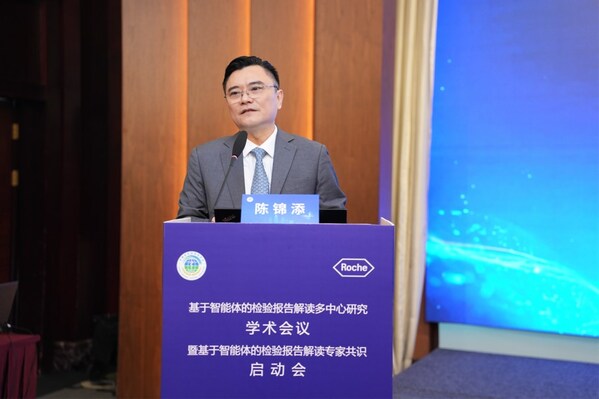
Figure: Mr. Chen Jintian
Lingyue Zhijian i-WiKi: Capitalizing on Experience, Creating an Industry Benchmark
As an important participant in promoting the development of smart laboratory medicine in China, Roche Diagnostics, leveraging its deep expertise in the field, has taken the lead in launching an agent product specifically tailored for medical laboratories — “Lingyue Zhijian i-WiKi”, providing a replicable and scalable intelligent solution for the industry. With the core concept of “capitalizing on experience to build a laboratory-specific agent,” this product deeply integrates large language model technology with professional knowledge in laboratory medicine. It supports mainstream large models such as DeepSeek, Qwen, and Doubao, and features customizable knowledge bases, seamless integration with HIS/LIS systems, and four core application scenarios (in-depth report interpretation, rare disease screening, intelligent Q&A, and further processing suggestions).
Currently, Lingyue Zhijian i-WiKi has been implemented and applied in multiple hospitals, including Qilu Hospital of Shandong University, Jiangsu Province Hospital (The First Affiliated Hospital of Nanjing Medical University), the Second Hospital of Shandong University, the Third Affiliated Hospital of Chongqing Medical University, and Beijing Jishuitan Hospital affiliated with Capital Medical University. According to statistics, Lingyue Zhijian i-WiKi has improved report review efficiency by 3 to 5 times, achieving significant results in reducing missed diagnosis rates and improving clinical communication quality, providing solid real-world evidence for the widespread clinical application of laboratory agents.
With the official launch of this consensus and the mature application of benchmark products like Lingyue Zhijian i-WiKi, the intelligent transformation of China’s laboratory medicine will enter a new phase of “standard-led, practice-driven.” In the future, artificial intelligence technology will be more deeply integrated into the entire process of laboratory medicine, fully unleashing the clinical value of laboratory data, and providing strong momentum for improving the quality of China’s medical services and achieving the goals of precision medicine.
|
[1] National Health Commission “National Medical Service Statistical Yearbook,” Survey Report of the Laboratory Physician Branch of the Chinese Medical Doctor Association |