

McDonald’s Tianjin Launches “Beauty” Central Axis Project, Creating New Urban Cultural Tourism Consumption Scenarios
TianjinMay 14, 2026 /PRNewswire/ — Today, McDonald’s China announced that the number of its LEED (Leadership in Energy and Environmental Design) certified green restaurants has surpassed 5,000. The Tianjin Chifeng Road restaurant, designed and built to LEED Gold standards, will become McDonald’s China’s 5,000th LEED-certified green restaurant, further demonstrating McDonald’s China’s long-term commitment and large-scale achievements in green restaurant construction.
Since introducing the internationally authoritative green building certification LEED in 2018, all newly opened McDonald’s restaurants have been designed and built according to LEED standards, now covering 31 provinces, municipalities, and autonomous regions in mainland China, with the certification scale ranking first globally for four consecutive years. On the same day, the Tianjin McDonald’s “Beauty” Central Axis project was officially launched, deeply integrating the city’s historical culture, core business districts, and brand consumption experience, using green initiatives to illuminate new urban roaming scenarios and stimulate new vitality in cultural tourism consumption.
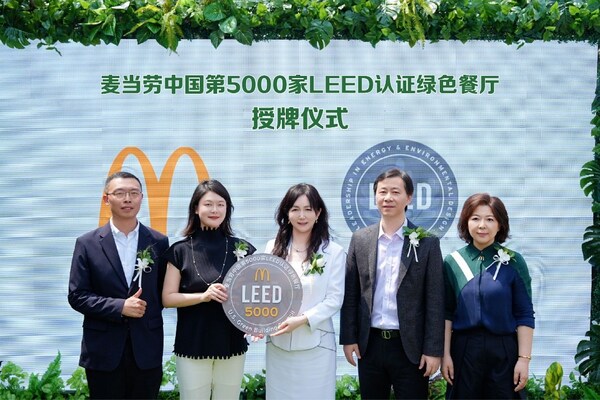
McDonald’s China LEED-certified green restaurants surpass 5,000, ranking first globally in certification scale for four consecutive years
The 5,000th LEED-certified green restaurant marks a significant milestone in McDonald’s China’s green development. Since 2018, McDonald’s China has continuously promoted the standardization and large-scale construction of green restaurants, integrating LEED standards into every aspect of restaurant site selection, design, construction, and operations management, gradually establishing a nationwide green restaurant system. “Restaurants are the core of McDonald’s business. In recent years, McDonald’s China has maintained a development pace of approximately 1,000 new restaurants annually. We also hope to leverage this scale and speed to continuously drive green development, allowing more consumers to experience a reassuring and comfortable green experience in their daily dining, while collaborating with industry partners to promote a more sustainable future,” said Gu Lei, Chief Impact Officer of McDonald’s China.
The Tianjin Chifeng Road restaurant is located in the heart of Tianjin’s historical and cultural district, covering over 400 square meters with two floors and more than 100 seats. Designed in McDonald’s iconic global Ray style, it incorporates elements of Tianjin’s historical character, such as red brick facades, vintage corridors, lattice art ceilings, and retro lattice doors and windows, allowing customers to savor the city’s cultural charm while enjoying McDonald’s delicious food. As McDonald’s China’s 5,000th LEED-certified green restaurant, the Chifeng Road restaurant promotes energy conservation and emission reduction from site selection and design to building materials, construction, and energy management, minimizing environmental impact throughout the process:
- Natural Lighting Enhances Comfort: The restaurant features energy-efficient insulated glass windows and curtain wall designs that introduce natural light while reducing the impact of sunlight on comfort, creating a brighter and more pleasant dining environment.
- Green Building Materials Reduce Carbon Emissions: The restaurant uses decoration materials certified by the international authoritative standard GREENGUARD, along with 100% recyclable pure aluminum ceilings, wood-grain panels, and mineral fiber boards. The flooring uses Type III Environmental Product Declaration-certified tiles partially made from recycled materials, sourced within 100 kilometers to reduce carbon emissions during transportation.
- Efficient Equipment + Smart Management for Energy Savings: Over 80% of the restaurant’s energy-consuming equipment meets Energy Star standards, and it is equipped with variable-frequency exhaust systems, hot water systems, air conditioning systems, and PM2.5 fresh air systems to enhance energy efficiency while ensuring a comfortable customer experience. Additionally, the equipment is connected via the Internet of Things to an “Intelligent Energy Management” system, enabling real-time monitoring and analysis of the restaurant’s energy consumption data.
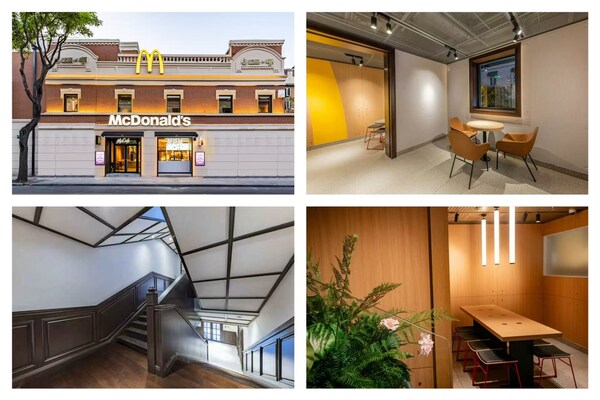
Tianjin Chifeng Road restaurant minimizes environmental impact from site selection, construction, to energy management
“Currently, McDonald’s China is the brand with the most LEED-certified projects globally, and it continues to explore and practice higher-standard green certifications such as LEED Zero Carbon and Zero Energy,” said Wang Jing, Vice President of the U.S. Green Building Council North Asia. “From the first LEED-certified restaurant in 2018 to surpassing 5,000 today, McDonald’s China has not only achieved large-scale implementation of green building standards but has also established a standardized, replicable green restaurant construction system. In a market as vast and operationally complex as China, the ability to systematically advance green practices holds significant industry demonstration value and provides a reference path for the green development of the catering industry.”
Today, at the main entrances of McDonald’s China’s 5,000 green restaurants, a unified green restaurant signage is displayed, allowing consumers to perceive the green concept in a more intuitive and everyday way. The green experience also permeates every aspect of the customer’s dining journey: McDonald’s China responsibly selects and uses packaging materials while ensuring a quality dining experience—using 100% Forest Stewardship Council (FSC)-certified paper and promoting strawless lids. The pollock used in McDonald’s fish burgers is 100% sourced from Marine Stewardship Council (MSC)-certified fisheries, and the coffee beans for McCafé are 100% Rainforest Alliance Certified, promoting more sustainable fishing and coffee cultivation practices. McDonald’s China also runs the “Reimagined Goodies” program, transforming discarded materials into circular products with both environmental value and brand attributes, including green trays, baby chairs, and eco-friendly bicycles, turning resource circulation into a tangible and participatory green experience for consumers.
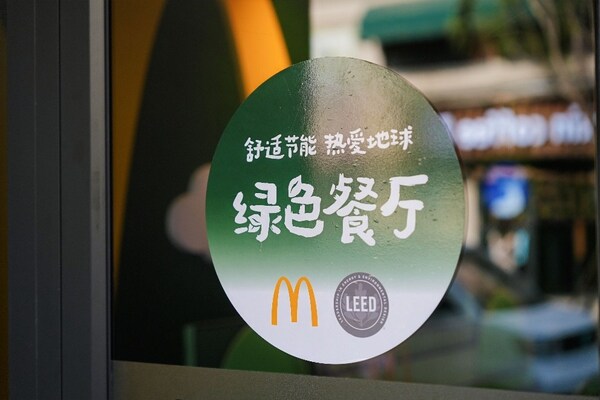
Unified green restaurant signage is displayed at the main entrances of McDonald’s green restaurants
Alongside the launch of McDonald’s China’s 5,000th LEED-certified green restaurant in Tianjin, the Tianjin McDonald’s “Beauty” Central Axis project was officially initiated. The project connects seven McDonald’s restaurants in Tianjin’s Heping District, linking four core business districts—Wudadao, Nanjing Road, Binjiang Road, and Chifeng Road—while also adjacent to cultural tourism landmarks such as the Porcelain House, Zhang Xueliang’s Former Residence, and Zhang Ailing’s Former Residence, creating an urban cultural tourism consumption route that integrates historical landmarks, core business districts, and community life. Starting today, the “Beauty” Central Axis project will also launch a series of limited-time check-in activities, interactive experiences, and themed giveaways, connecting urban cultural tourism with brand characteristics to offer both locals and tourists a life experience rich in cultural ambiance and everyday vitality.