

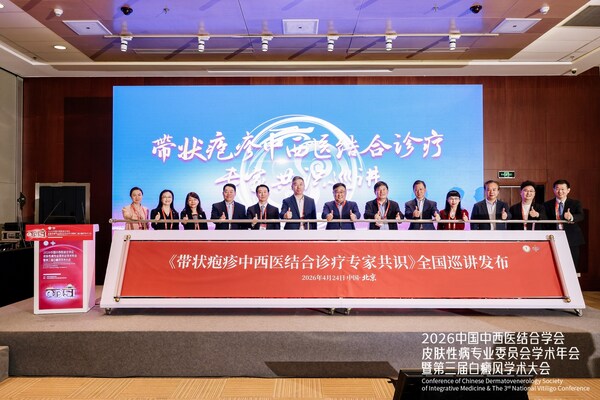
BeijingApril 24, 2026 /PRNewswire/ — In April 2026, during the annual academic conference of the Dermatology and Venereology Committee of the Chinese Association of Integrative Medicine, the national lecture tour project for the “Expert Consensus on the Diagnosis and Treatment of Herpes Zoster with Integrated Traditional Chinese and Western Medicine (2025 Edition)” (hereinafter referred to as the “Consensus”) was officially launched. This marks a solid and significant step forward in the field of integrated traditional Chinese and Western medicine (TCM-WM) diagnosis and treatment of herpes zoster in China, following the official release of the Consensus in 2025. The national lecture tour will systematically interpret the core content, key clinical application points, and standard pathway promotion, driving the transition of integrated TCM-WM diagnosis and treatment of herpes zoster from academic achievements to clinical application. According to the plan, the lecture tour will be conducted from May 2026 to May 2027, adopting a format of “offline lectures + online replays,” covering all 31 provinces, autonomous regions, and municipalities directly under the central government across the country.
From Complementary Advantages to Standardized Synergy: Integrated TCM-WM Diagnosis and Treatment of Herpes Zoster Enters a Deepening Phase
In recent years, standardized diagnosis and treatment of herpes zoster has continued to receive clinical attention. As a common infectious skin disease caused by the reactivation of the varicella-zoster virus, herpes zoster, in addition to skin lesions, is often accompanied by neuropathic pain, and the risk of onset increases with age, particularly requiring attention in elderly, immunocompromised, or patients with underlying diseases.[1] Studies show that there are over 6 million new cases of herpes zoster annually in China, with approximately 30% of patients potentially developing postherpetic neuralgia, which persistently impacts patients’ quality of life.[2],[3]
For a long time, traditional Chinese medicine (TCM) and Western medicine have each had unique advantages in the treatment of herpes zoster. Western medicine has relatively clear pathways for antiviral therapy, acute-phase intervention, and pain control, while TCM has accumulated rich experience in syndrome differentiation-based treatment, holistic regulation, and specialized external therapies. Although TCM and Western medicine have separately formed relatively independent guidelines or expert consensuses for herpes zoster, how to promote their complementary advantages and establish unified, implementable standardized diagnostic and treatment pathways in clinical practice remains an important issue requiring ongoing attention.
Against this backdrop, the Consensus will be officially published in 2026, establishing a more systematic and operational guidance framework for integrated TCM-WM diagnosis and treatment of herpes zoster. The launch of the national lecture tour in 2026 represents a further expansion based on the publication of the Consensus, shifting the focus from “forming a consensus” to “promoting and applying the consensus,” driving the standardized pathway to extend to a broader clinical frontline.
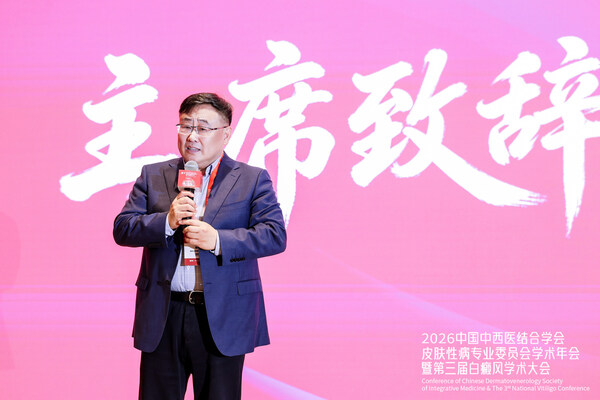
Professor Li Bin, Chairman of the Dermatology and Venereology Committee of the Chinese Association of Integrative Medicine, President of Shanghai Skin Disease Hospital, and Director of the Dermatology Research Institute at Shanghai University of Traditional Chinese Medicine, stated: “The release of the Consensus marks a new phase for integrated TCM-WM diagnosis and treatment of herpes zoster, moving from scattered exploration to standardized construction. The launch of the national lecture tour signifies that this work has further entered the stage of promotion and application. The significance of the lecture tour lies not only in reinterpreting the Consensus but also in driving it from academic achievements to clinical consensus, from expert frameworks to physician practice, serving to enhance diagnostic and treatment capabilities on a broader scale.”
Focusing on “Three Highs and One Rash” and Key Protection Needs for the Silver-Haired Population: National Lecture Tour Drives Consensus to the Clinical Frontline
Herpes zoster is highly prevalent among the elderly, making it a key health issue worthy of attention. With the deepening trend of population aging, the disease burden, complication risks, and long-term management needs are further highlighted. The 2026 Government Work Report continues to focus on “one old, one young,” reflecting that health protection is moving from general livelihood concerns to more institutional and systematic support. Incorporating herpes zoster into broader health communication and disease management perspectives, such as the “Three Highs and One Rash,” can help enhance social awareness and promote better integration of key population health management with standardized diagnosis and treatment systems.
This national lecture tour will systematically interpret the core points of the Consensus and its clinical practice applications, with a focus on integrated TCM-WM treatment plans for different disease stages, management of special populations and special sites, prevention and treatment of postherpetic neuralgia, analysis of typical cases, and application of characteristic TCM-WM techniques. The project aims to achieve “academic promotion, clinical translation, capacity building, industry collaboration, and patient benefit,” driving the Consensus from an industry achievement at the publication level to clinical application in medical institutions at all levels, realizing standardized implementation and homogenized promotion nationwide.
Professor Lv Chengzhi, Head of the Herpes Zoster Group of the Dermatology and Venereology Committee of the Chinese Association of Integrative Medicine and President of Dalian Dermatology Hospital, stated: “The core value of the national lecture tour lies in further translating the Consensus into diagnostic and treatment pathways that are understandable, executable, and promotable at the clinical frontline. Especially among medical institutions in different regions and at different levels, there are still differences in diagnostic and treatment concepts, capacity foundations, and practical experience. Promoting the dissemination of standardized thinking through the lecture tour helps facilitate experience sharing, narrow regional gaps, and drive integrated TCM-WM diagnosis and treatment of herpes zoster from ‘having a consensus’ to ‘being able to apply and implement it.'”

From Clinical Practice to Long-Term Construction: Multi-Stakeholder Collaboration Drives Continuous Implementation of Standardized Pathways
The Consensus emphasizes the precise integration of Western medicine clinical staging with TCM syndrome differentiation thinking, forming a more systematic integrated TCM-WM diagnostic and treatment framework for the herpes stage, crusting and scab removal stage, and postherpetic neuralgia stage. This framework not only helps strengthen antiviral therapy in the acute phase but also better leverages the advantages of TCM in pain management, recovery intervention, and regulation of special constitutions, thereby promoting more continuous, refined, and standardized management of herpes zoster.
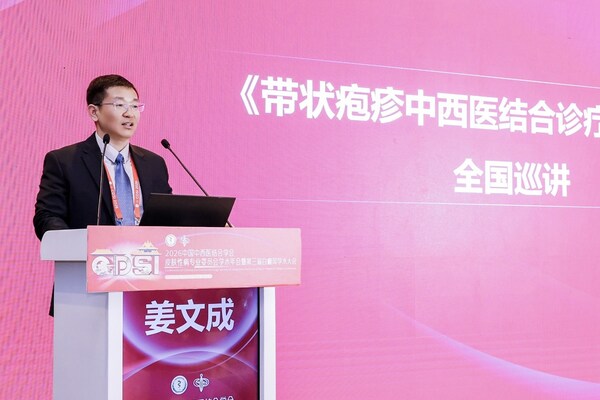
Professor Jiang Wencheng, Deputy Head of the Herpes Zoster Group of the Dermatology and Venereology Committee of the Chinese Association of Integrative Medicine and Chief Physician of the TCM Dermatology Department at Shanghai Skin Disease Hospital, commented from a clinical implementation perspective: “From real-world clinical scenarios, the key to managing herpes zoster lies in early identification, early intervention, and early standardization. Western medicine treatment provides a clear handle for acute-phase antiviral therapy, while TCM can play a unique role in syndrome differentiation-based treatment, pain relief, disease course regulation, and management of special constitutions. Particularly for elderly patients and those with underlying diseases, it is necessary to develop more detailed and continuous integrated TCM-WM plans based on disease characteristics, constitutional differences, and risk factors, to support comprehensive patient management and long-term prognosis improvement.”
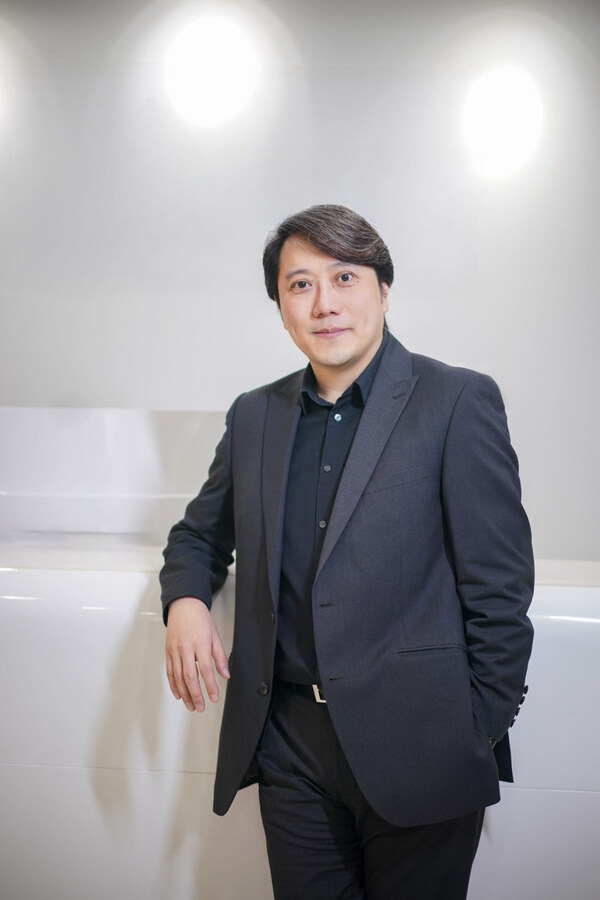
As a key supporter of the Consensus release and subsequent promotion, Menarini continues to focus on progress in standardized diagnosis and treatment in the herpes zoster field, supporting academic exchanges, special sessions, and the national lecture tour to facilitate the translation of professional achievements into clinical practice. Chen Jialin, CEO of Menarini China, stated: “Menarini has nearly 20 years of experience in the herpes zoster treatment field and has always been attentive to the disease burden and unmet treatment needs of patients. Supporting the release of the Consensus is an important step in our participation in advancing integrated TCM-WM diagnosis and treatment of herpes zoster. Supporting the launch of the national lecture tour and driving standardized pathways into broader clinical scenarios is a longer-term responsibility. Looking ahead, we look forward to continuing to collaborate with academic societies and expert teams, leveraging our professional expertise and treatment experience in the herpes zoster field, to promote the application of integrated TCM-WM diagnostic and treatment concepts in more real-world settings, contributing to improving herpes zoster diagnosis and treatment levels and enhancing long-term patient benefits.”
As the national lecture tour gradually unfolds, the Consensus will further transition from a “published achievement” to a “promotional action,” from an “academic text” to “clinical practice,” continuously driving the development of integrated TCM-WM diagnosis and treatment of herpes zoster toward greater standardization, synergy, and accessibility. Meanwhile, against the backdrop of the Two Sessions’ continued focus on key population health protection and the gradual entry of the “Three Highs and One Rash” topic into broader public communication and medical-prevention collaboration perspectives, the launch of this national lecture tour will also provide further support for the standardized prevention and treatment of this key health issue, health management of the elderly key population, and TCM-WM collaborative services for public health. It will also continuously strengthen Menarini’s long-term participation and support role in advancing standardized diagnosis and treatment of herpes zoster.