

BeijingApril 27, 2026 /PRNewswire/ — Advancing with light, innovating through collective effort. On April 26, 2026, the “6th Lu Daopei Medical Cell Therapy Academic Conference”, jointly hosted by the Beijing Health Promotion Association and the Hongmian Public Welfare Foundation and organized by the Beijing Lu Daopei Institute of Hematology, was grandly held in the lecture hall of Yanda Lu Daopei Hospital.
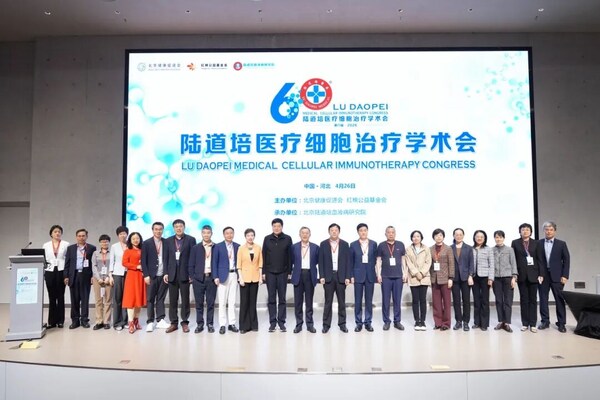
The conference specially invited Professor Huang Xiaojun from Peking University People’s Hospital and Peking University Institute of Hematology, Professor Hu Yu from the Institute of Hematology, Huazhong University of Science and Technology, Professor Zhang Xiaohui from the Institute of Hematology, Peking University People’s Hospital, and Professor Ma Jun from the Harbin Institute of Hematology and Oncology to serve as co-chairs of the conference. Professor Lu Peihua from Lu Daopei Hospital/Beijing Lu Daopei Institute of Hematology served as the conference secretary-general. The conference brought together over 40 renowned experts in cell research and treatment, as well as leading figures in the hematology field, to engage in in-depth discussions on cutting-edge basic research, key detection technologies, clinical application challenges, and future trends, aiming to translate technological advancements into tangible benefits for patients.
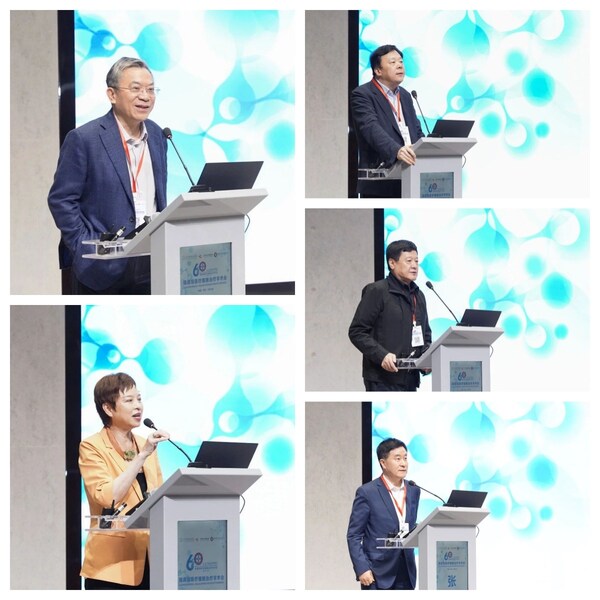
(Chairman’s Address)
Address by Professor Huang Xiaojun
In his address, Professor Huang Xiaojun pointed out that CAR-T cell therapy, as a highly active field, continues to see the emergence of new products and therapies. China places great importance on this, offering strong support through national projects such as the “Major New Drug Development” initiative and related industrial policies. This conference brings together numerous experts and scholars from clinical and basic research fields, with rich content and a high level of discourse. He hopes that through interdisciplinary communication and exchange, the conference will steadily advance China’s scientific research and clinical capabilities.
Address by Professor Hu Yu
In his address, Professor Hu Yu highly praised the development of Lu Daopei Medical. He noted that the annual cell therapy academic conference not only gathers high-level experts and scholars in the field but also features topics closely aligned with disciplinary frontiers and clinical needs. Through various forms of exchange, it continuously deepens our understanding and academic discussion of cell therapy, driving research progress and clinical development in related fields.
Address by Professor Ma Jun
Drawing on his extensive experience in hematology and cell therapy research, Professor Ma Jun reviewed the development history of related fields in China and shared his observations on clinical research, product evaluation, and policy environment changes. He pointed out that with the gradual improvement of the industry regulatory system and the implementation of new regulations, cell therapy is moving towards a more standardized development phase. He emphasized the importance of advancing treatment strategies and enhancing patient benefits, while calling for strengthened industry collaboration and academic organization building.
Address by Professor Zhang Xiaohui
Professor Zhang Xiaohui presented multiple sets of data demonstrating the rapid development and significant position of China’s cell therapy (especially CAR-T) on the global stage. Chinese researchers continue to propose innovative solutions and achieve original results, making a strong voice internationally. He stated that cell therapy is entering a new development phase with increasing disciplinary influence, and it is significant to discuss development with peers on such a focused and in-depth academic platform.
Address by President Lu Peihua, Who Chaired the Conference
President Lu Peihua first extended a warm welcome to all experts and scholars and expressed sincere gratitude for their long-standing care and support. In recent years, cell therapy, particularly CAR-T-related research, has developed rapidly, with new solutions emerging, new targets expanding, and indications gradually extending. Positive progress has been made in multiple disease areas, bringing new hope to patients with previously limited treatment options. She hopes that this conference will serve as an opportunity to further promote in-depth exchanges between clinical experience and cutting-edge research, building consensus and broadening ideas through mutual learning, and jointly advancing the continuous development of the cell therapy field.
Academic Sessions
This conference focused on the frontier progress and clinical translation of cell therapy, setting up multiple thematic academic report sections covering key directions such as CAR-T, CAR-NK, engineered T cells, and related basic research and clinical practice.
Theme 1: Frontiers of CAR-T Therapy
As one of the most groundbreaking directions in cell therapy, CAR-T technology is continuously expanding towards greater precision, safety, and broader indications. This theme focuses on frontier explorations, from new target applications to novel cell therapy strategies like CAR-NK, combined with clinical practice and mechanistic research, presenting the latest trends in the CAR-T field.
President Lu Peihua shared explorations of CD7 CAR-T in treating refractory/relapsed mixed-phenotype acute leukemia; Professor Qian Wenbin from the Second Affiliated Hospital of Zhejiang University School of Medicine shared research on the construction of a novel CAR-NK cell therapy system and its translational studies in treating lymphoma and autoimmune diseases; Professor Liang Aibin from Tongji Hospital affiliated with Tongji University/Tongji University Institute of Hematology shared practices and reflections on immune cell therapy—system construction and innovation.
Moderators: Professor Hu Yu, Professor Ma Jun, Professor Zhang Xiaohui
Hot Topic Discussion Among Experts
During the hot topic discussion, experts exchanged views on the development paths and application differences between CAR-NK and CAR-T, comparing them from multiple dimensions such as efficacy, safety, accessibility, and cost. They also explored the potential characteristics and application scenarios of CAR-NK in lymphoma and autoimmune diseases. Additionally, focusing on relapse issues after CD19/CD7 CAR-T treatment, experts discussed the two major mechanisms of target antigen loss and CAR-T cell exhaustion, exploring the causes of relapse and intervention strategies from multiple perspectives. Discussion participants: Professor Lu Peihua, Professor Ma Jun, Professor Zhang Xiaohui, Professor Qian Wenbin, Professor Liang Aibin.
Theme 2: Progress of Domestic CAR-T Products in Treating Malignant Hematological Diseases
With multiple domestic CAR-T products entering clinical application, China is accelerating its transition from “following” to “running alongside” in this field. This theme focuses on engineered T cell development, immune mechanisms, and clinical management optimization, systematically reviewing the latest progress and practical experience of domestic CAR-T in treating malignant hematological diseases.
Professor Tang Xiaowen from the First Affiliated Hospital of Soochow University shared whole-process management of immune platelet transfusion refractoriness; Professor Lin Xin from Tsinghua University School of Medicine shared the development and application of engineered T cells; Professor Wang Haopeng from Changping National Laboratory shared T cell signaling mechanisms and new strategies for immunotherapy.
Moderators: Professor Liu Qifa, Professor Zhou Daobin, Professor Zhao Yanli
Theme 3: Focusing on Clinical CAR-T Therapy
Transitioning from clinical trials to real-world application, CAR-T therapy is continuously accumulating experience and evidence. This theme is grounded in clinical frontline practice, focusing on in vivo CAR-T technology, international frontier progress, and large-sample case summaries, delving into efficacy improvement, strategy optimization, and standardized application pathways.
Professor Mei Heng from Union Hospital, Tongji Medical College, Huazhong University of Science and Technology shared Preliminary Progress and Prospects of In Vivo CAR-T; Professor Wang Ying from the Institute of Hematology & Blood Diseases Hospital, Chinese Academy of Medical Sciences shared 2025 ASH Cell Therapy Progress; Professor Zhang Xian from Lu Daopei Hospital shared CD19 CAR-T in treating refractory/relapsed B-cell acute lymphoblastic leukemia—a single-center large case series summary.
Moderators: Professor Lu Peihua, Professor Zhuang Junling, Professor Liu Fang
Multi-Expert Dialogue on CAR-T Therapy
In the multi-expert dialogue session, experts exchanged views on key issues in transitioning universal CAR-T and autologous CAR-T from clinical trials to clinical practice, discussing the efficacy and durability of universal products, as well as trade-offs between waiting time, treatment cost, and failure risk. Additionally, in the context of commercial CAR-T, experts engaged in in-depth discussions on clinical decision-making issues such as the need for subsequent bridging transplantation, timing of transplantation, and indication selection. Dialogue participants: Professor Zhang Xian, Professor Wang Ying, Professor Zhuang Junling, Professor Liu Fang, Professor Jin Jingyu, Professor Huang Zhongxia, Professor Liu Deyan, Professor Zhang Jianping, Professor Sun Ruijuan.
Theme 4: Discussion of Challenging Cases
Complex and challenging cases have always been a key driver of medical progress. This theme features multiple typical case presentations and expert commentary, focusing on individualized treatment strategies for refractory/relapsed patients, showcasing the crucial role of multidisciplinary collaboration in improving diagnostic and treatment levels.
Professor He Jiujiang from Hebei Yanda Lu Daopei Hospital shared universal CAR-T in treating refractory/relapsed CD7+ leukemia
Moderators and discussion participants: Professor Lu Yue, Professor Zhou Jiarui, Professor Xiong Min
Professor Luo Xueyi from Peking University People’s Hospital/Beijing Lu Daopei Hematology Hospital presented a case of CD7 CAR-T in treating relapsed acute myeloid leukemia post-transplantation
Moderators and discussion participants: Professor Lyu Meng, Professor Wang Yingjie, Professor Wei Zhijie
Professor Liu Xiyang from Beijing Lu Daopei Hospital presented a case of refractory/relapsed B-cell lymphoma
Moderators and discussion participants: Professor Cao Xingyu, Professor Lyu Fanyong, Professor Zhang Wei
Theme 5: Basic Research and Laboratory Testing in CAR-T
Basic research and detection technologies are the core support for continuous breakthroughs in cell therapy. This theme focuses on frontier directions from flow cytometry to in vivo gene delivery, exploring the application of key technologies in mechanistic research and clinical translation, providing a solid foundation for the ongoing innovation of CAR-T therapy.
Professor Wang Hui from Lu Daopei Hospital shared advances in the application of flow cytometry in targeted therapy; Professor Chen Haifeng from Willock Inc., USA, shared AAV-mediated in vivo CD19 chimeric antigen receptor T cell therapy: CD3 single-chain antibody-modified AAV capsid enables efficient in vivo generation of CAR-T cells and complete tumor elimination
Moderators: Professor Zhou Xiaoge, Professor Zhang Jianping
Academic Symposium:
Professor Cui Na from Beijing Chaoyang Hospital, Capital Medical University, shared new strategies for treating CRE pan-enzyme types; Professor Kong Xudong from China-Japan Friendship Hospital shared the pharmaceutical characteristics and clinical applications of different formulations of amphotericin B.
Moderators: Professor Cao Xingyu, Professor Lu Yue
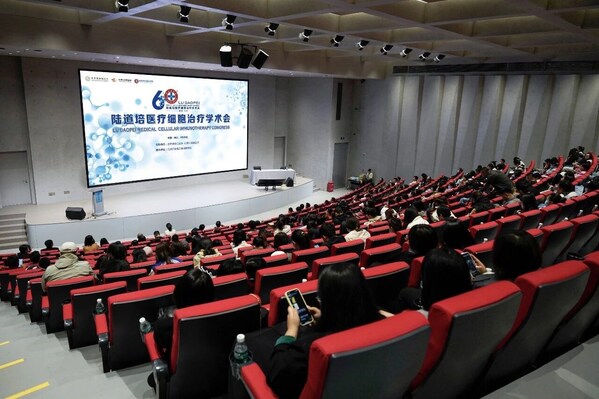
This year’s Lu Daopei Medical Cell Therapy Academic Conference concluded successfully amidst in-depth and vibrant academic exchanges. From basic mechanistic exploration to clinical strategy optimization, from technological pathway innovation to real-world experience summarization, the conference comprehensively showcased the vibrant innovation vitality and clinical translation potential of the cell therapy field. Through multi-dimensional and multi-level academic exchanges, not only was the understanding of key scientific issues deepened, but more possibilities were also provided for optimizing future diagnostic and treatment pathways. In the future, relying on multi-center collaboration and continuous innovation, cell therapy is expected to play a role in more complex disease scenarios, bringing new hope and possibilities to more patients.