Samsung Bets Big on Robots: Building a Korean "Robot Empire"
If these resources are effectively integrated, Samsung could become a key player in the global humanoid robotics race
By Luo Xiaobei | Produced by "TechSir"
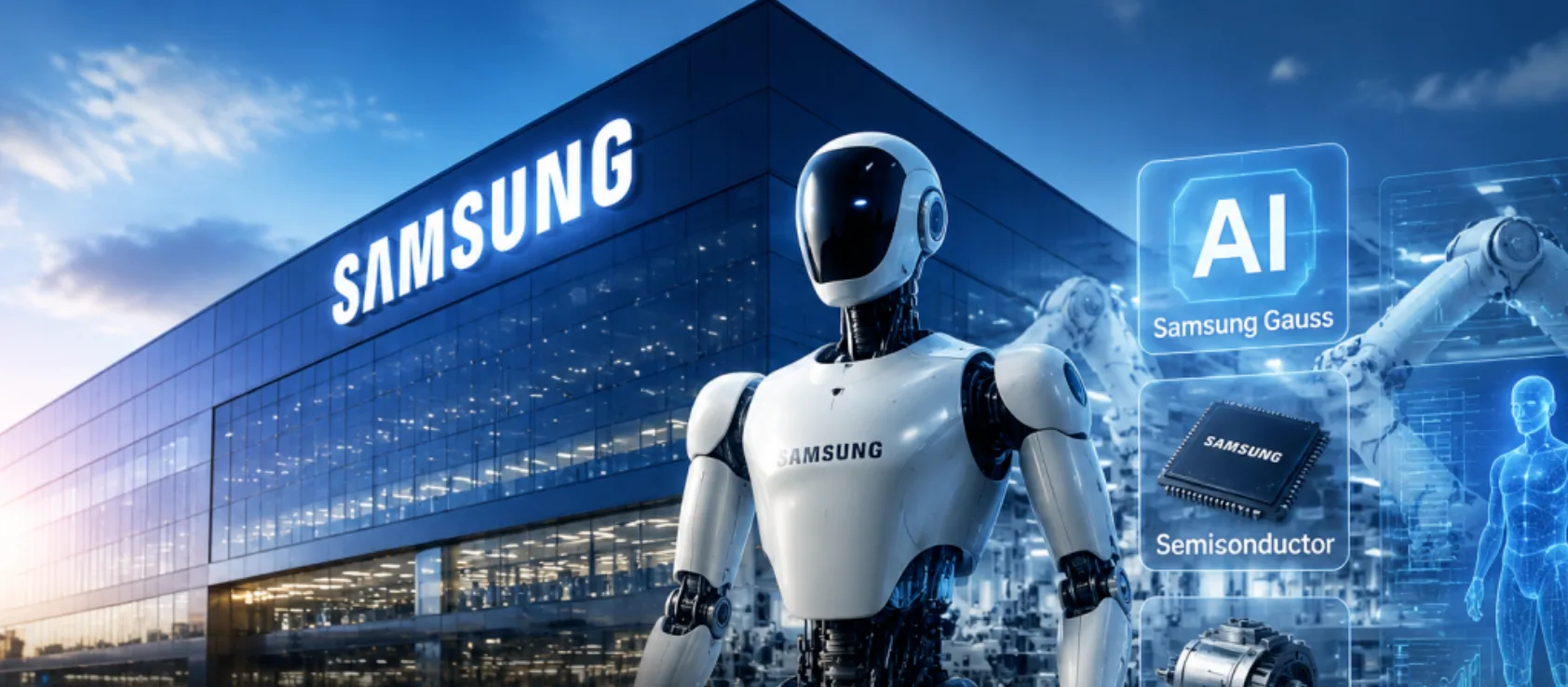
Following tech giants like Tesla, Nvidia, and Google doubling down on embodied AI, South Korean tech giant Samsung Electronics is accelerating its entry into the humanoid robot track.
According to South Korean media outlet ZDNet Korea, Samsung Electronics is pooling internal group resources to speed up its self-developed humanoid robot project. Beyond its affiliated robotics firm Rainbow Robotics, Samsung Electronics is also independently developing humanoid robots, with relevant technologies having reached a remarkably mature stage. (ZDNet Korea)
Industry insiders believe Samsung's true advantage lies not merely in robotics technology itself, but in its long-accumulated manufacturing system, semiconductor capabilities, AI models, and global supply chain capacity. If these resources are effectively integrated, Samsung could become a key player in the global humanoid robotics race.
From Investing in Robotics Firms to In-House R&D
Samsung’s entry into the robotics sector is hardly abrupt.
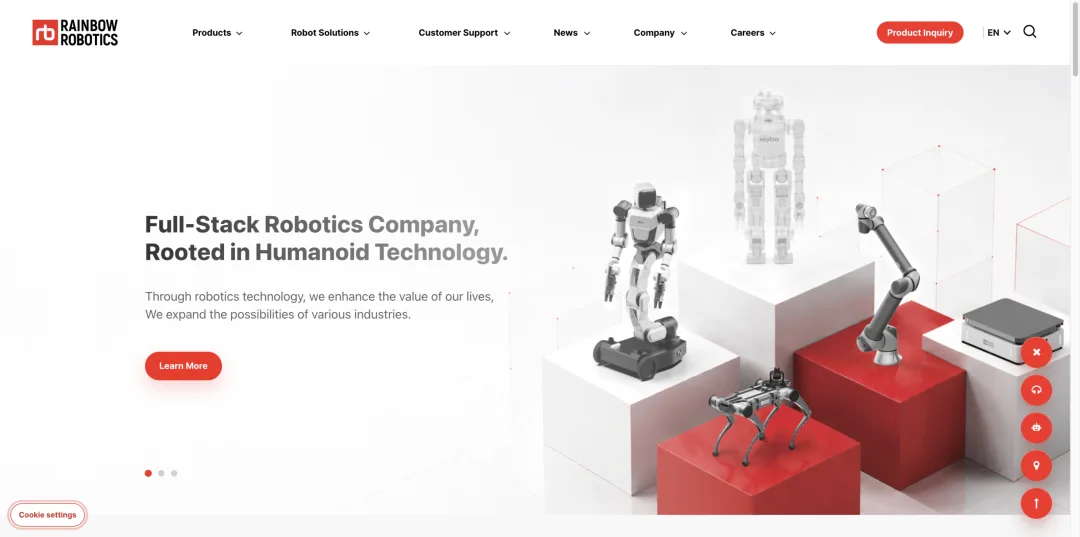
As early as 2023, Samsung Electronics invested in the South Korean robotics company Rainbow Robotics to acquire a stake. By late 2024, Samsung further increased its shareholding with plans to bring Rainbow Robotics under its umbrella to strengthen its future robotics layout. (Samsung Global Newsroom)
Rainbow Robotics boasts critical technological reserves in South Korean robotics research. Founded by members of the humanoid robotics research team at the Korea Advanced Institute of Science and Technology (KAIST), the team's predecessor developed Hubo, South Korea's first bipedal humanoid robot. (Samsung Global Newsroom)
However, Samsung’s strategy now clearly goes beyond relying on corporate acquisitions to gain robotics capabilities.
South Korean media reports that Samsung Electronics is concurrently advancing the development of autonomous humanoid robots in-house, with R&D levels already surpassing most domestic peers in South Korea.
A robotics industry insider noted that Samsung has long held robotics technology reserves rather than starting from scratch; it simply kept a low profile without publicly showcasing all its achievements.
This marks the biggest distinction between Samsung and other robotics startups.
For many robotics companies, the primary hurdle is the lack of real-world application scenarios and manufacturing data. In contrast, Samsung possesses one of the world's largest electronic manufacturing systems. From smartphones, TVs, and home appliances to semiconductor and display panel production lines, Samsung generates vast volumes of industrial data every day.
This data could serve as a vital asset for training next-generation intelligent robots.
Samsung's Ultimate Weapon: Not Robots, but Manufacturing Data
The current humanoid robotics competition is shifting from a contest of "mechanical capabilities" to one of "data and artificial intelligence."
In the past, humanoid robot R&D focused primarily on mechanical structures, motors, and control algorithms. But with the rapid development of large language models, the industry is entering the "Physical AI" era.
Robots must not only move but also comprehend their environment, predict outcomes, and independently complete complex tasks.
This means that the importance of large-scale, real-world data is escalating.
Samsung holds abundant data sources required for robot training.
For instance, in semiconductor fabrication plants, robots can learn precision manufacturing processes; in home appliance factories, they can learn assembly, material handling, and quality inspection; on mobile device production lines, they can learn intricate manual operation workflows.
South Korean media reported that Samsung plans to build a "Data Factory" at its Gumi site, leveraging existing production line data to train robots and allow them to simulate various manufacturing scenarios in advance. (ZDNet Korea)
Compared to many robotics startups restricted to collecting data in laboratory environments, Samsung owns real industrial environments, which could prove to be a crucial advantage in entering the humanoid robot market.
AI Large Models & Actuators: Samsung Is Filling the Core Tech Gaps
A humanoid robot is not a simple mechanical device, but an integrated system of AI, chips, software, sensors, and actuators.
Samsung is attempting to consolidate its existing advantages.
In terms of AI, Samsung has already launched its self-developed generative AI model, Samsung Gauss, while continuously laying out its edge-side AI and smart device ecosystem.
Reports indicate that Samsung is also developing the "World Model" required for robots.
A world model allows AI to learn the laws of the physical world through video and other data, enabling robots to predict potential outcomes before actually executing actions.
For example, before picking up a cup, a robot needs to gauge the cup's weight, material, position, and the required gripping force. Without an understanding of the real world, completing complex tasks becomes extremely difficult for a robot.
Beyond AI software, robotic actuators represent another core competitive battleground.
Actuators act as a robot's joint system—composed of motors, controllers, and reducers—and directly determine a robot's strength, precision, and flexibility.
Samsung’s long-standing expertise in home appliance motor technology could also serve as an essential foundation for its entry into robotics.
Establishing the RX Robotics Unit: Samsung Launches a "Group-Wide Army"
Another key signal of Samsung accelerating its robotics strategy is its organizational restructuring.
In July 2026, Samsung Electronics established the RX (Robotics eXperience) Business Promotion Office. Reporting directly to the CEO of Samsung Electronics and the head of the DX Division, this organization handles robotics business strategy, core technology development, and commercialization progress. (ZDNet Korea)
Concurrently, Samsung appointed Lee Dong-gun to head the Robotics Strategy Team.
Lee previously participated in Hyundai Motor Group's robotics strategy and contributed to business direction planning related to Boston Dynamics. (Reuters)
This arrangement indicates that Samsung is elevating its robotics business from scattered R&D projects in the past to a company-wide strategy.
Similar adjustments are unfolding among other global tech giants.
Tesla is pushing forward with its Optimus humanoid robot, aiming to leverage its automotive manufacturing experience to build a robot production system; Nvidia is cutting into the embodied AI ecosystem via AI chips and robotics platforms. (Investor’s Business Daily)
The path chosen by Samsung more closely resembles a "manufacturing giant's transformation."
Can Samsung Become the New Giant in the Humanoid Robotics Era?
From a technical roadmap perspective, Samsung meets several critical conditions to enter humanoid robotics.
Manufacturing Capability: Robots ultimately require large-scale production. Samsung’s decades of electronics manufacturing experience are something many robotics startups cannot replicate.
Chip and AI Capabilities: The future competition in robotics is fundamentally a competition in AI computing power. Samsung not only manufactures memory chips and advanced semiconductors but also possesses in-house AI software development capabilities.
Application Scenarios: Samsung can first deploy robots inside its own factories for internal validation before expanding to external markets.
However, Samsung also faces challenges.
Currently, global humanoid robotics remains in its early stages. Achieving true large-scale commercialization still requires addressing challenges in cost, safety, reliability, and AI generalization capabilities.
Even with a manufacturing ecosystem, the journey for robots moving from laboratories to factories—and eventually into homes—remains long.
Yet it is undeniable that Samsung is leveraging its greatest assets—its manufacturing empire, semiconductor power, and AI technology—to bet on next-generation intelligent machines.
Over the past few decades, Samsung grew into a global tech giant through semiconductors and consumer electronics.
In the humanoid robotics era, Samsung aims to replicate a similar trajectory: turning robots from laboratory products into intelligent devices capable of mass manufacturing and commercial deployment.
This competition may determine not only who can build more human-like robots, but also who will become the infrastructure provider for the upcoming "Physical World AI Era."
As tech giants storm into the humanoid robotics market, the dividend window for startup companies will rapidly shrink. Beyond Samsung, Chinese tech giant Huawei has also initiated a comprehensive layout across the robotics ecosystem.
Discussion
Comments
Checking your account status