Samsung’s profits surge nearly 9-fold: South Koreans emerge as the big winners of the AI supercycle
Some chipmakers even judge that the current supply tightness could last until 2027 or 2028.
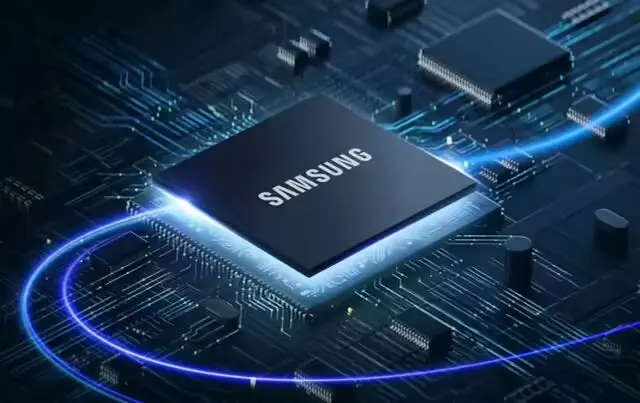
Samsung is delivering a truly extraordinary set of results.
On October 7, reports indicated that, driven by the continued explosion in demand for AI infrastructure, Samsung Electronics’ operating profit for the third quarter of 2026 is expected to reach 106.1 trillion won—approximately 526 billion yuan—representing a year-on-year increase of nearly nine times.
If this forecast is ultimately realized, it will not only mark Samsung’s fourth consecutive quarter of record operating profits, but also signal that AI infrastructure is pushing the world’s largest memory-chip maker into an unprecedented profitability cycle.
In the same period last year, Samsung’s operating profit was only 12.17 trillion won. In other words, within a single year, operating profit has jumped from roughly the 60.3-billion-yuan level to more than 520 billion yuan.
Even more noteworthy is that this figure has been achieved without every condition being favorable.
AI’s appetite is outpacing chip capacity expansion
The core driver of Samsung’s soaring profits this time is neither smartphones nor consumer electronics, but AI.
Over the past year or more, continuous investment in global AI data centers has created massive demand for high-performance memory to accompany GPUs and AI accelerators. Products such as HBM, in particular, have become a critical bottleneck in AI infrastructure.
Demand has grown too quickly, while expanding memory production capacity takes time.
As a result, the supply-demand imbalance has translated directly into higher chip prices and profit margins.
This is why memory giants including Samsung, SK Hynix, and Micron are simultaneously posting record profits. The market has shifted from the traditional “chip cycle” into a super-demand cycle propelled by AI capital expenditure.
Some chipmakers even judge that the current supply tightness could last until 2027 or 2028.
This means the truly formidable aspect of the AI industry chain is not merely how many GPUs companies such as Nvidia sell, but that once those GPUs enter data centers, the entire infrastructure system must expand accordingly.
Memory is one of the most direct beneficiaries.
Markets begin to worry: how long can the craziest phase last?
The question arises precisely here.
Samsung is expected to earn 106.1 trillion won in the third quarter, yet analysts have already begun cooling expectations around that figure.
Since the end of August, the market consensus for Samsung’s third-quarter earnings has been revised downward by 7.7%. One reason is that the pace of memory-chip price increases is slowing.
TrendForce forecasts that contract prices for conventional DRAM will rise 10–15% quarter-on-quarter in the fourth quarter.
That still looks impressive, but against this year’s backdrop it appears less extreme—DRAM prices once surged by roughly 60% quarter-on-quarter in the second quarter.
In short, chips are still rising in price, only the surge has moderated into continued gains.
Behind this lies a significant change: AI-driven demand remains strong, yet suppliers no longer dare to raise prices without limit.
Because higher chip prices ultimately feed through to smartphones, PCs, and other consumer electronics, further squeezing end-market demand.
At the same time, Samsung and its peers are increasing the share of long-term supply agreements. In July, Samsung stated its desire for long-term orders to cover about two-thirds of its memory capacity.
Long-term contracts provide more stable orders, but they also constrain the room for further price increases.
The market therefore finds itself in an interesting state:
Demand remains strong, supply remains tight, prices continue to rise—yet the rate of increase is beginning to slow.
This may be the first signal that the current memory supercycle is moving from “mania” toward “rationality.”
Samsung’s real next battle is HBM
For Samsung, the larger variable still lies in HBM.
Conventional DRAM is memory; HBM has become a critical foundational component of AI data centers. AI accelerators from Nvidia and others rely on HBM for higher memory bandwidth, and as AI models grow larger, demand for HBM continues to rise.
Samsung’s biggest previous shortfall was precisely in HBM.
Delayed product qualification for Nvidia had left Samsung trailing SK Hynix.
This year, however, the situation is changing.
Samsung is ramping up shipments of its latest-generation HBM4 chips and seeking to reclaim its position in the high-end AI memory market.
JPMorgan estimates that Samsung’s HBM market share this year could rise from 20% last year to 34%, while SK Hynix’s share may fall from 60% to 46%.
If this trend materializes, Samsung will face not only rising prices for traditional memory, but a reallocation of value at the heart of the AI-era memory industry.
Because the significance of HBM is already different from ordinary memory of the past.
It increasingly functions as part of the AI computing infrastructure itself.
The “King of Volumes”—formidable Chinese players are also entering the fray
Another change Samsung must confront is the growing presence of Chinese memory makers.
Domestic manufacturers are currently concentrated mainly in relatively lower-end product lines, yet the overall memory supply-demand tightness created by AI has also given domestic DRAM and NAND more opportunities to enter the market.
Industry surveys already show that a growing number of OEMs and ODMs are beginning to adopt Chinese DRAM and NAND flash products.
This means Samsung is no longer facing only traditional competition among SK Hynix and Micron.
When the memory industry enters a massive profitability cycle, more manufacturers will attempt to expand capacity and enter the market, while customers will more actively seek second and third sources of supply.
This may precisely become the most important variable in the next phase of the memory industry.
106.1 trillion won is only the result; what truly deserves attention is how AI is rewriting the chip cycle
In pure numerical terms, Samsung’s expected third-quarter operating profit of 106.1 trillion won is indeed extraordinary.
A year ago it was 12.17 trillion won; a year later it may be nearly nine times higher.
Yet more noteworthy than the “nine-fold” figure itself is the shift in industrial logic behind these profits.
The defining characteristic of memory chips in the past was cyclicality. Demand rose, prices climbed, manufacturers expanded capacity; once supply increased, prices fell and profits shrank rapidly.
What this round of AI demand has changed is the sudden appearance, on the demand side, of a new variable of enormous scale and potentially long duration.
Data centers will not stop construction simply because they have purchased enough GPUs this year.
AI models continue to grow larger, inference demand keeps increasing, and computing infrastructure keeps expanding. As a result, memory demand is continually pushed higher.
That is the truly “heaven-defying” aspect of Samsung’s profit outlook:
A giant that once relied heavily on traditional consumer-electronics cycles is being propelled by AI infrastructure back to the center of global technology-industry profits.
Of course, whether the 106.1 trillion won materializes still awaits Samsung’s release of its preliminary third-quarter results.
And what the market truly cares about is no longer whether Samsung can earn that money.
It is—
How high this AI supercycle can ultimately push memory-chip profits, and how long it can last.
Discussion
Comments
Checking your account status