

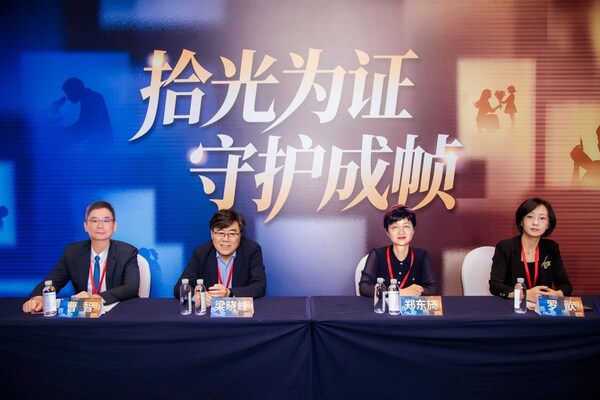
KunmingApril 26, 2026 /PRNewswire/ — On April 25, the 40th National Child Vaccination Day, the second Vaccine Science Summit Forum was grandly held in Kunming. Under the theme “Time as Proof, Protection Framed,” the forum brought together top experts in public health, pediatric clinical care, preventive healthcare, and the industry. In-depth discussions were held on core topics such as the high-quality development of immunization programs, prevention and control of invasive pneumococcal disease, addressing vaccine hesitancy, promoting scientific prevention concepts, and the value of real-world research on vaccines in China. The aim was to build a robust immune barrier for children’s health through multi-party collaboration, ushering in a new chapter in the development of pneumococcal disease prevention and control in China.
Reflecting on Immunization Program Achievements: China’s Leap from “Reactive Response” to “Proactive Prevention”
In recent years, the focus of health work has been shifting from “treatment-centered” to “people’s health-centered.” Currently, China’s public health sector is entering a new phase of high-quality development. The “15th Five-Year Plan” explicitly emphasizes strengthening public health capabilities, deepening the integration of medical care and prevention, prioritizing child health protection and disease control system upgrades, and continuously consolidating the foundation of life-cycle health management.
Professor Liang Xiaofeng, Dean of the Vaccine Industry Research Institute/Disease Prevention and Control Research Institute at Jinan University, pointed out: “After decades of dedicated effort, China’s immunization program has achieved a historic leap. From systematically carrying out infectious disease prevention and control in the 1950s, to the full launch of the National Immunization Program in 1978, and the continuous improvement of the child prevention and control system, China has made globally recognized achievements in controlling major infectious diseases such as hepatitis B elimination and polio eradication. Vaccination has become a crucial shield for safeguarding the nation’s health. Looking ahead, we must continue to consolidate multi-party efforts, strengthen authoritative science popularization, optimize vaccination services, promote vaccine equity and accessibility, use scientific evidence to dispel misconceptions, continuously enhance public confidence in vaccines, and inject sustained momentum into the high-quality development of immunization and prevention.”
Grounding in Grassroots Clinical Practice: Guiding Scientific Vaccine Awareness through Professional Communication
Currently, vaccine hesitancy has become a prominent issue affecting the consolidation of the universal immune barrier and hindering the high-quality development of immunization programs. Addressing this challenge requires not only scientific coordination and institutional guarantees at the national level but also professional communication, warm services, and trust rebuilding at the grassroots frontline, allowing scientific prevention to truly reach every household.
Professor Liang Xiaofeng, drawing on China’s immunization program practices and global experience, stated: “Vaccine hesitancy stems from public cognitive biases regarding vaccine safety and efficacy, as well as a lack of trust due to the mix of true and false information in the environment. To tackle this challenge, professional institutions, academic associations, and research institutes must carry out systematic and precise science education, using authoritative evidence and accessible language to clarify misconceptions. At the same time, multi-party collaboration and the integration of medical care and prevention should be promoted, enhancing social trust through transparent communication and standardized services.” Professor Liang further emphasized that over decades of immunization program development, China has formed distinctive experiences, including a prevention-oriented policy system, a vaccination network covering urban and rural areas, and a multi-party collaborative working framework. Looking toward the “15th Five-Year Plan,” these mature experiences should be transformed into long-term mechanisms, continuously optimizing services, strengthening science popularization, improving accessibility, and using scientific evidence to eliminate doubts, making proactive prevention a conscious societal action.
Dr. Zheng Dongyi from the Preventive Healthcare Department of the First Hospital of Tsinghua University shared insights from grassroots practice: “In my daily vaccination work, I’ve found that many parents are not deliberately refusing vaccines but are more often concerned and hesitant due to cluttered information and a lack of authoritative guidance. As frontline vaccination doctors, we consistently use real-world data and clinical evidence to objectively explain the protective value of vaccines, honestly address safety concerns, and clearly state that common adverse reactions are mostly mild and transient, far less risky than the dangers of disease infection. At the same time, we repeatedly emphasize to parents the importance of completing the full vaccination schedule, helping them develop a scientific and rational view of vaccines. Prevention is better than cure; early vaccination provides early protection. This is not just a concept but a more economical, effective, and reliable way to safeguard children’s health.” Dr. Zheng called for the continuous construction of an authoritative, transparent, and warm science communication system, ensuring that professional and trustworthy health knowledge reaches parents directly, fostering a societal consensus on proactive prevention and scientific protection, and jointly building a solid immune barrier for the healthy growth of children.
Upholding Corporate Responsibility and Mission: Empowering the Local Health Ecosystem
Building a universal immune barrier and improving vaccine equity and accessibility rely on the innovative leadership of multinational pharmaceutical companies and the on-the-ground support of local service institutions. Guided by the “Healthy China 2030” strategy, global vaccine companies and local promotion agencies are working together, leveraging their respective strengths, to open up the entire chain from innovative vaccine R&D and production to terminal vaccination, safeguarding the healthy growth of millions of children with responsibility and professionalism.
Mr. Cao Zhi, General Manager of Pfizer China’s Business, Retail, and Strategic Alliance Department, stated: “Over the past decade, Pfizer has consistently resonated with China’s public health endeavors, continuously introducing global high-quality vaccine achievements and using a diversified innovative product portfolio to precisely meet the public health protection needs of different populations, building a strong health defense line for millions of families. Looking ahead, we will continue to fulfill our corporate mission. On one hand, we will accelerate the localization of more global innovative vaccines to comprehensively meet the public’s disease prevention needs across the life cycle. On the other hand, we will deepen cooperation with local partners, extending from product supply to health services, contributing to the high-quality development of immunization and prevention with sustained innovation and firm responsibility, and contributing corporate strength to advancing the ‘Healthy China 2030’ initiative.”
Ms. Luo Xin, Deputy General Manager of Shanghai Pharma科园 Trade and General Manager of Hongyao, emphasized from a service implementation perspective: “As a domestic vaccine promotion and service enterprise, Hongyao leverages its parent company’s extensive network covering the entire country and reaching grassroots levels to efficiently deliver high-quality vaccines to millions of households. On one hand, we connect with high-quality domestic and international production enterprises to ensure innovative products enter the Chinese market promptly. On the other hand, we collaborate closely with local CDC centers and grassroots vaccination units to achieve precise vaccine distribution and dynamic allocation, effectively improving accessibility in grassroots and remote areas. Through a division of labor where ‘enterprises focus on innovation, we focus on implementation,’ we enable global innovative achievements to truly enter Chinese families, safeguarding children’s health with tangible services and fulfilling the responsibility and commitment of a local enterprise.”
This forum served both as a review of China’s immunization program achievements and a forward-looking layout for vaccination work during the “15th Five-Year Plan” period. Experts in attendance unanimously agreed that addressing vaccine hesitancy and building a robust immune barrier requires concerted efforts from the government, professional institutions, enterprises, and families. They look forward to strengthening the popularization of scientific prevention concepts, improving the vaccination service system, and promoting equitable access to innovative vaccines. By building a universal immune barrier to protect people’s health, they aim to inject strong momentum into the high-quality development of public health and the construction of a Healthy China during the “15th Five-Year Plan” period.