

 |
—Safe, Sustainable, and Highly Resilient Transport Systems: Confidently Addressing Diverse Challenges
- The world’s largest ministerial-level transport summit
- DEKRA CEO engages in dialogue with officials and industry leaders from multiple countries
- Live technology demonstrations highlight the core value of V2X in saving lives by avoiding collisions
Stuttgart, May 12, 2026 /PRNewswire/ — The 2026 International Transport Forum (ITF) Summit in Leipzig, Germany, was held in grand style. DEKRA, an international expert organization, participated deeply with its professional expertise in safe and sustainable future mobility. Following its official membership in the ITF Corporate Partnership Board this year, DEKRA sent a high-level delegation to this event. With the summit themed “Empowering Resilient Transport,” DEKRA CEO Stan Zurkiewicz was invited to speak at the opening plenary. At the summit venue, DEKRA conducted live technology demonstrations, showcasing the practical application results of V2X technology, its effectiveness in preventing cyclist collisions, and debuting its patented in-house technology for assessing the health status of electric vehicle batteries.
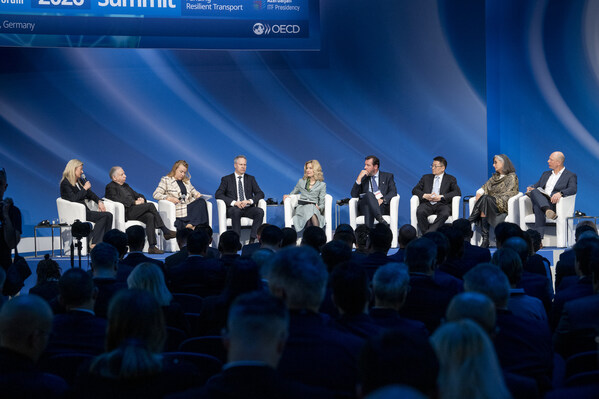
The ITF Summit in Leipzig is the world’s largest ministerial-level transport summit and a premier international policy event for transport. DEKRA CEO Stan Zurkiewicz stated at the summit that building a safe, sustainable, and highly resilient transport system requires close collaboration between policymakers, industry players, and independent third-party organizations. With over a century of expertise in road safety, DEKRA is committed to contributing its professional capabilities to industry knowledge and jointly exploring the future.
Live Demonstration of V2X Technology
With the support of the Cyclist Safety Alliance, DEKRA experts conducted live simulation demonstrations to intuitively illustrate the core advantages of V2X technology in protecting lives on the road.
Christoph Nolte, Executive Vice President and Head of the Vehicle and Transportation Services Division at DEKRA, stated: In complex urban intersection scenarios, cyclists and pedestrians are highly vulnerable to severe or even fatal traffic accidents, posing significant safety risks. V2X technology can predict potential road hazards in advance, proactively issuing warnings before road users perceive the risk, thereby comprehensively enhancing road safety protection levels.
The demonstrations recreated three common real-world scenarios: a truck obstructing the view as a vehicle and cyclist approach an intersection simultaneously; a vehicle following a slow-moving cyclist; and a vehicle turning into a cyclist’s path.
Christoph Nolte added: These scenarios are frequently encountered on daily roads and often lead to unexpected dangers for innocent parties, endangering lives. Human hazard perception relies on visual cues, whereas V2X technology enables early hazard prediction, buying crucial time for evasive action and safeguarding travel safety.
DEKRA Patented Technology: Electric Vehicle Battery Health Assessment
Electric vehicles are a core component of building a sustainable future mobility system. DEKRA experts believe that the widespread adoption of electric mobility depends on a well-established used car market.
“Uncertainty about the health status of traction batteries is the core pain point hindering the development of the new energy used car market,” noted Christoph Nolte. The DEKRA battery health assessment patented technology showcased at this summit can independently, quickly, and accurately measure the remaining battery capacity, alleviating consumer concerns and building trust in market transactions. This patented testing solution is currently compatible with nearly 160 mainstream passenger car models.
Opening Plenary & Ministerial Roundtable
During the opening plenary of the summit, DEKRA CEO Stan Zurkiewicz joined government officials and industry leaders from various countries in a discussion on the value and investment required for resilient transport.
In his remarks, he emphasized: Transport assets and lifecycle systems can only truly demonstrate their resilience value when capital investment is integrated with sound governance frameworks, trustworthy data support, and independent third-party assurance. The industry must shift from reactive crisis management to comprehensive, forward-looking operational oversight, enabling investors, operators, and the public to fully trust the system’s ability to withstand pressure. Rather than debating whether there are funds to invest in transport resilience, we should consider the cost of failing to build a resilient system.
The ministerial roundtable focused on governance rules and investment mechanisms for leveraging artificial intelligence to enhance transport resilience. Stan Zurkiewicz offered clear advice to decision-makers from various countries: As AI rapidly integrates into the transport sector, regulators must balance fostering innovation with safeguarding fundamental principles, adhering to the three pillars of safety standards, cybersecurity, and public trust. A robust system of independent testing, certification, and lifecycle supervision is key to translating AI concepts into safe and reliable transport applications. Furthermore, investment mechanisms must be precisely aligned with quantifiable safety indicators, resilience targets, and accountability frameworks to ensure funding delivers tangible results.