

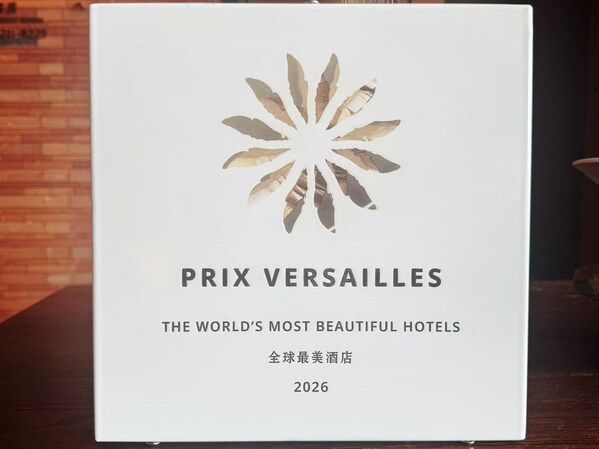
BeijingMay 22, 2026 /PRNewswire/ — In May 2026, the prestigious architectural award, the Prix Versailles – The World’s Most Beautiful Hotels 2026, jointly supported by UNESCO and the International Union of Architects (UIA), was announced in France. The ArcadiaPlace, Lugu Lake, operated by Beijing ArcadiaPlace Hotel Management Co., Ltd., stood out from numerous global candidates and successfully ranked among the world’s 16 “Most Beautiful Hotels” for 2026. As an internationally renowned authority in architectural and spatial aesthetics, the Prix Versailles, established in 2015, has consistently adhered to the core principles of aesthetic innovation and local symbiosis, recognizing global benchmark projects that deeply integrate architectural and interior design with natural ecology, regional culture, and social functions. As the Secretary-General of the Prix Versailles commented: “The selected projects this year possess a dreamlike quality and innovative ingenuity, deeply rooted in local contexts, setting exemplary standards in architectural design. They empower spaces with humanistic hospitality aesthetics, respond to travelers’ spiritual expectations, and build a diverse and inclusive humanistic dialogue amidst the wave of cultural globalization.” This award not only serves as an international recognition of the hotel’s design aesthetics but also marks a successful global dialogue of the Mosuo matrilineal civilization through contemporary architectural language.
Boundless Design: A Symbiosis of Architecture and Nature
As the first member of Marriott Bonvoy’s Design Hotels™ alliance in mainland China, The ArcadiaPlace, Lugu Lake is not only the debut of the ArcadiaPlace brand but is also regarded as “a work of art born for the future.” It embodies the brand’s core philosophy of “exploring a blissful lifestyle.” Designed by Chinese architect Lu Yang and his IMAGO team, with “low intervention, integration with nature, and cultural heritage” at its core, the architecture echoes the sacred mountains, holy lakes, natural beliefs, and lifestyle details of the matrilineal region from the inside out, from form to elements. It incorporates local traditional architecture and craftsmanship, transformed through contemporary architectural language.
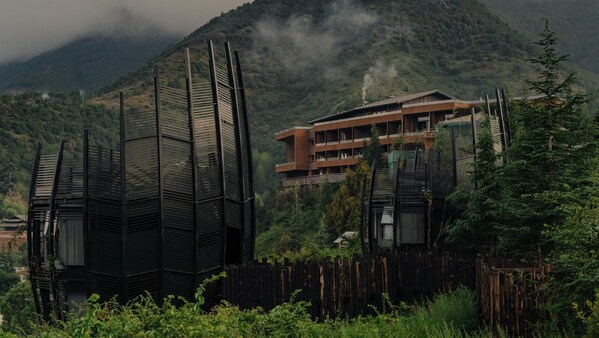
This “boundless design” transcends mere visual style, constructing a highly restrained ecological aesthetic system: In terms of spatial dimensions, the hotel abandons the closed-off feeling of traditional architecture. Through extensive use of negative space and transparent design, it completely dissolves the physical boundaries between interior and exterior, architecture and nature, making the view of Lugu Lake and Goddess Gemu Mountain outside the window not just a scenic painting but a natural extension of the living space. In terms of materials and time, the building materials are sourced directly from the land beneath. Whether it’s the texture of the stone or the warmth of the wood, they share the same roots as the local memory. At the same time, the design respects nature’s cycles of succession, avoiding harsh anti-aging methods that fight against time. Instead, it allows plants to follow the seasons of growth and decay, and stone to weather over time, enabling the architecture to age gracefully alongside nature rather than depreciating abruptly. Ultimately, this design achieves a harmonious coexistence between humans and nature. Guests are no longer mere observers of nature but become part of the ecosystem, thus truly realizing a leap from “physical and mental return” to “spiritual abundance.”
Design is the Skeleton, but Culture is the Soul
Lugu Lake is not only a natural wonderland but also the spiritual homeland of the “living heritage” of Mosuo matrilineal culture. As a highly spiritual and culturally rich “Kingdom of Women,” it represents symbiosis with nature, harmony with humanity, and spiritual return. Starting from this point, ArcadiaPlace fulfills its commitment to “cultural sustainability” — by deeply integrating Mosuo culture, intangible cultural heritage craftsmanship, and a reverence for nature, it creates a sustainable experience that combines cultural depth with contemporary luxury travel.
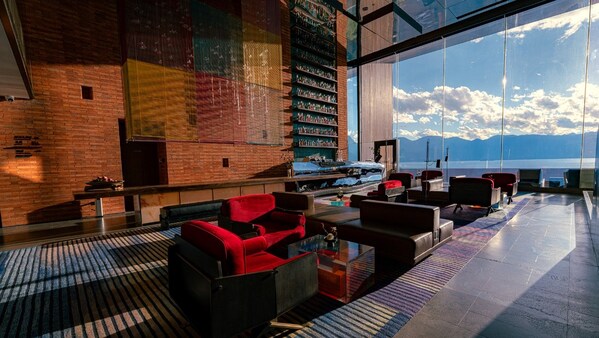
Located halfway up a mountain and embracing a Mosuo ancient village, The ArcadiaPlace, Lugu Lake skillfully translates the totems, fire pit culture, and spatial logic of the grandmother house from Mosuo matrilineal civilization into the language of a modern hotel. From the fire pit in the lobby to the double-pillar structure in the guest rooms, every detail tells the story of the Mosuo people. This is not a museum-style display but an integration of local culture into daily life, allowing travelers to experience authentic Mosuo living during their stay, achieving deep immersion in cultural experiences. This is precisely what the Secretary-General of the Prix Versailles praised as “deeply rooted in the local context, setting an exemplary model in architectural design.”
Building a Sustainable Community Symbiosis Loop
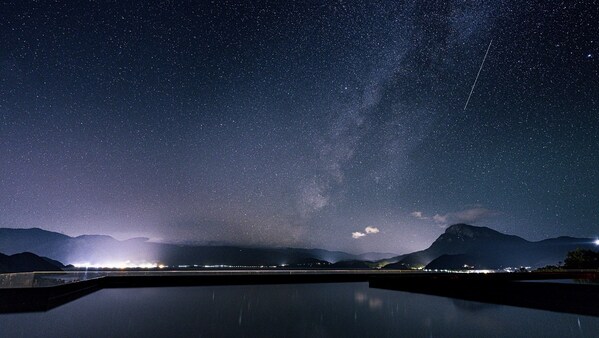
ArcadiaPlace firmly believes that true luxury is not about the accumulation of resources but “letting the land tell its own story.” In the Lugu Lake project, this brand philosophy has been transformed into a highly dynamic asset appreciation model. By introducing professional hotel asset management logic, the project has effectively revitalized dormant stock assets, converting the once-static natural landscape and Mosuo cultural resources of Lugu Lake into operational capital with sustained revenue-generating capacity, maximizing the release of resource value. On the front of rural revitalization, the hotel has abandoned the traditional one-way extraction model, instead building a symbiotic ecosystem: by prioritizing the employment of local Mosuo residents and systematically sourcing local ingredients and intangible cultural heritage crafts, the hotel not only serves as an economic bridge connecting the outside world with the village but also effectively drives the community’s economic self-sufficiency, ensuring that commercial benefits truly give back to the people. More importantly, this deep community integration creates irreplaceable experiential value for travelers — the travel experience is no longer limited to the sensory level of “seeing the landscape” but extends to the spiritual realm of “seeing oneself,” providing travelers with profound spiritual nourishment. When commercial value and social value resonate and elevate together, ArcadiaPlace not only fulfills its brand promise of “cultural sustainability” but also builds a high-quality asset for owners that combines social impact with long-term financial returns.
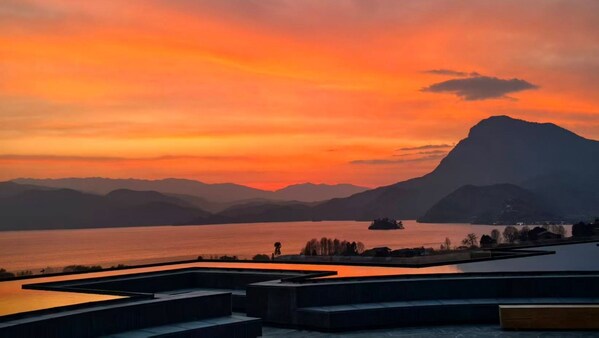
This recognition by the Prix Versailles is not only an accolade for a hotel but also a global endorsement of a brand’s values. Winning the award is not the end but a new starting point for the brand. ArcadiaPlace will continue to adhere to the principle of “no clamor, yet heard,” creating one irreplaceable sanctuary after another, steadily building a global system of Eastern secluded luxury, allowing the world to see the aesthetic heights of Chinese hospitality and enabling more people to reach their spiritual homeland.