

 |
ShenzhenMay 22, 2026 /PRNewswire/ — During the 22nd China (Shenzhen) International Cultural Industries Fair (hereinafter referred to as the “ICIF”), TÜV SÜD Group (hereinafter referred to as “TÜV SÜD”) successfully held the “Cultural Industry AI Product Overseas Compliance and Certification Seminar” at the Zhiheng Cultural Technology Creative Park sub-venue. The event focused on topics such as AI governance, international regulations, smart hardware, accessible design, and sustainable development, exploring key pathways for the global development of AI products with industry partners.
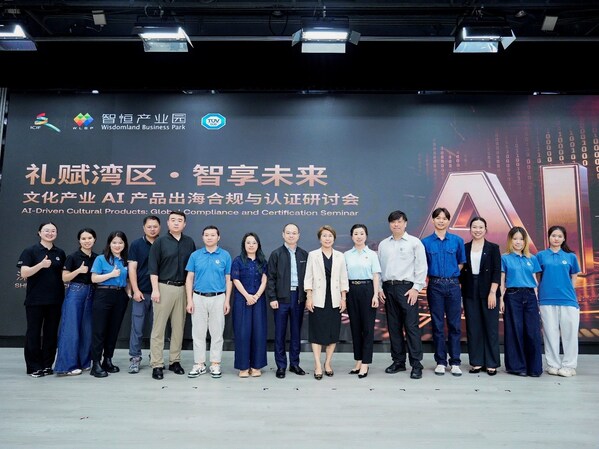
Event Scene
As generative AI, smart terminals, and digital content technologies continue to converge, AI is rapidly entering scenarios such as digital culture, creative technology, and intelligent interaction, ushering in new internationalization opportunities for the cultural technology industry. At the same time, global regulatory frameworks for artificial intelligence, data security, and cybersecurity are being continuously refined. From the EU’s Artificial Intelligence Act to cross-border data governance and updates to smart hardware regulations, AI product exports are transitioning from a focus on pure technological competition to a new phase that equally emphasizes “technology, compliance, and trust.” How to establish international and sustainable governance capabilities has become a critical issue for companies in their global expansion.
Focusing on AI Globalization Trends, Analyzing Core Challenges for Enterprises Going Global
Regarding the construction of AI governance systems, TÜV SÜD expert Mr. Li Daheng pointed out that relying solely on AI functions is no longer sufficient to ensure market trust. Companies need to establish systematic governance mechanisms, implementing an artificial intelligence management system compliant with ISO/IEC 42001 to achieve identifiable risks, traceable responsibilities, and sustainable governance.
On the topic of international regulations and risk governance, TÜV SÜD expert Mr. Yu Zhenbang stated that AI risk governance is shifting from “post-event remediation” to “pre-emptive management.” In response to the risk classification requirements of the EU’s Artificial Intelligence Act, companies need to establish a comprehensive management system covering product design, risk assessment, and user notification as early as possible to reduce compliance risks and enhance market competitiveness.
Addressing trends in AI hardware development, TÜV SÜD expert Mr. Zou Zongquan noted that the EU’s new Battery Regulation imposes higher requirements for battery removability, replaceability, and spare parts supply. Companies should integrate these requirements into product design, supply chain, and after-sales management stages in advance to reduce later-stage rectification costs and market risks.
In the field of accessibility compliance, Ms. Chen Lan, an expert from the Information Accessibility Research Institute, pointed out that global accessibility regulations are continuously improving, and inclusive design is transforming from an “additional feature” to an important market access requirement internationally. Companies need to further convert compliance capabilities into long-term trust value.
Regarding the sustainable value of AI, TÜV SÜD expert Ms. Zhu Wenjun stated that as Europe and the United States increase requirements for data governance and AI transparency, companies should proactively conduct ethical impact assessments, establish privacy protection mechanisms, and label AI-generated content. By converting compliance capabilities into trust assets, they can break free from low-price competition and achieve sustainable value breakthroughs.
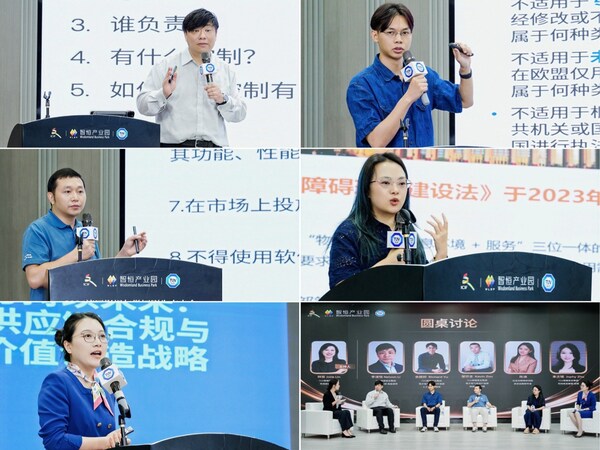
Event Scene
Multi-Party Collaboration to Build a Trust Ecosystem for the AI Industry
During the event, TÜV SÜD, together with multiple industry partners, showcased collaborative achievements in areas such as product certification, cybersecurity, international compliance, and accessibility development, further promoting high-quality development in the AI industry.
- Outstanding Partners, Synergistic Win-Win: TÜV SÜD awarded TCL and Ugreen (in no particular order) the title of “Annual Outstanding Partner,” recognizing their deep cooperation and outstanding contributions in product certification, quality improvement, and international compliance.
- Enhancing Efficiency, Accelerating Global Market Access: TÜV SÜD granted Anker Innovations the designation of “Cybersecurity Manufacturer Witness Testing Laboratory,” further improving the efficiency of cybersecurity certification for smart terminal products.
- Standards as a Guide, Expanding International Markets: The KNX smart panel from Shisheng (GVS) received the RED Cybersecurity NB Certificate from TÜV SÜD, providing technical and compliance support for its entry into the European market.
- Promoting Inclusive Development, Advancing Industry Upgrades: The Information Accessibility Research Institute presented an honorary plaque to TÜV SÜD at the event, recognizing TÜV SÜD’s professional contributions in promoting AI product accessibility compliance, inclusive design, and alignment with international standards.
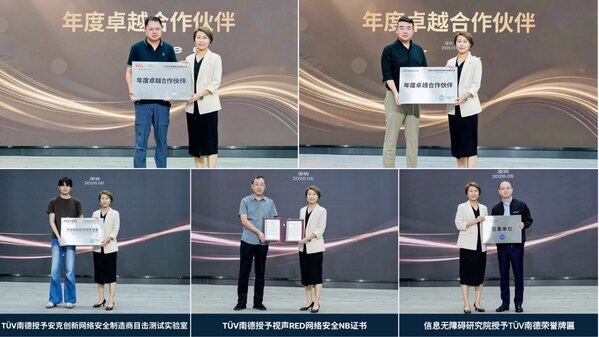
Event Scene
Empowering Through Compliance, Exploring a New Future for AI Overseas Expansion
During the roundtable discussion, participating guests engaged in in-depth conversations on topics such as AI product certification, international regulatory trends, accessibility practices, and sustainable development. Representatives from multiple companies indicated that as global AI regulation continues to evolve, the demand for interpretation of international regulations, risk governance, and the construction of global compliance systems is steadily increasing. This event, combining international perspectives with practical value, provided companies with clearer development pathways for their global market strategies.
In the future, TÜV SÜD will continue to leverage its technical and certification advantages, closely follow international regulatory developments, promote the upgrading of industry standards, and assist Chinese digital culture and smart products in achieving high-quality and sustainable development in the global market.