

 By Xiao Ma | Ruiniu Finance
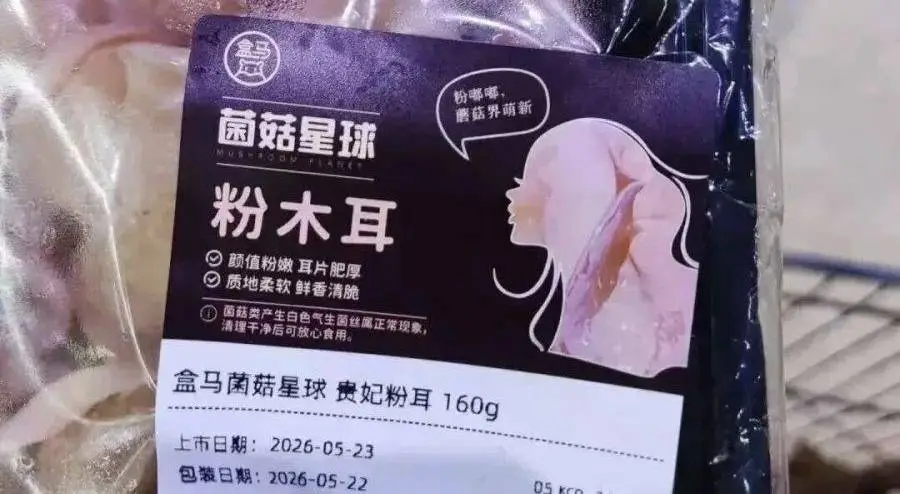
Show this packaging image to any normal person, and they’ll likely pause for three seconds before saying, “Is this… for real?” This “Mushroom Planet · Aristocrat Pink Ear” pink fungus product from Hema features a female silhouette profile filled with mushroom textures on the front of its packaging—the designer’s intent remains unclear, but the resulting effect requires no further interpretation. In May 2026, Hema made headlines twice within a week in two starkly different ways: once for its packaging design being deemed suggestive, and once for receiving a belated fine over last winter’s poisoning incident where daffodils were mistaken for lilies. The former is an aesthetic oversight, the latter a failure in food safety—vastly different in nature—but their simultaneous exposure to the public eye is a coincidence worth pondering. Even more intriguing is the fine amount: a warning plus a 198 yuan penalty and confiscation of 19.8 yuan in illegal gains. A 71-year-old man suffered foaming at the mouth, gastric bleeding, and required follow-up kidney checks after discharge—the legal price paid for this is less than the cost of two boxes of imported blueberries at Hema. This is certainly an issue on the enforcement side, but for Hema, the low external cost of punishment objectively diminishes the urgency for internal rectification.
Not Bad Luck, but Structural Overextension
Many attribute Hema’s quality control failures to “rapid expansion.” This diagnosis is correct but insufficient. Expansion speed is the trigger, not the root cause. The real issue is that while Hema has turned “quality living” into a commercial label and a source of premium pricing, it has never truly built “quality control capability” as a core infrastructure. It treats quality control as a marketing endorsement rather than an operational backbone. 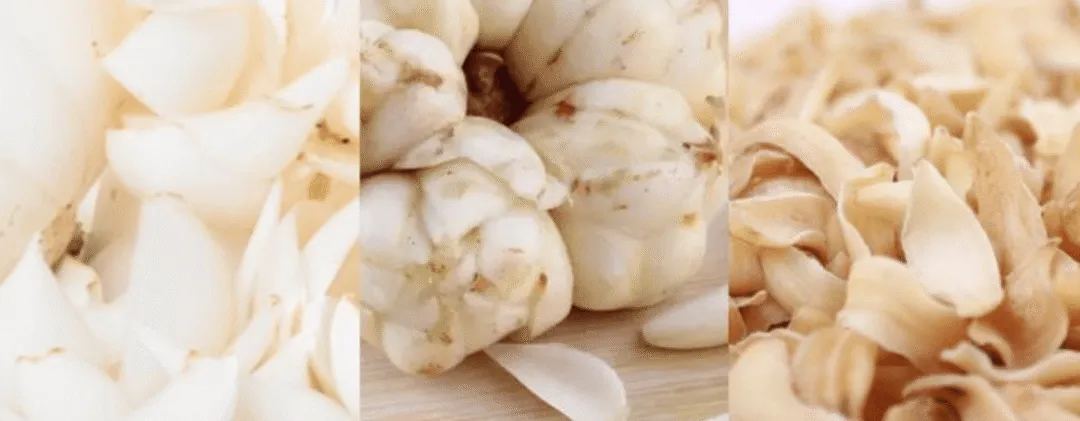 The difference between these two determines whether quality control strengthens or dilutes as scale expands. Hema’s three-tier quality inspection system (initial inspection at origin → random inspection at warehouse → re-inspection at stores) looks complete on paper, but in reality, it quietly erodes at every quickly opened new store, every low-bid supplier, and every understaffed sorting shift. In random inspections, coverage rate is always a hidden variable—what you publicly announce is the “mechanism” of random inspection, but what consumers never know is the “density” of those inspections. When density is insufficient, the mechanism is just PR rhetoric.
Can Discount Strategy and Quality Promise Coexist?
Over the past two years, Hema has firmly pursued a “discount-oriented” path—with Super Hema, NB discount stores, and a full rollout of private labels, the strategy is clear and the financial logic is sound. But there’s a fundamental paradox in retail that Hema has yet to address directly: When you continuously push down supplier prices, how can you demand the highest quality standards from them? This isn’t a moral issue but a problem of supply chain incentive structures. Under cost pressure, a supplier’s rational choice is to: lower raw material standards, reduce self-inspection frequency, and walk the line within regulatory blind spots. Thus, we see—”antibiotic-free eggs” with excessive veterinary drug residues, kiwifruit with 70% excessive growth regulators, fragrant pears with pesticide residues, and bass with excessive antibiotics. This isn’t a problem with a few individual suppliers but a complete causal chain: low-price competition → bad money drives out good → collective decline in quality control standards. Unless Hema is willing, like some high-end fresh food brands, to internalize testing capabilities as a core competency, build its own labs, and conduct mandatory unannounced audits on suppliers—otherwise, discount expansion and quality premium are two cards that cannot be played in the same hand over the long term.
Depreciation of Trust Is Harder to Detect Than Product Spoilage
The business model of fresh food retail is essentially a “trust renewal” business. Every time a consumer opens the app to place an order, they silently renew a trust deposit for that platform. This deposit doesn’t appear on financial statements, but it’s worth more than any SKU—because it determines whether a user’s first reaction to trouble is “this is a one-time mistake” or “I should have switched platforms long ago.” The brand premium Hema has built over nearly a decade is fundamentally this trust deposit. And it’s being consumed at an alarming rate. Interestingly, this packaging was launched on May 23, 2026—just two or three days before it was pulled for being suggestive. This means it went through the entire design, review, and launch process without a single red flag. Hema claims it has “internally reviewed and improved the launch review process,” but it’s hard to have high expectations for the sensitivity of a review team that couldn’t even spot whether packaging visuals crossed a line, especially when it comes to food safety judgments. More troubling is the severe lag in trust erosion. A consumer poisoned today might only affect a hundred potential users a year later through a screenshot in a friend’s circle. The over 17,000 cumulative complaints on the Black Cat complaint platform likely each represent ten users who chose silence but have quietly uninstalled the app. This silent vote with their feet is invisible on financial reports—until a sudden inflection point in user retention rates in a given quarter jolts everyone awake.
Food Is the First Necessity of the People; It Cannot Be Trifled With
Hema’s predicament is not unique to Hema. It’s a collective challenge that the entire fresh food e-commerce industry must confront after the “burn money for scale” phase ends: When traffic dividends fade and financing slows, can quality control capabilities truly support the established landscape? Japan’s fresh food retail offers another answer. Players like 7-Eleven, Seijo Ishii, and Kinokuniya have, over decades of development, always treated the “density of quality control” in their supply chains as their primary competitive advantage, even willing to reduce SKUs and slow store openings. Their scale may not match Hema’s, but their trust deposits don’t depreciate at Hema’s pace. Scale doesn’t create a moat; scale multiplied by quality control does. This formula isn’t new, but in Hema’s case, it has been validated in an especially concrete and sobering way. The night an elderly man vomited blood should not be casually brushed aside by a 198 yuan fine. In this writer’s view, fresh food e-commerce platforms should leverage digital technology to set an example in supply chain quality control innovation, rather than repeating the old world’s stories. The people need safe and reassuring food, not dazzling marketing jargon.