

ChengduMay 28, 2026 /PRNewswire/ — Recently, the 32nd Annual Conference of the China Dairy Industry Association, the 2026 China Dairy Technology Expo, and the 2026 Dairy Carnival were grandly held in Chengdu. As a supporting organization for the event, Royal FrieslandCampina deeply participated in this industry gathering, sharing cutting-edge research on early-life nutrition and contributing to the high-quality development of the dairy industry. Yang Guochao, Senior Vice President of FrieslandCampina China, attended the conference and took part in the launch ceremony of the “Daily Dairy, Nutrition for Life” 2026 World Milk Day and National Dairy Nutrition Week.
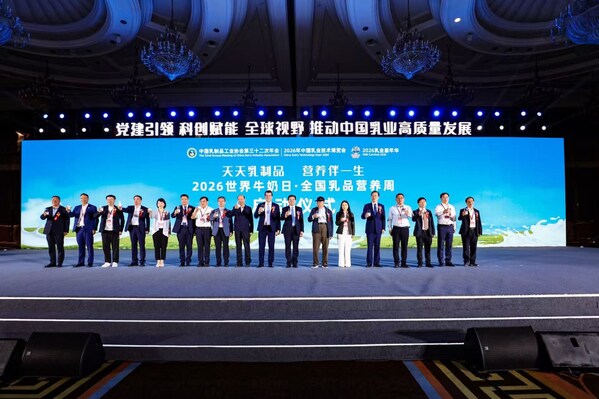
Launch Ceremony of the 2026 World Milk Day and National Dairy Nutrition Week
The annual conference, themed “Party Building Guidance, Technological Innovation, Global Vision Driving High-Quality Development of China’s Dairy Industry,” brought together leaders from relevant domestic and international ministries, experts from research institutions, scholars from universities, and dairy industry elites from home and abroad. They discussed key topics such as technological innovation and application, industrial transformation and upgrading, market expansion and innovation, and brand value enhancement, taking concrete actions to implement the “Healthy China” strategy and injecting new momentum for high-quality development into the dairy industry.
At the Forum on Special Medical Purpose and Infant Formula Foods, Liu Yan, Head of Nutrition at FrieslandCampina China, delivered a special report titled “Research and Prospects on Early-Life Protein Nutritional Needs and Health.” She elaborated on FrieslandCampina’s core scientific research achievements and practical applications in optimizing bovine milk protein and upgrading infant formula quality. The report clarified that infants’ physiological characteristics—such as low digestive enzyme activity, higher gastric pH, and weaker gastric motility—determine their specific need for high-quality, easily absorbable protein nutrition, with breast milk serving as the gold standard for early-life nutrition. It also highlighted natural differences between bovine milk and breast milk in protein content, whey-to-casein ratio, and protein component structure. The degree of casein mineralization is key to determining the softness or hardness of gastric curds and digestion speed, while protein glycation reactions induced by heat processing can alter protein structure, reduce essential amino acid utilization, and increase the risk of digestive discomfort.
Based on this, FrieslandCampina has developed two core innovation pathways to reduce the differences between milk protein in infant formula and human milk. First, it focuses on source control, monitoring casein mineralization levels at the milk source to fundamentally reduce the risk of forming “hard” curds. Second, it adopts innovative mild processing techniques, such as direct cold-chain transport of raw milk from the farm and single-pass spray drying, to minimize protein glycation reactions during processing and preserve the natural nutrition of the protein. Multiple clinical and in vitro studies have confirmed that low-mineralized, low-glycated milk protein formulas can significantly enhance amino acid absorption rates, improve intestinal comfort, and support healthy growth in infants and young children.
In a thematic report titled “Unleashing the Natural Vitality of MFGM, Leading a New Era of Nutrition,” Sun Benfeng, Senior Researcher at the FrieslandCampina R&D Center, shared the company’s core achievements in research on milk fat globule membrane (MFGM), early-life nutrition upgrades, and functional ingredient applications. The report noted that MFGM naturally exists in both breast milk and bovine milk, rich in phospholipids, sphingolipids, gangliosides, and various active proteins, making it a key nutritional component supporting infant immune health and brain development. Published clinical studies have demonstrated that MFGM can reduce the risk of diarrhea and respiratory infections and improve cognitive development. Multiple in vitro and preclinical studies conducted by FrieslandCampina have confirmed that MFGM can also effectively inhibit infections from pathogens such as rotavirus and respiratory syncytial virus, while regulating intestinal barrier and immune functions. Leveraging FrieslandCampina’s unique mild processing and membrane filtration concentration technologies, MFGM can retain heat-sensitive bioactive components such as immunoglobulins and lactoferrin. When applied in infant formula, it provides natural bioactive proteins, polar lipids, and membrane proteins.
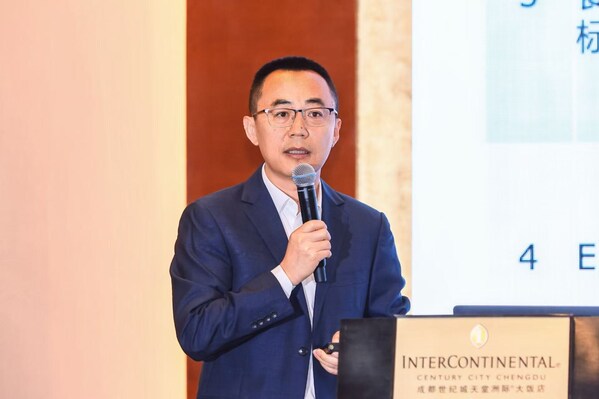
Sun Benfeng, Senior Researcher at the FrieslandCampina R&D Center, delivers a report at the thematic forum
Yang Guochao, Senior Vice President of FrieslandCampina China, stated: “In the future, FrieslandCampina will continue to strengthen quality control across the entire supply chain and increase investment in scientific research and innovation. At the same time, leveraging globally advanced R&D technologies and local market insights, we aim to create high-quality dairy products that better meet the needs of Chinese consumers.”