

Hong Kong, Shanghai, and HuzhouJune 2, 2026 /PRNewswire/ — Beijing Time May 31, 2026 (Chicago Time May 30, 2026), the 2026 American Society of Clinical Oncology (ASCO) Annual Meeting unveiled key clinical breakthroughs. Hong Kong-listed innovative drug company TYK Medicines, Inc. (02410.HK) announced that the interim analysis results of the pivotal Phase II ESAONA study of its self-developed next-generation EGFR-TKI innovative drug, Edotinib Mesylate Tablets (TY-9591), for the first-line treatment of non-small cell lung cancer (NSCLC) patients with EGFR mutations and brain metastases, were presented as a Late-Breaking Abstract (LBA) oral presentation format. Led by Professor Shi Yuankai from the Cancer Hospital of the Chinese Academy of Medical Sciences as the principal investigator, the study garnered high attention from global oncology experts, industry, and capital markets due to its groundbreaking intracranial efficacy data, marking a significant leap for domestic innovative drugs in the precision treatment of lung cancer brain metastases.
Addressing Critical Clinical Needs, Edotinib Precisely Targets Lung Cancer Brain Metastases
EGFR mutation is the most common driver gene mutation type in non-small cell lung cancer, and brain metastasis is the most dangerous form of advanced lung cancer metastasis. It not only significantly shortens patient survival but also severely impairs quality of life, representing a core clinical challenge and an unmet medical need.
Although current mainstream third-generation EGFR-TKIs can significantly improve overall survival in EGFR-mutant lung cancer patients, they still have shortcomings in penetrating and inhibiting brain metastases, resulting in limited intracranial therapeutic efficacy. There is an urgent clinical need for next-generation treatment options with better efficacy and safety.
Edotinib Mesylate Tablets is a highly selective, next-generation irreversible EGFR-TKI independently developed by TYK Medicines. As a differentiated deuterated innovative product of osimertinib, it leverages unique pharmacokinetic advantages to significantly reduce the generation of toxic metabolites. Previous early-phase clinical studies have already demonstrated its excellent intracranial lesion inhibition capability and favorable safety/tolerability, offering new breakthrough possibilities for treating lung cancer patients with brain metastases.
Head-to-Head Pivotal Phase II Study, Rigorous Design Ensures Data Authority
The ESAONA study announced this time is an open-label, multicenter, randomized controlled pivotal Phase II clinical trial. It uses a head-to-head comparison against the global first-line standard therapy, osimertinib, to comprehensively validate the efficacy and safety of Edotinib as a first-line treatment for NSCLC patients with EGFR classic mutations and brain metastases.
The study enrolled a total of 224 patients, randomized 1:1 into the Edotinib group (160 mg once daily) and the osimertinib group (80 mg once daily), stratified by EGFR mutation subtype and number of intracranial lesions, ensuring balanced and comparable baseline data between the two groups. The study uses Blinded Independent Central Review (BICR)-assessed intracranial objective response rate (iORR) and intracranial progression-free survival (iPFS) as the primary endpoints, comprehensively evaluating intracranial efficacy, systemic antitumor efficacy, and safety from multiple angles. The study design is rigorous, data reliability is high, and it holds significant clinical reference value.
Core Data Surpasses Across the Board, Setting New Efficacy Benchmarks for Lung Cancer Brain Metastases
As of December 15, 2025, with a median follow-up of 19.12 months, the interim analysis data showed that Edotinib achieved more positive data in both intracranial efficacy and systemic antitumor efficacy dimensions, with benefits observed across all subgroups, demonstrating best-in-class therapeutic potential.
1. Intracranial Efficacy Significantly Leads, 95.5% Intracranial Response Rate Achieves Breakthrough Benefit
Controlling intracranial lesions is the core goal of treating lung cancer brain metastases. The study data set a new record for intracranial efficacy among current EGFR-TKIs:
Under authoritative BICR assessment, the intracranial objective response rate (iORR) in the Edotinib group reached 95.5%, significantly higher than the 79.6% in the osimertinib group, with an intergroup efficacy difference of 15.62% and highly significant statistical difference (P=0.0004). Patients across all predefined subgroups benefited significantly from Edotinib treatment.
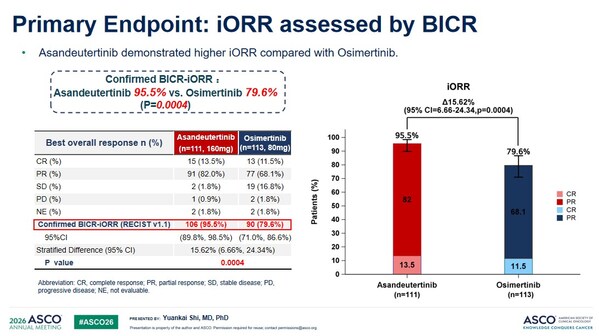
Figure 1. Confirmed BICR-iORR Results
Intracranial survival benefits were also impressive. The study showed that the median intracranial progression-free survival (iPFS) was not reached in the Edotinib group, while it was only 17.51 months in the osimertinib group (HR=0.46, P=0.0020). Long-term follow-up data indicated that the 18-month and 24-month iPFS rates in the Edotinib group were 75.24% and 61.56%, respectively, representing a substantial improvement over the osimertinib group and effectively reducing the risk of intracranial lesion progression.
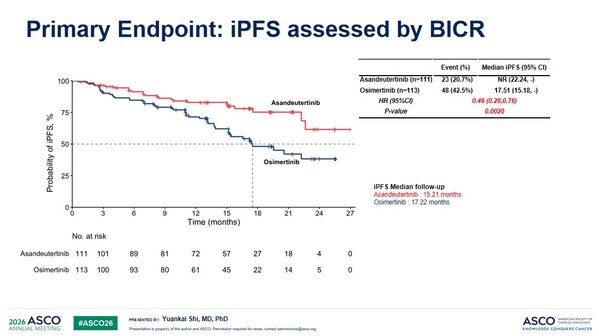
Figure 2. BICR-iPFS Kaplan-Meier Curve
Furthermore, the median intracranial duration of response (iDoR) was not reached in the Edotinib group, compared to 16.26 months in the osimertinib group (HR=0.50, P=0.0148), indicating more durable intracranial lesion remission for patients. Additionally, the iORR and iPFS data assessed by investigators using both RECIST v1.1 and RANO-BM criteria were highly consistent with the BICR assessment results, further validating the stability and reliability of Edotinib’s intracranial efficacy.
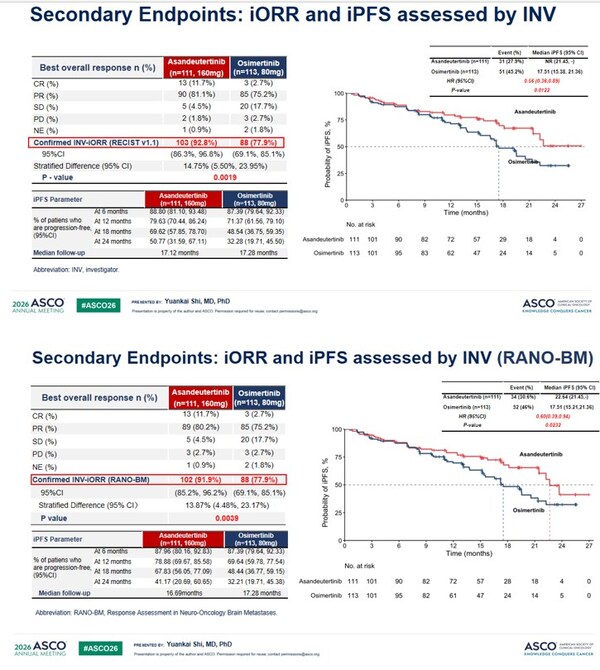
Figure 3. INV-Assessed iORR and iPFS by RECIST v1.1 and INV-Assessed iORR and iPFS by RANO-BM
2. Systemic Efficacy Shows Significant Comparative Effect, Overall Antitumor Capability Fully Upgraded
In terms of systemic antitumor efficacy, Edotinib also demonstrated significant clinical effects. BICR assessment results showed that the overall objective response rate (ORR) in the Edotinib group was 89.2%, higher than the 77.9% in the osimertinib group (P=0.0301); the median progression-free survival (PFS) was not reached, compared to 17.22 months in the osimertinib group (HR=0.64, P=0.0473), effectively delaying systemic tumor progression and providing patients with a longer survival benefit period. Overall survival (OS) data are not yet mature, and follow-up is ongoing, with potential for more positive long-term survival data to be disclosed.
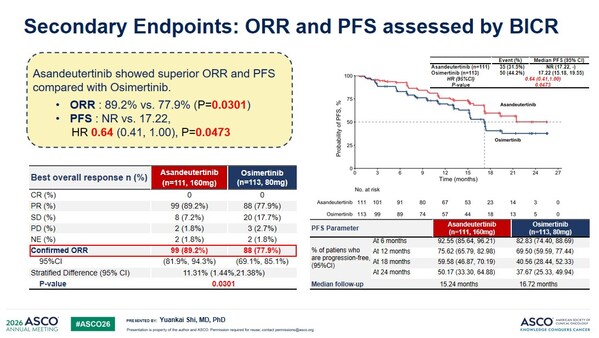
Figure 4. BICR-PFS Kaplan-Meier Curve
Controllable Safety Profile with Good Tolerability, Combining Efficacy and Safety Advantages
Safety is a core guarantee for the clinical adoption and long-term use of innovative drugs. The safety data from this study showed that the overall safety profile of Edotinib is manageable, with most adverse events being mild to moderate and effectively manageable with symptomatic treatment or dose adjustment.
The incidence of treatment-emergent adverse events was generally comparable between the two groups. The incidence of Grade 3 or higher adverse events in the Edotinib group was 49.5%, higher than the control group, but severe adverse reactions were effectively manageable. Permanent discontinuation due to treatment-related adverse events occurred in 4 patients in each group, fully demonstrating that Edotinib has good clinical tolerability, supporting long-term standardized medication and meeting the needs of long-term clinical treatment.
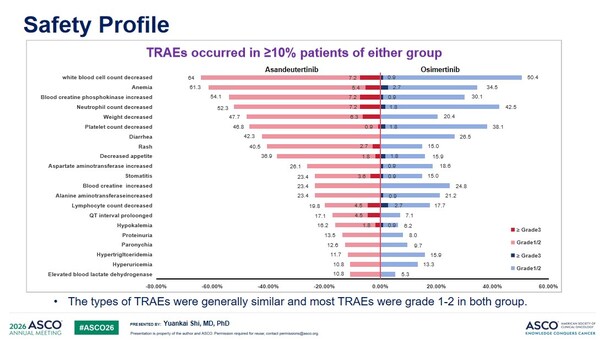
Figure 5. Common TRAEs in Both Groups (Incidence ≥10%)
Commercialization Accelerating, Poised to Reshape Treatment Landscape for Lung Cancer Brain Metastases
Leveraging the breakthrough positive data from the ESAONA study, Edotinib has demonstrated core product strengths of more positive efficacy, controllable safety, and significant differentiation, positioning it as a potential new first-line preferred option for EGFR-mutant lung cancer patients with brain metastases.
Currently, the New Drug Application (NDA) for Edotinib Mesylate Tablets has been accepted by the Center for Drug Evaluation (CDE) of the National Medical Products Administration (NMPA) and has been granted Priority Review status, accelerating the path to market. If successfully approved, it will quickly fill the need for upgraded precision treatment of lung cancer brain metastases in China, offering a new treatment choice for advanced lung cancer patients.
In the future, TYK Medicines will continue to advance multiple clinical studies of Edotinib as monotherapy and in combination therapies, continuously strengthening the product’s clinical evidence base, with more clinical data to be disclosed subsequently. The company will remain focused on unmet critical clinical needs in oncology, persistently delve into the development of innovative kinase inhibitors, benefit global patients with high-quality domestic innovative drugs, and continuously unlock corporate innovation value and capital market growth potential.
[About Edotinib Mesylate Tablets (TY-9591)]
Edotinib Mesylate Tablets is a next-generation, highly selective, irreversible oral EGFR-TKI independently developed by TYK Medicines. It is a differentiated deuterated innovative version of osimertinib. Through unique structural optimization, the drug effectively reduces the generation of toxic metabolites, possesses superior pharmacokinetic characteristics, and has demonstrated outstanding clinical efficacy and safety advantages in patients with lung cancer brain metastases and EGFR L858R sensitive mutations. The company has initiated multiple clinical studies for this product, covering monotherapy and combination therapies, comprehensively addressing various sub-indications of advanced non-small cell lung cancer.
[About TYK Medicines (02410.HK)]
TYK Medicines is a China-based, globally oriented innovative biopharmaceutical listed company, dedicated to the research, development, and commercialization of next-generation kinase inhibitors, focusing on major critical clinical needs in oncology. Since its establishment in 2017, the company has built a comprehensive innovative drug R&D system, with a pipeline of over ten differentiated innovative candidates spanning from preclinical to Phase III stages. With the core mission of “developing more effective and safer anti-tumor drugs,” the company consistently delivers high-quality clinical results, committed to providing high-quality, accessible innovative treatment options for cancer patients worldwide.