

ShanghaiJune 2, 2026 /PRNewswire/ — From May 29 to 31, 2026, the “2026 China Gut Health and Innovation Conference” was held in Shanghai. Hosted by the Gut Microbiota Branch of the Biophysical Society of China and co-organized by several national key laboratories, the conference attracted over 1,000 experts, physicians, and industry representatives from both domestic and international backgrounds. The event featured nine sub-forums and nearly 100 thematic presentations, delving into in-depth discussions on cutting-edge gut microbiome technologies, industrial transformation, clinical application standards, and industry innovation directions.
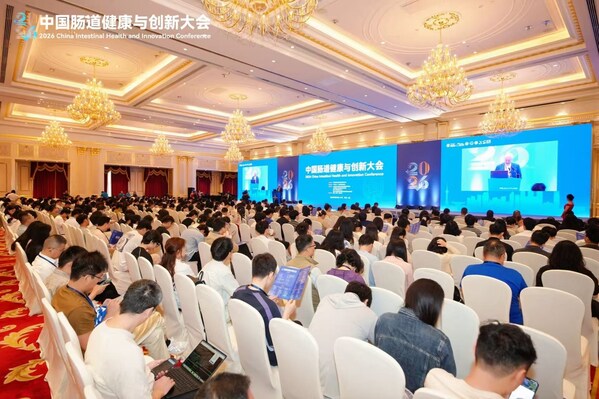
2026 China Gut Health and Innovation Conference Held in Shanghai
As a renowned enterprise in the probiotic field, Yakult (China) Investment Co., Ltd. was invited to attend the conference. Li Yang, Senior Section Manager of the Academic Public Relations Department, delivered a keynote speech titled “Exploration and Innovation of Lactobacillus paracasei Shirota Strain in the Health Field,” systematically sharing the cutting-edge research findings of Lactobacillus paracasei Shirota strain (LcS) contained in Yakult across multiple health domains. This provided scientific evidence and innovative ideas for the high-quality development of the gut health industry.
The Scientific Journey of LcS and Multi-Domain Health Exploration
In maintaining the homeostasis of the gut microbiome, probiotics play an indispensable role. Strains are the core foundation of probiotics, with different strains exhibiting distinct mechanisms of action—a key factor in determining whether probiotics can effectively support gut health.
Lactobacillus paracasei Shirota strain (LcS), a representative strain in the probiotic field, was selected by Dr. Minoru Shirota, founder of the Yakult Group, in the early 20th century. In his presentation, Li Yang noted that over the past 90-plus years, Yakult has consistently adhered to a science-based evidence approach. Leveraging its robust research platform and R&D capabilities, combined with gut microbiome studies, the company has independently conducted extensive rigorous clinical trials and basic research, continuously exploring the potential of LcS in various health areas.
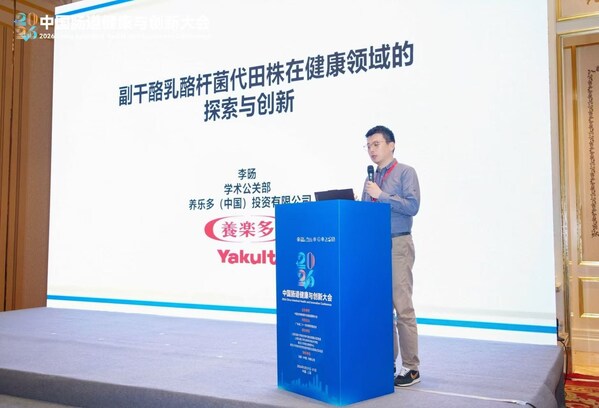
Li Yang Delivers Keynote Speech ‘Exploration and Innovation of Lactobacillus paracasei Shirota Strain in the Health Field’ at the Conference
In the report, Li Yang shared two representative studies. The first focused on the high-stress scenario of final exams among fourth-year medical students in Japan, using a double-blind, placebo-controlled trial (daily intake of 10¹¹ cfu LcS). Results showed that LcS could significantly suppress the rise in salivary cortisol concentration and improve perceived stress under short-term mental stress, while also enhancing deep sleep quality.
The second study targeted Parkinson’s disease patients with constipation symptoms (daily intake of 10¹⁰ cfu LcS). Findings indicated that LcS supplementation significantly improved specific gastrointestinal symptoms in Parkinson’s disease patients and increased the abundance of Lactobacillus in the gut. Additionally, it regulated tyrosine metabolism in patients, reducing fecal tyrosine concentration and elevating plasma tyrosine levels. Tyrosine, as a precursor to dopamine, offers a new pathway for Parkinson’s disease intervention through optimized metabolism. Dietary-microbiota intervention may become a potential adjunctive strategy for managing Parkinson’s disease, opening new avenues for probiotic applications in the auxiliary management of neurodegenerative diseases. Furthermore, Yakult continues to explore LcS’s potential in additional fields.
Rooted in Science, Driving Continuous Probiotic Innovation
Upholding the founding philosophy of Dr. Minoru Shirota—”Preventive Medicine, Healthy Gut for Longevity, and Easy Enjoyment”—Yakult persistently advances the application of microbiological science to daily health management. This ensures that cutting-edge research outcomes move beyond the lab, transforming into products and solutions that meet public health needs, thereby supporting the development of preventive medicine.
In this process, Yakult consistently relies on the scientific evidence of LcS as its core support. Leveraging a mature and comprehensive research system, the company has built a full-chain framework spanning strain selection, basic research, clinical validation, and industrial application. Li Yang emphasized in his speech that Yakult has established the Yakult Central Institute in Tokyo, Japan, and the Yakult European Research Institute in Ghent, Belgium, in 2005. These research platforms ensure seamless integration across all stages, from strain selection to industrial application.
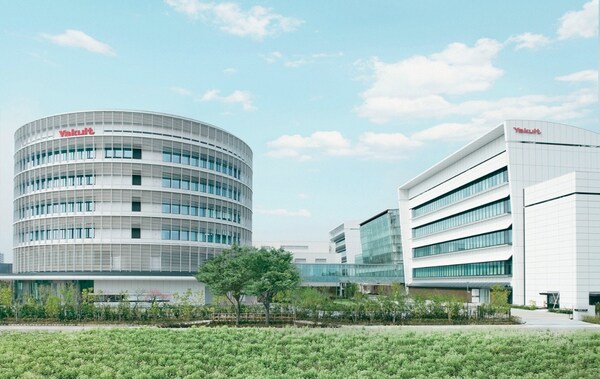
Yakult Central Institute in Tokyo, Japan
In China, Yakult emphasizes localized scientific collaboration, establishing extensive partnerships with multiple universities, medical institutions, and research organizations. Focusing on LcS’s mechanisms of action, gut microbiota regulation, and health effects on specific populations, the company has conducted numerous clinical and basic studies, yielding substantial academic achievements. This open, continuous, and evidence-based research model enables Yakult to continually explore LcS’s application value in emerging fields such as mental health, metabolic diseases, and neurological disorders, expanding the scientific boundaries of probiotic functions and providing evidence-based support for more precise health management in the future.
From cultivating a single strain to building a health-oriented industrial ecosystem, Yakult’s development journey is essentially a persistent scientific quest. With reverence for science and a mission to safeguard human health, Yakult will continue to increase R&D investment and accelerate the practical application of technological achievements. At the same time, it will unite forces across the industry, leveraging science to protect public health and contribute to building a Healthy China.