

GuangzhouJune 4, 2026 /PRNewswire/ — During the college entrance exam season, the entire nation is cheering on a “brainpower test.” But in reality, beyond the exam hall, maintaining brain health is a lifelong journey.
Low work efficiency, forgetting key points in meetings, leaving the house without your phone, words on the tip of your tongue suddenly slipping away… Have you experienced these “brain fog” moments? Before quickly blaming it on “lack of sleep” or “high stress,” you might be overlooking a more critical cause!
A study published in *Aging and Disease* found that many young people have very low choline levels in their bodies. This research further confirms the value of choline as an important marker of metabolic and brain dysfunction, and emphasizes the importance of adequate daily choline intake[1].
Why is Choline Called the “Golden Multi-Nutrient”?
Many people are unfamiliar with choline, but it was officially recognized as an “essential nutrient” by the Institute of Medicine (IOM) in the United States as early as 1998[2].
A study published in *Aging Cell* found that a lack of choline in the diet can have adverse effects on the body, potentially representing a missing piece of the Alzheimer’s disease puzzle[3]. If your diet is chronically deficient in choline, your brain might literally “starve” into problems[4].
Choline is the core raw material for synthesizing “acetylcholine.” Acetylcholine acts like a “signal soldier” in the brain’s neural network, responsible for transmitting information related to learning, memory, and attention. With fewer “signal soldiers,” information transmission is prone to stalling. Conditions like memory decline, poor concentration, and sluggish thinking—the hallmarks of “brain fog”—may then appear.
Acetylcholine’s capabilities go far beyond this; it can also influence the release of dopamine, serotonin, and norepinephrine. These substances affect our sense of motivation, happiness, and mental vitality. In other words, both our emotional well-being and brain health depend on the nutritional support of choline.
Beyond mood and the brain, choline is also closely linked to the liver. Choline is involved in the liver’s fat metabolism, helping to transport fat out of the liver. Without enough choline, fat can quickly accumulate in the liver, potentially leading to fatty liver disease.
Multiple studies published in top-tier academic journals such as *Science* and *Nature* have confirmed that choline is important for maintaining health in adults.
Due to its multi-dimensional capabilities, choline is also known as the “golden multi-nutrient.”

96% of Adults Don’t Reach the “Adequate Intake”
Choline is crucial for health, but the human body can only synthesize a very small amount, insufficient to meet the body’s needs. It must be obtained from diet and supplements[5].
So, are we getting enough choline?
According to the *Chinese Dietary Reference Intakes (2023 Edition)*, adult men need 450 milligrams of choline per day, and women need 380 milligrams. However, most people don’t get enough. Data from an authoritative white paper shows that over 96% of Chinese adults have insufficient choline intake, with an average daily intake of only 179 milligrams[6]—far below the recommended amount!
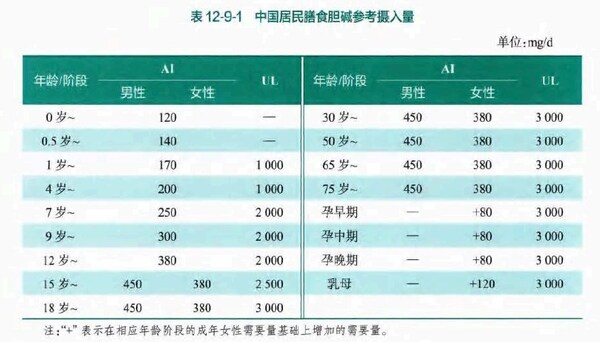
The underlying problem likely lies in dietary habits. For example, some people avoid egg yolks due to cholesterol concerns; others shun animal organs for fear of high purines; some limit red meat, worried about saturated fats… These habits happen to exclude several food groups richest in choline. Plant-based diets and veganism can also reduce choline intake[5].
Foods like eggs, animal liver, and walnuts are rich in choline and can be included in a daily diet. However, an unbalanced daily diet makes it difficult to get enough choline. Combining diet with dietary supplements is an efficient way to supplement choline.
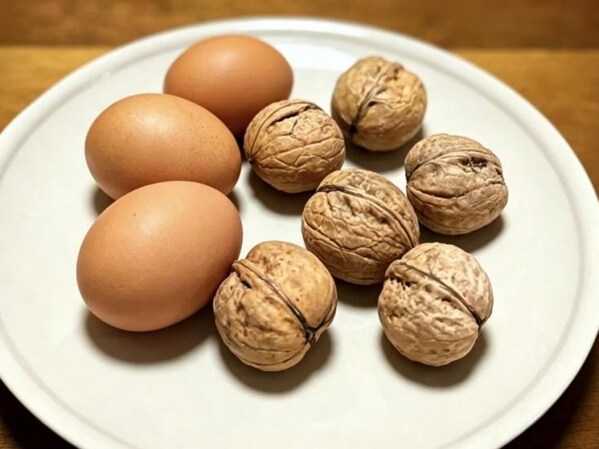
(Foods rich in choline, image generated by AI)
For Choline Supplementation, Co-supplementation with 8 B Vitamins is Recommended
Supplements on the market often pair choline with B vitamins. Consumers can choose a “choline + B vitamin” combination formula with sufficient content based on their needs.
Why is choline often used together with B vitamins? Their synergy is primarily reflected in the synthesis of acetylcholine. As mentioned earlier, choline is the key raw material for synthesizing acetylcholine; but choline doesn’t work alone. Vitamins B1, B12, and pantothenic acid (B5) are also deeply involved in this synthesis process. They work synergistically to improve the efficiency of acetylcholine synthesis[2], thereby affecting our attention, memory, and mental vitality.
On the other hand, B vitamins have another notable nickname—”happy vitamins.” This group of vitamins also emphasizes “synergistic supplementation,” mainly including B1, B2, B6, B12, pantothenic acid, niacinamide, biotin, and folic acid.
They are deeply involved in energy metabolism and neural activity. Long-term deficiency in B vitamins can lead to low mood, anxiety, or even depression. It can also cause issues like mental fatigue, lack of energy, slowed metabolism, oral mucosal discomfort, oily skin and acne, and hair loss.
Beware of the Easily Overlooked “Nutrient Activity” Issue
So, how do you choose a reliable choline + B vitamin supplement? First, look for the “Blue Hat” logo, which indicates better assurance of product safety, stability, and efficacy. Second, check the content; both choline and B vitamins should be in sufficient amounts, not just “conceptually added.” Third, look at the formula. A scientific B vitamin supplement should contain all 8 B vitamins, including B1, B2, B6, B12, pantothenic acid, niacinamide, biotin, and folic acid, to achieve synergistic effects.

Additionally, pay attention to an easily overlooked “hidden danger”!
Choline is highly hygroscopic, meaning it can quickly absorb water when exposed to air[2]. When mixed with other B vitamins, the moisture generated by its absorption can affect the stability of other B vitamins, leading to a decline in nutrient activity[7]. This is also why many combined B vitamin supplements contain insufficient amounts of choline. Ingesting vitamins that have deteriorated due to moisture can also burden the body.
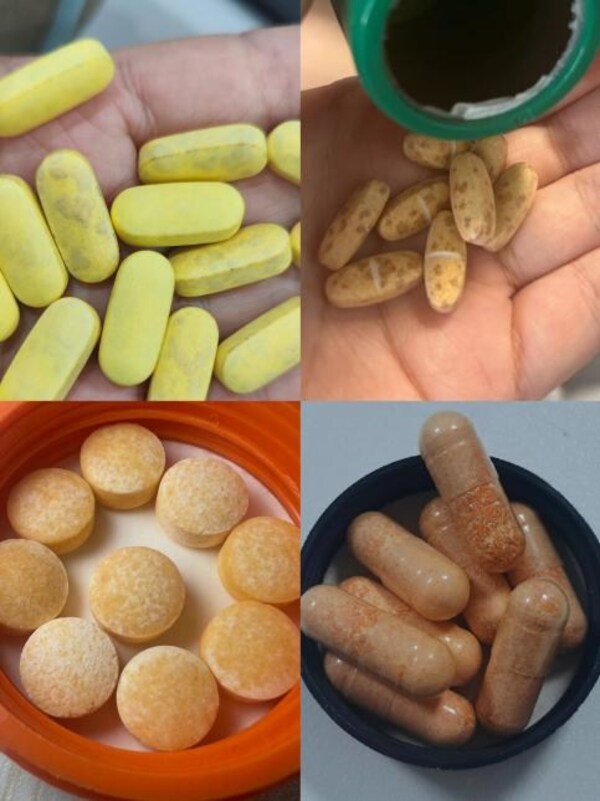
(Vitamin products deteriorated due to moisture, image from the internet)
Addressing this industry challenge, By-Health has broken through technical barriers by innovatively adopting a nutrient layered freshness-locking technology. For example, By-Health’s Choline-Enhanced B Vitamin Double-Layer Tablet uses physical isolation to store choline and the 8 B vitamins in separate layers, better preserving nutrient activity.
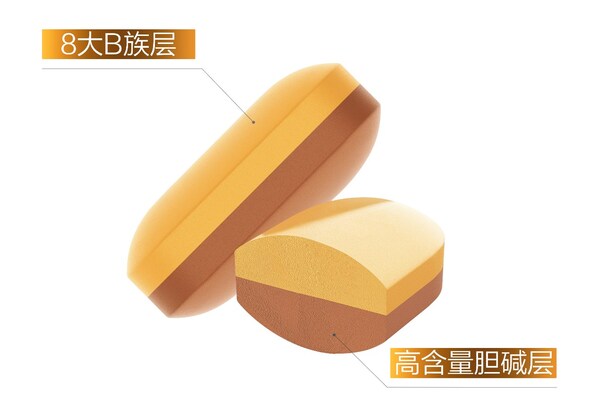
Furthermore, pay attention to whether the brand discloses its raw material sources and production test reports. The production process of a good product should be transparent, open to external scrutiny, and undergo rigorous testing.
The brain operates at high intensity every day. What we need is not the temporary stimulation of caffeine, but solid nutritional support. To keep your brain sharp, your energy levels high, your liver healthy, and your mood positive, don’t forget to supplement with key nutrients like choline and B vitamins!