

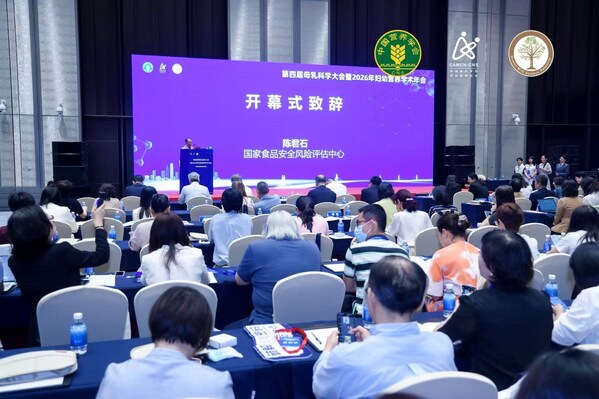
GuangzhouMay 26, 2026 /PRNewswire/ — Recently, the “4th Breast Milk Science Conference and 2026 Maternal and Child Nutrition Academic Conference,” hosted by the Maternal and Child Nutrition Branch of the Chinese Nutrition Society, was grandly held in Guangzhou. As a globally leading dairy enterprise, Royal FrieslandCampina was invited to participate in this top-tier industry academic event, sharing the latest research and practical achievements in early-life nutrition, thereby contributing to the development of maternal and child nutrition and breast milk science.
With the main theme of “Academic Leadership, Science Popularization Empowerment, and Achievement Transformation,” this conference closely adhered to the topic of “Breastfeeding and Healthy Lifestyles,” deeply implementing the “Five Health” requirements. It brought together over 60 experts and scholars from both domestic and international backgrounds to jointly explore academic frontiers, discuss development strategies, and share practical outcomes, providing solid academic support for the implementation of the “Healthy China” initiative and the nutritional security of the first 1,000 days of life.
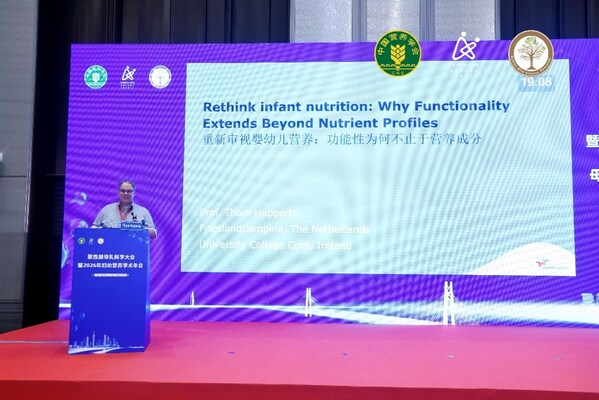
During the conference, Thom Huppertz, Senior Scientist at the FrieslandCampina R&D Department and Professor at University College Cork, Ireland, was invited to deliver a keynote report titled “Re-examining Infant and Toddler Nutrition: Why Functionality Goes Beyond Nutritional Components.” He systematically shared FrieslandCampina’s innovative scientific research achievements and industrial applications, using breast milk as the gold standard, in areas such as milk protein digestion mechanisms, casein mineralization, protein glycosylation, and quality improvement of infant formula.
Professor Thom Huppertz pointed out that the digestive system of infants and toddlers is not yet mature, characterized by low pepsin secretion, high gastric pH, weak gastrointestinal motility, and low expression levels of pancreatic enzymes and intestinal transport proteins. This imposes extremely stringent requirements on protein quality, digestibility, and bioavailability. Breast milk is the gold standard for early-life nutrition, while cow’s milk and breast milk exhibit significant differences in casein curd properties, protein structure, and digestive behavior. For infant formula, merely meeting nutritional component labeling is insufficient and far from achieving the digestive and absorptive effects of breast milk.
Research has confirmed that the level of casein mineralization directly affects the texture of gastric curds and digestion speed in infants. High mineralization tends to form dense, hard curds, significantly reducing the digestive and absorptive efficiency of protein and calcium. Meanwhile, protein glycosylation induced by heat processing can lead to lysine blockage, reducing the bioavailability of essential amino acids and directly inhibiting overall protein digestion.
Professor Thom Huppertz shared the latest research findings from a collaboration between FrieslandCampina and Jiangnan University, showing that the level of casein mineralization and the degree of protein glycosylation are two key factors determining the digestibility of infant formula. A survey of 25 toddler formulas on the Chinese market revealed significant differences in casein mineralization and blocked lysine levels among different products, which can directly affect the digestibility of formula.
Multiple clinical and in vitro studies have confirmed that milk proteins with low mineralization and low glycosylation are easily digestible and absorbable, with high bioavailability, good intestinal comfort, and fewer digestive issues. FrieslandCampina’s Friso brand, with its innovative low-mineralization, low-glycosylation milk protein solutions, provides high-quality nutritional support for infants and toddlers, aiding healthy growth in early life.
With a history of over 150 years, FrieslandCampina is committed to the mission of “Nourishing by Nature,” grounded in scientific evidence. It has deeply engaged in the fields of maternal and child nutrition and breast milk science, continuously increasing investment in early-life nutrition research and development. Yang Guochao, Senior Vice President of FrieslandCampina China, stated: “In the future, FrieslandCampina will continue to collaborate with industry experts and partners, deepen academic exchanges and scientific research cooperation, strengthen quality control across the entire industrial chain, and jointly promote breast milk science research and maternal and child nutrition health, providing safer and higher-quality dairy products for Chinese families.”