

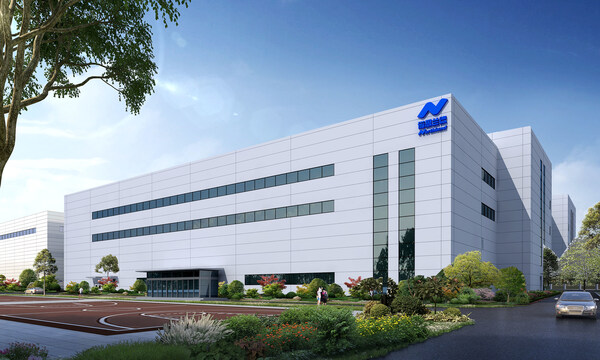
I. Milestone Significance: Filling the Gap in Etiological Treatment
The approved indication for Sedomingi Injection is: limb ulcers caused by severe lower limb ischemia (including lower extremity arteriosclerosis obliterans, thromboangiitis obliterans, and diabetic lower limb ischemia) that are unsuitable for or have poor outcomes from revascularization surgery. As the world’s first HGF-based naked plasmid gene therapy drug, the launch of Sedomingi Injection not only fills the gap in etiological clinical treatment for severe lower limb ischemia in China but also marks the official transition of gene therapy for lower extremity arterial disease from the laboratory to clinical application. This represents a significant milestone in accelerating the global industrialization of gene therapy.
II. First-Mover Advantage: Sedomingi Captures the Blue Ocean Market
Severe lower limb ischemia is a clinical syndrome that occurs when peripheral arterial disease (PAD) progresses to its terminal stage. According to the “China Cardiovascular Health and Disease Report 2022,” the prevalence of lower extremity arterial disease among individuals aged ≥35 in China is 6.6%, affecting approximately 53.86 million people[1]. About 10% of these cases progress to CLI, resulting in approximately 5.38 million CLI patients in China[2]. Among CLI patients, ulcers are the primary clinical manifestation in about 32%, corresponding to roughly 1.72 to 2.59 million individuals[3,4]. Within this group, approximately 5% to 20% are unable to undergo surgery due to extremely poor vascular conditions or multiple underlying diseases, becoming a “no-option” population[5] in urgent need of new treatment options. Additionally, among the approximately 90% who have undergone surgery, over half experience recurrence within six months post-operation, with diminishing efficacy after repeated procedures and a lack of further effective treatments[6]. Combining these two groups, the target patient population in China eligible for Sedomingi’s indication (severe lower limb ischemic ulcers unsuitable for or with poor outcomes from revascularization surgery) is approximately 1 million people[1–6].
China currently has approximately 119 million diabetes patients, with a diabetic foot prevalence rate of about 14% among diabetics, equating to roughly 16.6 million diabetic foot patients. Based on etiology, diabetic foot ulcers can be classified into neuropathic, neuroischemic, and purely ischemic types, with the latter two accounting for about 45% combined. Both involve vascular ischemic lesions, making them potential target populations for Sedomingi.
Furthermore, the Phase III clinical study for Sedomingi’s rest pain indication (Rutherford Category 4) was unblinded in August 2024, with results meeting expectations. The company will proceed with subsequent registration submissions in an orderly manner. Rest pain patients account for approximately 30% to 40% of the total CLI population, corresponding to a potential patient base of about 1.35 to 1.8 million in China. Once approved, this will significantly expand the patient population beyond the current ulcer indication, serving as the company’s most important mid-term performance growth catalyst.
III. Poised for Launch: Precision Commercialization Strategy, Actively Pursuing 2026 Medical Insurance Negotiations
The company has established a Shanghai sales subsidiary, initially forming a professional team covering sales, marketing, and commercial functions. Preparations for commercialization are being comprehensively advanced across areas including agency partnerships, academic promotion, market access, and commercial channels. Simultaneously, the company is developing institutional frameworks around three systems: sales management, academic promotion, and compliance management. Documents such as the “CSO Management System,” “Academic Activity Management System,” and “Compliance Management System” have been formulated to build business processes and management mechanisms, providing solid support for standardized operations post-product launch. In terms of market layout, the company plans to adopt a model combining provincial agency partnerships with self-operated operations in key cities. Key provincial regions have already been identified, with preliminary research and cooperation negotiations underway. Standardized academic promotion models and compliant sales channels have been established concurrently.
The company has completed preliminary reference drug communication with the National Healthcare Security Administration and officially initiated the 2026 medical insurance application process. Clinical expert consensus development and pharmacoeconomic studies have been launched simultaneously to strengthen the value argument for medical insurance coverage with sufficient evidence-based data. Once successfully included in medical insurance, patient payment burdens will be significantly reduced, fundamentally improving product accessibility, and sales volume is expected to achieve leapfrog growth.
IV. Dual-Track Approach: Contract Manufacturing Ensures Current Supply, Self-Built Factory Supports the Future
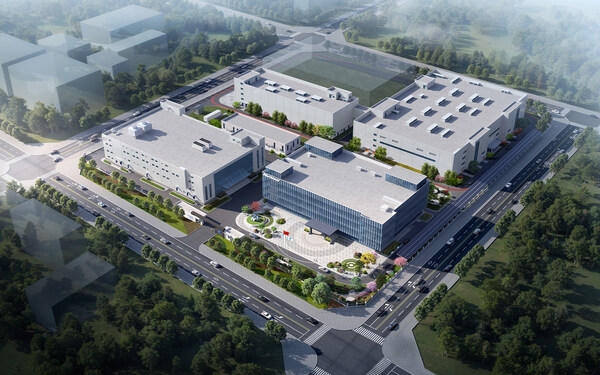
The company has entered into a strategic partnership with Jiangsu Yaohai Biopharmaceutical Co., Ltd. (hereinafter referred to as “Yaohai Bio”). Yaohai Bio has established an internationally high-standard quality system benchmarked against China’s NMPA, the US FDA, and the EU EMA, strictly adhering to compliant production standards across all processes. Its contract manufacturing production line has passed GMP dynamic inspections, with material reserves, production plans, and logistics distribution systems all in place, fully ensuring stable supply during the initial product launch phase. Meanwhile, the company’s self-built bioengineering drug production base in Tongzhou, Beijing, is being accelerated. Covering an area of 36,000 square meters with a total building area of 33,000 square meters, the base plans to include a comprehensive office building, self-developed drug production workshops, and warehouses, fully integrating digital and intelligent concepts. Upon completion, it will meet leading domestic biopharmaceutical production standards. Civil construction is largely complete, with purification renovation and electromechanical installation for the 4# self-developed drug workshop underway. All raw material equipment has arrived and is being installed, with completion expected by the end of 2026. Once operational, the base will fundamentally ensure the long-term supply capacity and quality stability of Sedomingi Injection and subsequent pipeline products.
V. Continuous Deepening: Post-Launch Clinical Value Planning for Sedomingi
The company has systematically planned a post-launch clinical research system, leveraging real-world studies (RWS) and investigator-initiated trials (IIT) as primary tools. Within a compliant operational framework, it is comprehensively advancing multiple dimensions, including combination therapy exploration (with topical FGF gel), specific population studies (diabetic foot ulcers DFU, diabetic peripheral neuropathy DPN), dosing regimen optimization, and multicenter epidemiological research on LEAD. This will continuously optimize clinical medication regimens, accumulate real-world evidence, and strengthen the product’s academic position. The approval and launch of Sedomingi Injection represent only the first step in translating Northland’s R&D achievements. Multiple projects in its pipeline have entered clinical stages, with long-term growth momentum continuing to be unleashed.
About Northland
Beijing Northland Biotech Co., Ltd. (Stock Code: 920047), founded in 2004 and listed on the Beijing Stock Exchange in November 2021 as one of its first batch of listings, is among the earliest innovative biopharmaceutical companies in China to enter the gene therapy赛道. The company is a key national high-tech enterprise under the Torch Program and a Beijing “Specialized, Fined, Peculiar, and Innovative” small and medium-sized enterprise. It holds multiple authorized patents and has undertaken eight national-level “Major New Drug Creation” projects. Its core product, Sedomingi Injection (Huasuoling®), was officially approved for marketing in May 2026, becoming China’s first and the world’s first HGF-based naked plasmid gene therapy drug.
References
|
[1] China Cardiovascular Health and Disease Report Writing Group (2023) China Cardiovascular Health and Disease Report 2022. Beijing. |
|
[3] IQVIA (2020) China Severe Lower Limb Ischemia Market Research Report. |
|
[6] Internal Research Report. |