

ShanghaiMay 18, 2026 /PRNewswire/ — Online ecosystem governance is a critical task in building a cyber power, bearing on national development and security as well as the vital interests of the people. It must combine law-based governance, moral cultivation, and technological management to foster a clean and orderly cyberspace. As a frontier of reform and opening-up and a hub for the internet industry, Shanghai has consistently adhered to the strategic vision of building a cyber power, continuously improving the long-term mechanism for online ecosystem governance, and striving to create a fair, orderly, and upright online environment, providing solid guarantees for high-quality economic and social development and the healthy growth of enterprises.
Against this backdrop, the professional seminar titled “Rule of Law as a Shield – Building a Favorable Online Business Environment”, guided by the Shanghai Municipal Cyberspace Administration and co-hosted by the Shanghai Internet Industry Federation and Beijing Dentons (Shanghai) Law Firm, was successfully held on the afternoon of May 15, 2026, in Pudong, Shanghai. The seminar invited Zhang Lei, Deputy Secretary-General of the Shanghai Municipal Government and Executive Deputy Secretary of the Municipal Political and Legal Affairs Committee; Jiang Xun, Standing Committee Member of the Shanghai Municipal Committee of the Chinese People’s Political Consultative Conference (CPPCC), Director of the Learning, Culture, and History Committee, and President of the Shanghai Internet Industry Federation; Shao Wanquan, President of the Shanghai Bar Association; Huang Aiwu, Secretary of the Party Leadership Group and Director of the Pudong New Area Bureau of Justice; Yuan Yefeng, Secretary of the Party Leadership Group and Director of the Lujiazui Administration Bureau of the China (Shanghai) Pilot Free Trade Zone Management Committee, and Director of the Shanghai Lujiazui Financial City Development Bureau; Mei Yue, Deputy Secretary of the Party Working Committee and Director of the Office of the Lujiazui Subdistrict in Pudong New Area; and Wang Lu, Director of the Law Enforcement and Supervision Division of the Shanghai Municipal Cyberspace Administration. The seminar also specially invited Shi Jianzhong, Professor at China University of Political Science and Law and Dean of the Institute of Data Rule of Law, to attend and deliver a keynote speech.
Also invited to attend were Yuan Huazhi, Director of Dentons Law Firm and Chairman of the Board of Directors; Wang Zhongde, Lifetime Honorary Managing Partner of Dentons, Lifetime Honorary Chairman of the Dentons Global Legal Services Network Joint Conference, and Dean of the Dentons International Legal Services Research Institute; Ma Jiangtao, Chairman of the Supervisory Committee of Dentons Law Firm; Chen Jun, Vice Chairman of the Board of Directors of Dentons Law Firm and Head of Dentons Shanghai; Chen Feng, Vice Chairman of the Advisory Committee of Dentons Law Firm and Party Secretary of Dentons Shanghai; and Gu Wei, Director of the Board of Directors of Dentons Law Firm and Chairman of the Supervisory Committee of Dentons Shanghai. Additionally, representatives from municipal and district judicial administrative systems, industry associations, universities and research institutes, Dentons China and Dentons Shanghai management and partner teams, as well as clients, attended the seminar.
At the beginning of the seminar, Jiang Xun, Standing Committee Member of the Shanghai Municipal Committee of the CPPCC, Director of the Learning, Culture, and History Committee, and President of the Shanghai Internet Industry Federation; Chen Jun, Vice Chairman of the Board of Directors of Dentons Law Firm and Head of Dentons Shanghai; and Shao Wanquan, President of the Shanghai Bar Association, delivered opening remarks.
President Jiang Xun noted in his speech that fostering a favorable online business environment is a key task for the central government and the Shanghai Municipal Committee and Government. Addressing online violence and regulating online order is a systematic project, and the risks of public opinion and online chaos arising from internet development urgently require legal solutions. He stated that the Shanghai Internet Industry Federation, under the guidance of the Municipal Cyberspace Administration, actively plays a bridging role, promoting deep integration of industry self-discipline and legal construction, and deepening cooperation with Dentons Shanghai to build an anti-online violence platform, contributing to multi-stakeholder governance of cyberspace.
Lawyer Chen Jun stated that the important discourse on improving the long-term mechanism for online ecosystem governance provides fundamental guidance for the construction of internet rule of law. This seminar is a practical measure to implement central government decisions and respond to the development needs of the internet industry. Since its establishment in 2001, Dentons Shanghai has deeply cultivated its expertise and made forward-looking arrangements, forming core advantages in emerging fields such as online public opinion and digital rule of law. Dentons Shanghai will adhere to its professional original intention, bravely shoulder social responsibilities, continuously deepen research and service provision in internet rule of law, and work with all sectors to build a clean and orderly cyberspace, contributing legal strength to the high-quality construction of a favorable online business environment.
President Shao Wanquan stated that with the rapid development of the digital economy and new technologies, cyberspace governance has become a crucial legal issue concerning fairness, justice, and the business environment. The Shanghai legal profession has formed a modern legal service system with a reasonable structure, comprehensive specialties, and broad coverage. The Shanghai Bar Association focuses on key areas such as online violence governance, online public opinion response, and online ecosystem rule of law, strengthening professional guidance and practical capability building, and promoting multi-stakeholder collaborative governance. He pointed out that Shanghai lawyers will closely align with national strategies and urban development positioning, accelerate professional, digital, and international transformation, continuously enhance legal service capabilities in emerging fields, jointly create a clean cyberspace and a first-class online business environment, and contribute professional strength to the construction of a rule-of-law Shanghai and high-quality development.
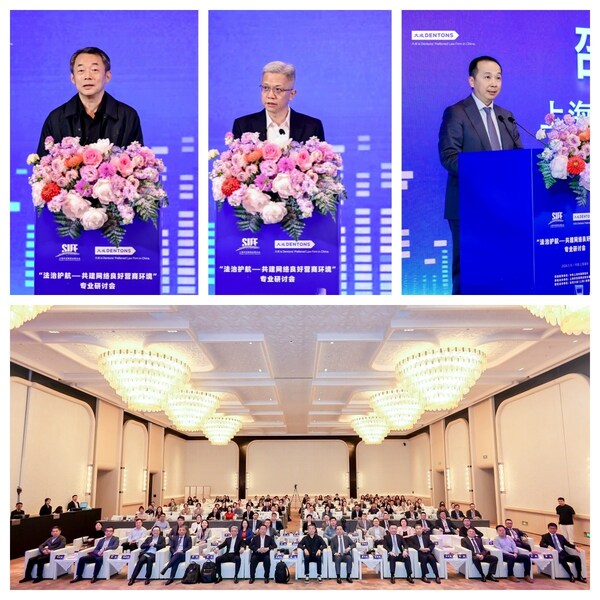
Professor Shi Jianzhong delivered a keynote speech titled “Online Ecosystem Governance and the Reshaping of the Lawyer’s Role”. Professor Shi stated that the legal profession should undergo role reshaping in this context, transitioning from “transactional lawyers” to “institutional lawyers.” This involves participating in online legislation as professional fulcrums for rule-making, guiding platform enterprises to fulfill their main responsibilities as co-builders of compliance systems, conducting online rule-of-law publicity as disseminators of the spirit of the rule of law, participating in multi-stakeholder dispute resolution as professional forces for conflict resolution, and acting as agents in public interest litigation to fill gaps in governance forces. He pointed out that lawyers need to seize opportunities in new litigation and non-litigation scenarios while guarding against risks such as the boundaries of self-media marketing, being targeted by online violence, and data breaches within law firms.
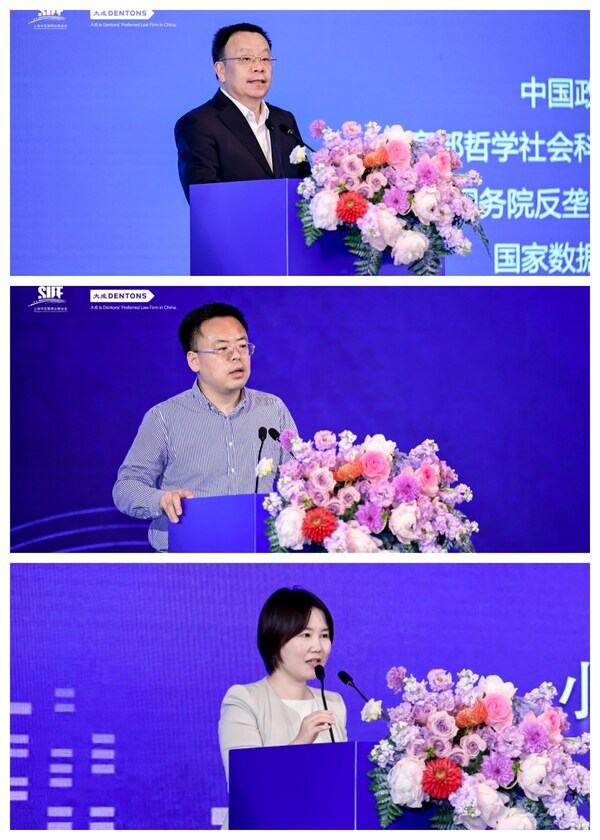
In the subsequent special lecture, Director Wang Lu delivered a speech titled “Good Governance through Law: Enhancing the ‘Comfort Level’ of the Business Environment with Efficiency and Service”. He pointed out that in the face of new business formats, scenarios, and technological applications in the digital economy, the Shanghai Cyberspace Administration deeply integrates “law enforcement” and “service.” On one hand, it strengthens the crackdown on illegal activities such as failing to fulfill obligations for cybersecurity, data security, and personal information protection, maintaining fair market order and protecting consumers’ legitimate rights. On the other hand, it integrates policy guidance, government services, and online legal education into the entire process of cyberspace management, providing customized “compliance consultations” for enterprises through “online legal services” to enhance their compliance capabilities. Finally, he emphasized that online law enforcement will continue to focus on improving enforcement efficiency and strengthening service capabilities, helping enterprises thrive steadily on the track of the rule of law.
Liu Man, Executive Editor-in-Chief of Xiaohongshu, delivered a keynote speech titled “Building a Healthy Online Ecosystem through Sincere Sharing”. Liu Man stated that issues such as inaccurate content, emotional polarization, and technology misuse are affecting the healthy development of the online ecosystem. In response, Xiaohongshu upgraded and released the Community Covenant 2.0 in January this year, continuing the core philosophy of “sincere sharing and friendly interaction” and adding targeted governance rules. She also mentioned that in optimizing the online business environment, Xiaohongshu removed and dealt with related violative accounts in 2025 through proactive inspections, complaint handling, and coordination with the 12377 hotline. Additionally, special campaigns curbed improper competitive content such as horizontal comparisons and disparagement, improving the interactive experience for corporate complaints. Finally, she stated that Xiaohongshu will continue to implement online ecosystem construction requirements with a “proactive and preemptive” governance model under the guidance of authorities, working with all parties to build a clean and upright cyberspace.
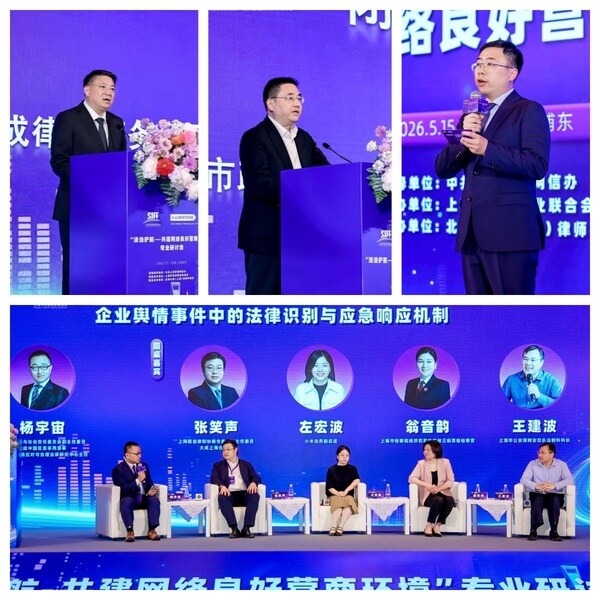
The roundtable discussion, themed “Legal Identification and Emergency Response Mechanisms in Corporate Public Opinion Incidents”, was moderated by Lawyer Yang Yuzhou, Deputy Director of the Public Welfare and Social Responsibility Committee of the Shanghai Internet Industry Federation, Director of the Board of Directors of Dentons Law Firm, and Director of the Dentons Shanghai Public Opinion Response and Governance Legal Research Center. Panelists included Zhang Xiaosheng, Deputy Director of the Self-Discipline and Coordination Committee of the Shanghai Internet Industry Federation and Partner at Dentons Shanghai; Zuo Hongbo, Deputy Legal Director of Xiaomi; Weng Yinyun, Senior Prosecutor at the Third Level of the Economic Crime Prosecution Division of the Shanghai Municipal People’s Procuratorate; and Wang Jianbo, Head of the Legal Affairs Section of the Cybersecurity Brigade of the Shanghai Municipal Public Security Bureau. Lawyer Chen Feng, Vice Chairman of the Advisory Committee of Dentons Law Firm, Party Secretary of Dentons Shanghai, and Deputy Director of the Legal Professional Committee of the Shanghai Internet Industry Federation, provided a summary of the roundtable.
The four panelists engaged in an in-depth dialogue from the perspectives of lawyers, enterprises, judiciary, and law enforcement, covering governance approaches from the police’s “proactive detection and precise crackdown,” practical analysis from prosecutors on charge selection and loss determination, internal corporate goodwill protection through vertical closure and horizontal coordination, and emergency guidance from lawyers on “stabilizing messaging, securing evidence, and determining paths” after public opinion incidents. This provided on-site enterprises with a comprehensive practical guide from identification to response and accountability, fully demonstrating the clear consensus that cyberspace governance requires multi-stakeholder collaboration among law enforcement, judiciary, enterprises, and lawyers.
Lawyer Chen Feng summarized that the rule of law is the fundamental guarantee for purifying the online environment and protecting the legitimate rights and interests of enterprises and the public. Building a clean cyberspace requires multi-stakeholder collaborative governance among the government, platforms, and the legal profession. Dentons Shanghai will continue to leverage its advantages of “party building leadership and professional excellence,” working with all sectors to consolidate legal forces and contribute to the legalization of cyberspace.
Zhang Lei, Deputy Secretary-General of the Shanghai Municipal Government and Executive Deputy Secretary of the Municipal Political and Legal Affairs Committee, delivered a closing speech at the seminar. He pointed out that the seminar had fostered multiple consensuses, including the courage to take decisive action to make cyberspace manageable and controllable, the skill to fight to make fairness and justice tangible, and the responsibility to make lawyers trustworthy. He fully affirmed the solid achievements of Shanghai’s political and legal system and legal profession in online governance, enterprise rights protection, and law enforcement-judicial coordination, and highly praised the important role of Dentons Shanghai and other law firms in online rule of law, data compliance, and public interest services. He emphasized that cyberspace governance is an ongoing journey and proposed four initiatives: adhere to political leadership to ensure the correct direction of law-based governance; leverage digital support to activate the governance efficiency of unified network management; strengthen collaborative governance to build a secure line of defense for the online business environment; and consolidate foundations to cultivate a clean cyberspace, continuously deepening online ecosystem governance and optimizing the online business environment, contributing legal wisdom and Shanghai solutions to building Shanghai into a modern socialist international metropolis with global influence.
The seminar was moderated by Lawyer He Tongyi, Partner at Dentons Shanghai.
This seminar closely aligned with the strategic deployment of building a cyber power, focusing on key issues of online ecosystem governance and business environment optimization. It consolidated multi-stakeholder consensus and gathered professional wisdom, providing practical pathways and support for advancing the legalization of cyberspace and improving governance systems and capabilities. Moving forward, all parties will take this seminar as an opportunity to adhere to political leadership, strengthen rule-of-law guarantees, deepen collaborative governance, highlight digital empowerment, continuously improve long-term mechanisms for online governance, regulate online order, prevent online risks, protect legitimate rights and interests, and continuously enhance the legalization, standardization, and convenience of the online business environment, laying a solid foundation for cybersecurity and rule-of-law guarantees for Shanghai’s accelerated construction of a modern socialist international metropolis with global influence.