

BeijingMay 19, 2026 /PRNewswire/ — On the occasion of the 17th World Inflammatory Bowel Disease (IBD) Day, the “Tuo Hu Chang An” patient assistance program, initiated by the China Population Welfare Foundation and supported by Eli Lilly China, was officially launched. The program aims to alleviate the financial burden on adult patients with moderate to severe active IBD, improve treatment accessibility, and enhance patients’ quality of life. This initiative not only reflects the deep care of Eli Lilly and various sectors of society for IBD patients but also represents a significant practice in promoting innovative drugs to benefit a broader population, helping to bridge the “last mile” between innovative therapies and patients.

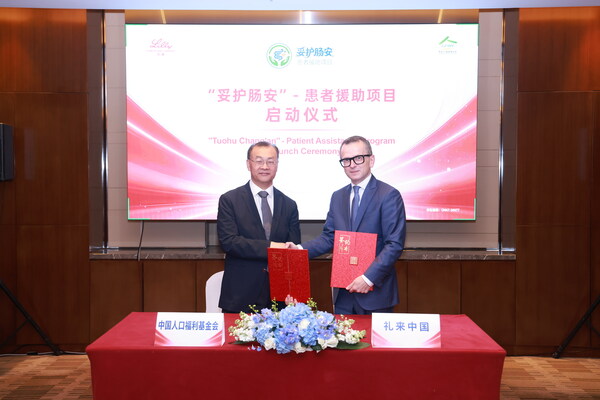
Launch ceremony of the ‘Tuo Hu Chang An’ patient assistance program
With changes in lifestyle, the incidence of IBD in China has significantly increased over the past 20 years, making it one of the chronic diseases of concern in the digestive field[1]. The prevalence of Crohn’s disease (CD) in China is approximately 3.39 cases per 100,000 people, while ulcerative colitis (UC) has a prevalence of about 17.24 cases per 100,000 people, roughly five times that of CD[1]. Although IBD treatment has entered the era of precision targeting, some patients still fail to receive innovative treatment options in a timely manner due to financial burdens and other reasons during actual treatment. The launch of the ‘Tuo Hu Chang An’ patient assistance program is expected to help financially disadvantaged patients gain access to innovative drug treatment support and medication opportunities.
Dai Tao, Vice Chairman and Secretary-General of the China Population Welfare Foundation, stated: “The China Population Welfare Foundation launched the ‘Tuo Hu Chang An’ patient assistance program to provide drug assistance to eligible patients with moderate to severe active IBD, effectively reducing their financial burden, improving treatment accessibility, and helping patients achieve better disease control and quality of life.”
Dehran, Vice President of Eli Lilly and General Manager of Eli Lilly China, said: “2026 marks the 150th anniversary of Eli Lilly. Looking back over this century and a half, we have always adhered to the original intention of ‘health first,’ transforming cutting-edge science into innovative drugs that truly improve patients’ lives. This year, the successful approval and launch of Antuolaili® (mirikizumab injection) and Antuolai® (mirikizumab injection (subcutaneous)) for dual indications not only provide innovative treatment options for IBD patients[2] but also reaffirm Eli Lilly’s long-term commitment to the autoimmune field. The significance of innovation lies not only in discovery but also in reaching patients. The ‘Tuo Hu Chang An’ patient assistance program is an important practice of transforming innovation into accessibility, in collaboration with the China Population Welfare Foundation, and is also Eli Lilly’s active response to the ‘Healthy China 2030′ and the ’15th Five-Year Plan.’ We look forward to helping more patients in need overcome financial barriers, benefit from innovative therapies as early as possible, and achieve long-term stable disease control.”
Heavy Disease Burden:IBDPatients Urgently Need Social Attention
Inflammatory bowel disease (IBD), primarily including Crohn’s disease (CD) and ulcerative colitis (UC), is a chronic, relapsing inflammatory condition of the intestines, often affecting young adults. Patients frequently experience recurrent symptoms such as abdominal pain, diarrhea, and bloody stools, severely impacting quality of life and even increasing the risk of infection, hospitalization, surgery, and colorectal cancer[2],[3]. Due to the prolonged course of the disease, patients often require long-term or even lifelong treatment, with medical expenses approximately three times that of the general population[4],[5]. For financially struggling families, the long-term cost of treatment becomes an unbearable burden, leading some patients to discontinue therapy due to inability to afford it, resulting in disease recurrence, progression, and a vicious cycle[3].
“Tuo Hu Chang An“: Enhancing Access to Innovative Drugs Through Public Welfare
The “Tuo Hu Chang An” patient assistance program, initiated by the China Population Welfare Foundation and supported by Eli Lilly China, aims to provide drug assistance with Antuolaili® (mirikizumab injection) and Antuolai® (mirikizumab injection (subcutaneous)) to adult patients with moderate to severe active IBD who meet medical and financial criteria. This initiative helps bridge the “last mile” between innovative therapies and patients, enabling more eligible IBD patients to access innovative treatment options.
The “Tuo Hu Chang An” patient assistance program is scheduled to launch in June 2026. Specific application conditions and procedures can be found through the program’s WeChat official account and the official channels of the China Population Welfare Foundation.
About the “Tuo Hu Chang An” Patient Assistance Program
About Antuolaili® (mirikizumab injection) and Antuolai® (mirikizumab injection (subcutaneous))
Antuolaili® (mirikizumab injection) and Antuolai® (mirikizumab injection (subcutaneous)) are interleukin (IL)-23p19 antagonists indicated for the treatment of adult patients with moderate to severe active CD and UC. Antuolaili® (mirikizumab injection) and Antuolai® (mirikizumab injection (subcutaneous)) selectively target the p19 subunit of IL-23, inhibiting the IL-23 pathway. Overactivation of this pathway plays a key role in the pathogenesis of IBD, making inhibition of the IL-23 signaling pathway significant for controlling inflammation[4].