

SHANGHAIApril 28, 2026 /PRNewswire/ — Against the backdrop of ongoing international turmoil and the accelerated restructuring of global supply chains, Chinese manufacturing enterprises are facing a critical transition period from “scale expansion” to “value leap.” With the叠加 of tariff barriers, technological blockades, and cost pressures, companies urgently need to forge resilience amidst uncertainty. The deep integration of World-Class Manufacturing (WCM) and Industry 4.0, particularly the explosive application of artificial intelligence technology, is becoming the core engine for the manufacturing sector to break through and achieve a turnaround.
On April 21, 2026, the 2nd World-Class Manufacturing (WCM) and Industry 4.0 Innovation Conference & Award Ceremony was grandly held at the International Institute of Finance, University of Science and Technology of China (USTC) in Hefei, Anhui. The event was organized by Effice Management Consulting (Shanghai) Co., Ltd., in collaboration with the USTC School of Business and Technology and School of Management, Anhui Dake Kechuang Development Co., Ltd., with support from Bain & Company, the Anhui Science & Technology and Industry Integration Innovation Association, Keda Valley Service Platform (Anhui) Co., Ltd., and the Digital Intelligence Alumni Association of the USTC School of Management. The conference attracted over 400 industry-leading representatives, experts, and scholars from hundreds of enterprises, who gathered to delve into the cutting-edge integration pathways of the World-Class Manufacturing system and industrial AI, under the theme “Break Boundaries • Integrate • Rebirth.”
Notably, the USTC School of Business and Technology and School of Management played a crucial bridging role in the grand hosting of this event. As a high-end platform jointly established by the Anhui Provincial Government and USTC, the school offers the “Understanding China” course, aimed at helping foreign-invested enterprises deeply comprehend the Chinese market. It was through this course that Effice established ties with Anhui, and through continuous exchanges, trust extended to the industrial frontlines, ultimately facilitating the establishment of the Effice Innovation Center.
The conference commenced in a warm atmosphere. Mr. Chen Jinbing, Head of Entrepreneur Programs at the USTC School of Business and Technology and School of Management, Mr. Liu Lindong, Associate Dean of the USTC School of Business and Technology and School of Management, and Mr. Wang Liping, Partner and General Manager of Effice Management Consulting Group China, successively delivered welcome speeches. Mr. Wang Liping also gave a keynote speech titled “From WCM to Industrial AI.”
On the morning of the conference, multiple keynote speeches centered on World-Class Manufacturing and Industry 4.0 innovation were held, along with a tripartite signing ceremony.
First, Mr. Fu Yuanguang, Vice President of Keda Valley Service Platform Company, provided a detailed introduction to Keda Valley’s full-chain service system, built as a “Ke Piao Paradise” sought after by global innovative talents. From outcome exploration to industrial implementation, it offers comprehensive technical support and service guarantees for key needs in the process of smart manufacturing and digital transformation.
Subsequently, the conference witnessed a tripartite signing ceremony — Effice Management Consulting, in collaboration with Keda Valley Global Partner Anhui Dake Kechuang Development Co., Ltd. and Bosch Information Technology Services Co., Ltd., jointly signed an agreement to establish the Effice Innovation Center in Hefei. This center will integrate Effice’s world-class operations management consulting, Bosch’s leading Industry 4.0 technology, and Dake Kechuang’s localized service capabilities, marking a significant milestone in Anhui’s efforts to build a source of technological innovation.
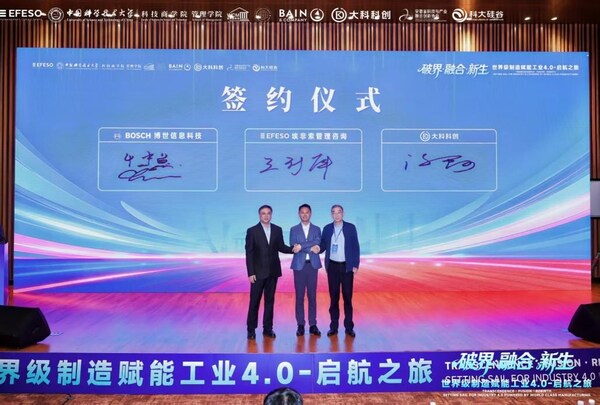
Signing Ceremony
Mr. Li Xiangyang, Executive Director of the USTC School of Information Science and Technology, Executive Dean of the School of Computer Science and Technology, and Executive Dean of the School of Software Engineering, delivered a speech titled “AI and Optimization Solvers in Discrete Manufacturing: Challenges and Initial Explorations.” Using cases like intelligent design, equipment interconnection, and data governance, he demonstrated the immense potential of data intelligence in complex industrial scenarios. He mentioned that current industrial AI faces challenges such as complex business logic and poor data quality. His team is exploring a path combining “ontology and large language models,” achieving dozens of times efficiency improvement in scenarios like bill of materials management and production scheduling.
Mr. Zhang Yongjiu, Vice President of Feihe Dairy Group and Executive Director, Chairman, and General Manager of Yuan Sheng Tai Pastoral Farming Co., Ltd., shared an in-depth account of “Feihe’s WCM Transformation Journey.” He emphasized that WCM construction is an endless journey, valuing continuous improvement and persistent effort; making the pursuit of excellence as natural as breathing. In this transformation involving all employees, staff at all levels need to be aligned and work together, striving daily towards the peak of excellence. Currently, Feihe has extended the WCM management system from production plants to high-quality pastures, scientifically improving dairy cow unit yield by meticulously studying “cow needs,” successfully achieving a leapfrog upgrade from industrial standardized control to agricultural lean operations.
Mr. Reza SHAHRBABAKI, Senior Vice President of Effice Management Consulting, proposed that “Perfect Every Day” is the ultimate operational goal of zero losses. He pointed out that WCM is responsible for systematically identifying losses, while AI solves complex problems through technologies like predictive maintenance and process self-optimization. The deep integration of the two is becoming a powerful engine for enterprises moving towards smart manufacturing.
After the morning speech session, the most exciting moment arrived:
The World-Class Manufacturing (WCM) China Awards for Best Practices and the Industry 4.0 China Awards Ceremony!
Heilongjiang Feihe Dairy Co., Ltd. won the “Organizational Empowerment Award”; Reckitt (Suzhou) Co., Ltd. won the “Early Management Award”; Hefei Yili Dairy Co., Ltd. won the “Strategic Leadership Award”; Amcor Group Foshan Xinchangsheng Plastic Film Co., Ltd. won the “Technological Innovation Award”; BSH Home Appliances Investment (China) Co., Ltd. won the “Lean Logistics Award”; COSMOPlat Chuangzhi IoT Technology (Chongqing) Co., Ltd. won the “Lean Improvement Award”; Tsingtao Brewery (Sanshui) Co., Ltd. won the “Agile Service Award”; Rifeng Enterprise (Tianjin) Co., Ltd. won the “Quality & Cost Dual-Win Breakthrough Award”; Saint-Gobain Automotive Glass (Shanghai) Co., Ltd. won the “Excellent Safety Benchmark Award”; and Yili Group Liquid Milk Business Unit won the “Excellent Intelligent Maintenance Award.”
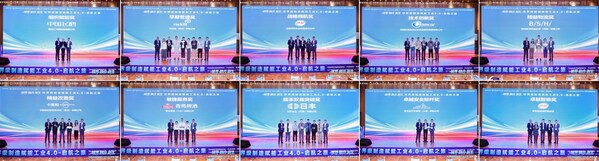
WCM China Best Practice Awards
Additionally, Fuding Times New Energy Technology Co., Ltd., Haier Qingdao Water Purification Interconnected Factory & Haier Qingdao Water Ecology Interconnected Factory, and Nestlé Qingdao Co., Ltd. respectively won the “Smart Factory Award,” “AI Innovation Navigator Award,” and “Intelligent Sustainability Award.”
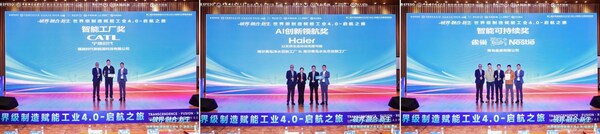
Industry 4.0 China Awards
Afternoon Sessions: Four Parallel Sub-forums
Sub-forum 1 brought together representatives from Feihe Dairy, Reckitt, Saint-Gobain Automotive Glass, Haier Water Ecology, and Fuding Times. They engaged in in-depth exchanges on talent system building, early equipment management, safety risk elimination, and smart manufacturing practices, fully demonstrating the deep implementation results of the World-Class Manufacturing system across multiple industries.
Mr. Li Kai, WCM Manager of Feihe Dairy Production Division, shared insights on “Building a Talent System with World-Class Manufacturing Genes, Abundant with Capable Individuals.” Through tiered and categorized training and “belt certification,” the project opens up a full-chain promotion channel from management trainees to factory general managers, achieving WCM certification for all key management positions and supplying lean talent upstream in the industrial chain, realizing a leap from “single-point empowerment” to “full-chain win-win.”
Ms. Cheng Qianqian, Core Member of the EEM Pillar at Reckitt (Suzhou) Co., Ltd., introduced the “EEM – Early Equipment Management” project. By deeply embedding WCM early management methodology into new production line construction, using tools like line balancing and FMEA to eliminate defects at the design source, achieving “vertical start-up,” significantly shortening delivery and ramp-up cycles, reaching target OEE in the short term, and establishing a standardized MP system.
Mr. Yang Leibo, Senior Production Engineer at Saint-Gobain Automotive Glass (Shanghai) Co., Ltd., presented the “Safety Risk Reduction Project for the Overhead Crane Area in Workshop 2.” Through WCM lean management, hazards were identified, processes optimized, protections strengthened, and repetitive loading/unloading tasks were reorganized and merged, cutting off risks at the source. A hierarchical control system was introduced, achieving zero high risks in key areas, a dramatic drop in operational risks, while simultaneously reducing operating costs.
Ms. Qiu Jing, Strategic Operations Director of Qingdao Haier Water Ecology Technology Co., Ltd., shared the AI Innovation Navigator project. Integrating AI, Industrial Internet, and WCM, the project achieved transparent, intelligent, and low-carbon upgrades across the entire production process. Through process self-optimization, predictive diagnostics, and flexible assembly, it significantly improved yield rates and inspection accuracy, built an energy circulation system, and became a benchmark for green smart manufacturing.
Ms. Zha Wenzhen, Process Engineer at Fuding Times New Energy Technology Co., Ltd., shared the award-winning smart factory project “Online Detection of Baking Water Content Based on Deep Learning Algorithms & Digital Twin Technology.” Centered on “extreme manufacturing + digital intelligence + zero-carbon cycle,” it deployed an AI closed-loop energy-saving system to optimize coating oven parameters in real-time, reducing energy consumption and carbon emissions; built a predictive maintenance platform for early fault warnings, achieving a 60% reduction in equipment failure rate and a 41% reduction in maintenance costs, setting an industry benchmark for smart manufacturing.
Subsequently, a roundtable discussion was held with guests including Mr. Li Kai, WCM Manager of Feihe Dairy Production Division, Mr. Cheng Weixi, Continuous Improvement Manager of Reckitt (Suzhou) Co., Ltd., Mr. Wu Qing, General Manager of Qingdao Haier Water Ecology Technology Co., Ltd., and Mr. Yang Leibo, Senior Production Engineer of Saint-Gobain Automotive Glass (Shanghai) Co., Ltd.
Sub-forum 2 featured presentations from representatives of Amcor, Hefei Yili, Haier Water Purification, and Rifeng, focusing on equipment mechanism analysis, TPM full-domain efficiency enhancement, AI intelligent inspection, and quality defect reduction, showcasing how industries achieve zero failures and quality-cost win-win through the integration of lean and AI.
Mr. Feng Yuxin, Equipment Manager of Amcor Group Foshan Xinchangsheng Plastic Film Co., Ltd., shared the “Project for Reducing High-Frequency Oil Leaks in Gearboxes to Achieve Zero Failures.” Using P-M analysis, the root causes of oil leaks were eliminated from the physical mechanism level, combined with basic condition restoration, achieving zero-failure operation. Key technologies were incorporated into new equipment procurement and MP systems to prevent recurrence from the source, enhancing the professional analytical capabilities of the maintenance team.
Mr. Fang Naiqi, TPM Promotion Manager of Hefei Yili Dairy Co., Ltd., presented the “‘Net Weaving’ Plan – Integrated TPM Full-Domain Efficiency Enhancement Practice.” By integrating regional resources and building a “mentor-core staff-trainee” tiered talent system, equipment operation and maintenance shifted from outsourcing dependence towards autonomy and specialization. This resulted in a sharp reduction in maintenance costs and downtime, providing a TPM breakthrough demonstration for the dairy industry.
Mr. Wang Yuhe, Quality Director of Haier Qingdao Water Purification Interconnected Factory, showcased the AI Innovation Navigator project. Facing the challenge of micro-leakage in 113 water circuit combinations, intelligent air leak detection replaced water testing. By collecting 19 parameters and integrating 9800 historical data cases, using LSTM and Bayesian networks, it achieved second-level positioning of micron-level leak points, improving the leak prevention compliance rate by 68%, realizing AI-empowered zero-defect quality.
Mr. Jiang Jinsheng, Senior Supervisor of the Tianjin Base at Rifeng Enterprise (Tianjin) Co., Ltd., shared the “Project for Reducing Quality Defects in Floor Heating Pipes.” Strictly following the 6-step defect reduction method, physical root causes were identified using QA/QX matrices, combined with 5Why analysis and condition restoration, leading to an order-of-magnitude reduction in defect rates and significant leaps in OEE and weekly output. A rapid response mechanism was established, achieving a quality-cost win-win.
Mr. Wu Zhongyi, Manager of the Lean Operations Department at Rifeng Group, shared “Rifeng’s WCM System Building,” introducing how Rifeng has moved from fragmented improvements to systematic operations on its WCM journey. Through indicator standardization and strategic deployment, it achieved refined management across the entire chain. Results were significant: multiple bases including Foshan and Tianjin achieved key breakthroughs in personnel efficiency, changeover time, and failure rates. Relying on talent development and cultural internalization, Rifeng successfully built a new manufacturing ecosystem of “Learn, Embrace, Become World-Class,” establishing a leading competitive advantage in the industry.
The roundtable session featured guests including Mr. He Wei, WCM Director of Amcor China, Mr. Gu Yuanlin, General Manager of Rifeng Enterprise (Tianjin) Co., Ltd., Mr. Li Zhipeng, General Manager of Hefei Yili Dairy Co., Ltd., and Mr. Wang Yuhe, Quality Director of Haier Qingdao Water Purification Interconnected Factory, discussing the integration of lean management and AI.
Sub-forum 3 gathered representatives from BSH Home Appliances, COSMOPlat, Tsingtao Brewery, Yili Liquid Milk Business Unit, and Nestlé Qingdao Factory. They exchanged views on agile logistics, lean improvement, one-stop service, predictive maintenance, and intelligent sustainability, showcasing innovative achievements of World-Class Manufacturing in logistics and operations.
Ms. Cao Xuelian, Senior Project Manager at BSH Home Appliances Co., Ltd., and Ms. Huang Lanping, Senior Lean Expert, shared “Reverse Improvement: Agile Sprint Towards World-Class Lean Logistics.” By introducing the Scrum agile model and building a cross-factory collaborative structure, departmental silos were broken. Using the logistics index as a lever, end-to-end value streams were connected, achieving a 19% improvement in the logistics index and savings of over €1.1 million, creating a replicable lean logistics benchmark.
Mr. Ma Jie, Engineering Director of COSMOPlat Chuangzhi IoT Technology (Chongqing) Co., Ltd., presented the “Project for Reducing Manufacturing Costs of Air Conditioner Outdoor Unit Control Boards.” By establishing a “chain-group contract” mechanism, technological innovations were implemented across the 4M1E dimensions, introducing odd-form inserters, modifying wave soldering equipment, and deploying ESOP, doubling labor productivity and reducing manufacturing costs by 54.3%, setting a lean benchmark for the electronics industry.
Ms. Tong Lin and Ms. Qin Zhuo, Business Managers at Tsingtao Brewery (Sanshui) Co., Ltd., showcased the “One-Stop Service Optimization Project for the Logistics Dispatch Center.” Using the ESIA four-step method, cumbersome nodes were integrated into a “one-stop” service, significantly reducing vehicle dwell time on site, improving logistics throughput efficiency, and solidifying it into a standard system, continuously exporting “Tsingtao Brewery experience.”
Ms. Zhang Juanjuan, TPM Promotion Manager of the Production Management Department at Yili Group Liquid Milk Business Unit, shared “The Construction and Application of the TPM Equipment Predictive Maintenance Insight System.” By building an equipment health prediction system based on vibration spectrum, the shift from “planned maintenance” to “condition-based response” was achieved. Annual unplanned downtime was eliminated, maintenance cycles were scientifically extended, forming a data-driven CBM transformation benchmark.
Mr. Xiao Ping, Plant Manager of Nestlé Qingdao Factory, presented the Intelligent Sustainability project. By building a digital safety platform, a predictive analysis platform (Trendminor), and an operations management platform (DMO), along with constructing a green smart factory and smart park, coordinated management of vehicles, personnel, and materials was achieved, driving the factory towards efficient, intelligent, and sustainable upgrades.
The roundtable discussion featured guests including Mr. PASTIRMACI Ali Kaan, Senior Director of Supply Chain for the Home Appliance Park at BSH Home Appliances Co., Ltd., Mr. Ma Jie, Engineering Director of COSMOPlat Chuangzhi IoT Technology (Chongqing) Co., Ltd., Mr. Xiao Ping, Plant Manager of Nestlé Qingdao Factory, Ms. Zhang Juanjuan, TPM Promotion Manager of Yili Group Liquid Milk Business Unit, and Ms. Zhang Yueting, Improvement Manager at Tsingtao Brewery Co., Ltd. Headquarters.
Sub-forum 4 was the Industrial AI themed forum, featuring presentations from representatives of Nestlé, Ikohe, Heihu Tech, Bain & Company, and Effice. It focused on the evolution from “human-machine interaction” to “autonomous operations” on the manufacturing floor, exploring cutting-edge practices of AI in process control, production scheduling, flexible manufacturing, supply chain, and industrial solvers.
Mr. Shi Qiuxiang, Head of the Digital Intelligence Center for Nestlé Greater China, shared the evolutionary path from “human-machine interaction” to “autonomous operations” on the manufacturing floor. With World-Class Manufacturing as the management system foundation, Nestlé deeply integrates industrial AI and digital technology. Through dual empowerment of organization and capability, it promotes the implementation of scenario-based AI on the manufacturing floor, accelerating the factory’s journey from operational excellence to smart manufacturing, building a more resilient and sustainably competitive factory of the future.
Mr. Yin Kejie, Chairman & CEO of Ikohe Information Technology (Shanghai) Co., Ltd., focused on “AI Defining the New Paradigm of New Energy Vehicle Smart Manufacturing – Ikohe X Huawei Collaborative Innovation Practice.” With Ascend computing power as the base, Ikohe connects the intelligent closed loop from process planning and production scheduling to production line execution. Deeply involved in the production and manufacturing control software and digital smart factory solutions for the entire industrial chain of automotive OEMs, three-electric systems, and core components, it promotes automotive companies towards an AI-defined smart manufacturing paradigm, providing a replicable innovation template for smart manufacturing in the automotive industry.
Mr. Xiao Zhe, Co-founder & CMO of Shanghai Heihu Technology Co., Ltd., explored how AI can become the new infrastructure supporting China’s new quality and flexible manufacturing. Combining frontline manufacturing practices, he analyzed why traditional production models centered on scale and rigid processes are failing, and how AI is entering the core of production and collaboration from the tool level, helping enterprises achieve flexible, efficient, and data-driven manufacturing, offering a new perspective for the transformation and upgrading of the manufacturing industry.
Mr. Liu Weibo, Global Expert Partner at Bain & Company, shared in-depth the latest advancements and implementation practices of AI in the high-end manufacturing sector. He emphasized that data and data architecture have become core production factors. Building a unified data platform, refining the relationship graph between data, and connecting IT/OT/AI models to create digital twins are key paths to maximizing AI value in the future, requiring years of continuous accumulation. AI application is not limited to individual use cases; more importantly, building data architecture, organizational capabilities, and workflow optimization will allow companies to benefit first from the AI transformation. Finally, he demonstrated two specific use cases in manufacturing scenarios: using AI models for analysis and benchmarking to find cost reduction and efficiency improvement opportunities, and using AI to generate management dashboards, project plans, and ROI analysis with one click. Another example was AI dynamic scheduling to coordinate and adjust the optimal solution for customer demand, people, machines, and materials in real-time.
Mr. Cao Bo, Senior Manager at Effice Management Consulting, presented “Industrial AI Solver Case Study.” He showcased breakthrough practices of AI empowering the manufacturing industry. Addressing the complex milk truck scheduling problem for a dairy company, using “ontology + LLM + solver” technology, business rules were automatically converted into mathematical models. Compared to manual scheduling taking 3-8 hours, the system outputs a globally optimal solution in just 5 minutes, reducing the required number of vehicles by nearly half and transportation mileage by 24%, achieving a decision-making revolution from “experience-driven” to “data-driven.”
The roundtable session featured guests including Mr. Shi Qiuxiang, Head of the Digital Intelligence Center for Nestlé Greater China, Mr. Yin Kejie, Chairman & CEO of Ikohe Information Technology (Shanghai) Co., Ltd., Mr. Xiao Zhe, Co-founder & CMO of Shanghai Heihu Technology Co., Ltd., Mr. Liu Weibo, Global Expert Partner at Bain & Company, Mr. Liu Yuping, Strategic Director of Integrated Supply Chain at Haier Smart Home, and Mr. Wang Liping, General Manager of Effice Management Consulting (Shanghai) Co., Ltd., engaging in an in-depth dialogue on digital transformation and AI talent issues.
This “Break Boundaries • Integrate • Rebirth: World-Class Manufacturing Empowering Industry 4.0 – The Voyage Begins: 2nd World-Class Manufacturing (WCM) and Industry 4.0 Innovation Conference & Award Ceremony” not only gathered global and local expert wisdom but also witnessed the implementation of numerous innovative achievements and the emergence of benchmark practices.
With lean as the foundation, data as the pulse, and intelligence as the wings, Chinese manufacturing enterprises are continuously breaking boundaries and integrating, gaining new life through change. In the future, the deep practice of World-Class Manufacturing (WCM) and Industry 4.0 will continue to empower Chinese manufacturing, building resilience amidst challenges and moving towards excellence through transformation.
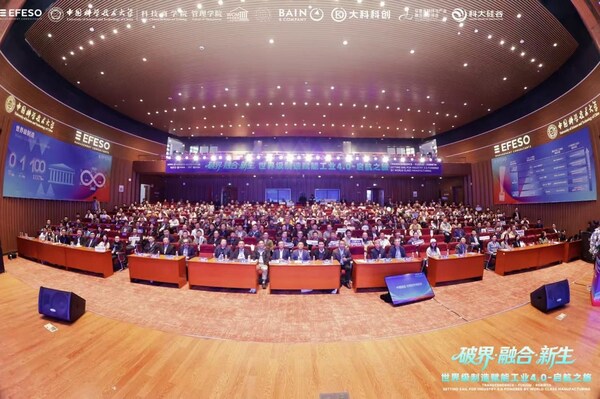
Conference Venue
From April 22 to 23, the conference organized benchmarking factory tour activities, carefully planning multiple routes including Hefei COSMOPlat Station, Hefei Yili Station, Chuzhou BSH Station, Suzhou Mondelēz Station, Jiangyin Envision Energy Station, Shanghai Royal Canin Station, Qingdao Haier Station, and Qingdao Nestlé Station. Participants visited advanced factories to observe the on-site application of WCM and Industry 4.0 concepts in production environments, extending the intellectual exchange of the conference into tangible and experiential learning.